










In Czechia, demand for new Prague apartments stays strong
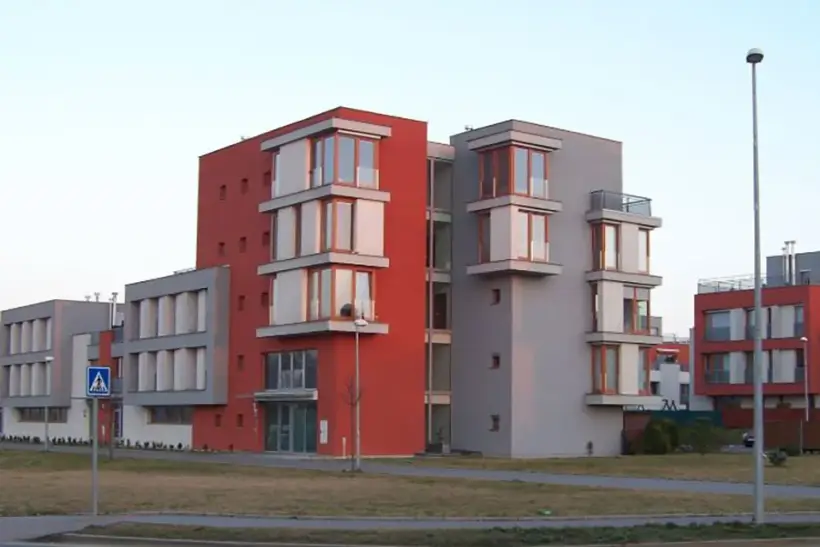
In the Czech Republic, the new-build apartment market in Prague maintained strong sales momentum at the start of 2026. In the first quarter, around 1,800 new apartments were sold, while the average price exceeded 180,000 Czech koruna per square meter for the first time, confirming the ongoing structural imbalance between demand and supply.
In Czechia, Prague new apartment sales remained elevated
According to market data cited in the April 23, 2026 overview, about 1,800 new apartments were sold in Prague in the first quarter. That is not a weak result for the market: it remains broadly in line with the average quarterly pace seen over the previous two years, even if it was formally about 30% below the exceptionally strong comparison base a year earlier. Earlier joint analysis from Central Group, Skanska Residential and Trigema showed that 2025 had already become a record year for Prague’s new-build market, with 7,800 newly built apartments sold, up 8% year on year.
That resilience suggests demand in the Czech capital remains intact despite rising prices. The Czech National Bank has already said the country’s housing market re-entered an upswing phase, with prices of new apartments rising faster than those of older housing. The central bank also noted that demand is concentrated primarily in Prague and in smaller apartment formats.
In Czechia, limited Prague supply keeps pushing prices higher
The main driver remains chronically constrained supply. In its March 2026 report on Czechia, the International Monetary Fund tied worsening housing affordability to a structural imbalance in which demand continues to outpace the market’s ability to deliver new homes, while construction is held back by slow permitting and fragmented municipal governance.
Against that backdrop, price growth looks consistent. According to the January market review, new apartment prices in Prague had already moved close to CZK 180,000 per square meter by the start of 2026. In the April overview, based on the market data provided by the user, that threshold was surpassed, with the average asking price reaching CZK 182,311 per square meter. That also fits the broader pattern described in market and analytical coverage: limited new approvals and construction delays continue to support higher prices.
In Czechia, smaller Prague apartments dominate demand
The sales structure shows the market is leaning even more heavily toward smaller units. According to the supplied overview, 1+kk and 2+kk apartments, effectively studios and compact one-bedroom layouts in Czech classification, accounted for more than three quarters of all sales in the first quarter. The 2+kk format represented roughly 45%, while 1+kk units accounted for about 31%.
That breakdown matches the Czech National Bank’s conclusion that demand in Prague is concentrated in smaller apartments, partly because they are easier to finance and remain attractive for investment buyers. For households, this means compact layouts continue to serve as the main entry point to the market, while the share of larger units is shrinking due to their higher total price and heavier financing burden.
In Czechia, four Prague districts led most new apartment sales
According to the market overview, Prague 9 alone accounted for nearly one third of first-quarter sales, while Prague 9 and Prague 5 together represented roughly half of the market. Prague 4 and Prague 10 also retained significant shares. That geography is consistent with the broader distribution of development activity, as larger regeneration and development zones have been especially active in Prague 5, Prague 9 and outer districts where more large-scale construction remains possible.
For the market, that is an important signal: buyer demand in Prague remains concentrated in districts with broader supply, stronger transport links and more room for phased development.
In Czechia, the Prague housing market remains under price pressure
Even when quarterly sales do not set a new record, the pace of absorption remains high by historical standards. Market participants at the start of 2026 said supply was still shrinking and the market was not keeping up with demand. In that environment, buyers increasingly appear to believe that further price growth may outpace any future decline in mortgage rates, making delay less attractive.
As International Investment experts report, Prague’s new-build market in 2026 remains one of the most strained in Central Europe: resilient demand, scarce supply and a heavy concentration of sales in smaller apartments are creating conditions in which prices may keep rising even without a fresh surge in mortgage activity. For investors and homebuyers, that means the core risk is no longer weakening demand, but the persistence of a shortage in quality new supply.