










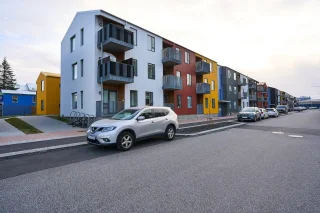


Housing in Dublin rose by €30,000 over the year: slowing growth momentum

Ireland’s housing market is gradually moving away from a period of rapid expansion. In Dublin, the average price of second-hand homes increased by around €30,000 over the year, while the pace of price growth continues to ease in the capital and other regions. The rental market is also stabilising, RTÉ reports, citing a review by DNG.
Housing price growth in Ireland slows
Dynamics in Dublin
The National Price Gauge, which tracks second-hand home prices in the capital, recorded a 3% increase in Dublin over the first six months of 2026. This is broadly in line with the second half of 2025, when prices rose by 1.5% per quarter. On an annual basis, prices were up 5.6% to June, down from 7.4% previously.
Paul Murgatroy, Head of Research at DNG, noted that the average second-hand home price in Dublin stands at around €630,000, roughly €30,000 higher than a year earlier. This reflects elevated price levels and continues to weigh on affordability in the capital.
Regional picture
Outside Dublin, the residential market also shows a slowdown in price growth, although regional dynamics remain uneven. Annual growth across regions has eased from over 7.5% at the end of 2025 to around 5% by June 2026.
The strongest price increases are seen in the Midlands and Midwest, where housing prices are rising at around 7.5% annually, above the national average. In contrast, more moderate growth is recorded in the Mid-East and Southwest regions at around 4.5% per year, below the national level.
Paul Murgatroy noted that price growth rates across different parts of the country are gradually converging, although the market cannot yet be described as fully uniform.
Rental reform reshapes investor behaviour
The share of landlords selling investment properties in Ireland’s housing market has declined. In the second quarter of 2026, they accounted for around 20% of all transactions, down from 27% in the third and fourth quarters of 2025, when a higher number of landlords exited the sector following the announcement of rental reform.
The Sun notes that since March 2026, Ireland has introduced a new regulatory model. Rent increases are capped at up to 2% for six years after a lease is signed, after which rents may be reset in line with market levels.
Large landlords (four or more properties) are prohibited from no-fault evictions under new contracts. Other owners retain limited grounds for termination, including economic hardship or personal use. Just before the rules came into force, rents rose by 4.4%, the highest quarterly increase since 2002.
Paul Murgatroy noted that the initial changes caused “shock and uncertainty” among landlords, leading to a temporary spike in investment property sales. The situation later stabilised as market participants became more familiar with the new framework. However, he added that further reductions in landlord activity cannot be ruled out as decisions are often made after lease cycles end.
Construction in Ireland: rising output
DNG CEO Keith Lowe expects an increase in new housing supply in Ireland, particularly in Dublin. He links this to expanding government housing initiatives, including the Croí Cónaithe Cities Scheme, which is helping restart previously stalled projects and supporting apartment development in the capital.
A high volume of approvals under the scheme is expected to translate into a noticeable rise in construction starts by year-end. Lowe also points to growing sales of new homes, encouraging developers to bring forward additional projects. In regional centres, large-scale developments are also expected to begin, supporting housing supply outside Dublin.
What this means for investors
Analysts at International Investment note that rapid price growth is no longer a universal driver of returns in Ireland, particularly in the capital where price levels are already high. This reduces the role of short-term speculative strategies and increases the importance of long-term holding periods. Future supply growth from construction may further limit price appreciation.
Rental reform has also reshaped income dynamics, reducing the potential for rental yield expansion. Investors continue to exit such assets, although at a slower pace. The market is stabilising, but it no longer offers the same flexibility, which has a direct impact on transaction activity and asset turnover.