







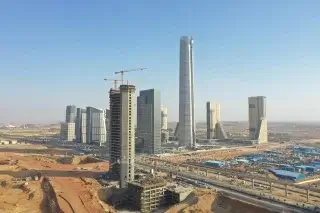
 Egypt Prepares New Law for Property Developers
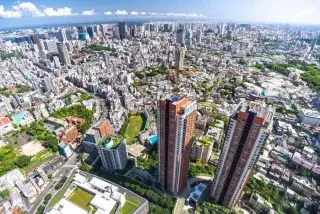 Young Japanese Buyers Turn to 50-Year Mortgages
 Argentina Narrows Tourism Gap as Arrivals Rise
 Seattle Luxury Housing Loses Its Former Momentum
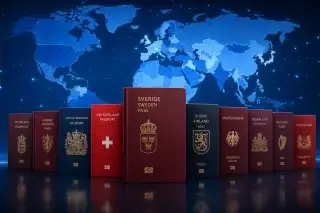 The World’s Strongest Passports for Travel, Living and Investment
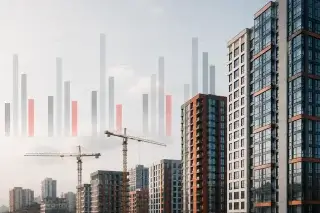 Russian Developers’ Debt Nearly Doubled in a Year
Conflicts Become the Norm: Peace Levels Decline for 12 Consecutive Years
The global security system has deteriorated for the 12th consecutive year, according to the Global Peace Index. The number of armed conflicts has reached its highest level since World War II, while the number of countries involved in external conflicts has nearly doubled since 2008. Around 181,000 people were killed in conflicts over the past year, one of the highest figures on record.
Countries with the Highest Level of Peace
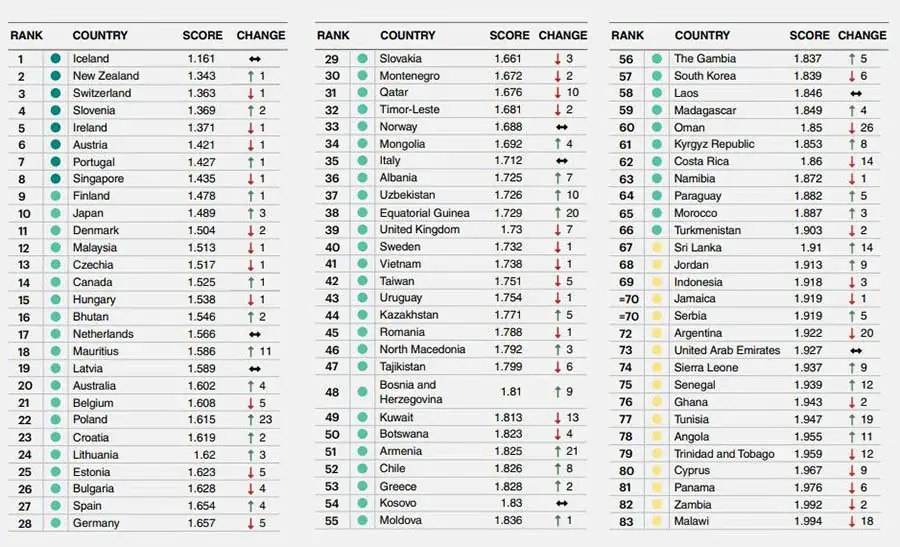
The top of the peace rankings is dominated mainly by small and politically stable states in Europe, the Asia-Pacific region, and several island economies. Iceland remains the leader, followed by New Zealand (+1) and Switzerland (−1).
The top ten also includes Slovenia (+2), Ireland (−1), Austria (−1), Portugal (+1), Singapore (−1), Finland (+1), and Japan (+3). These countries are characterised by strong institutions, low levels of violence, and limited involvement in external conflicts.
Outside the top 10, notable changes were recorded in Denmark (−2), Germany (−5), the United Kingdom (−7), and Belgium (−5). The strongest improvements were seen in Poland (+23), Armenia (+21), and Equatorial Guinea (+20). Mauritius (+11) and Uzbekistan (+10) also made significant gains.
Countries with Medium Levels of Peace
The upper part of this category includes Sri Lanka, Jordan, Indonesia, Serbia, Argentina, and the UAE. These countries sit just behind the high-peace group and form a transitional zone between the most stable states and the broader global average.
Changes among leading countries are usually limited to a few positions, while others show more pronounced movement. The strongest gains were recorded in Lesotho (+27), Tunisia (+19), Papua New Guinea (+17), Liberia (+17), Gabon (+17), Sri Lanka (+14), and Honduras (+13).
Georgia ranks 94th and improved by one position. Armenia showed a stronger improvement, rising by 21 places and entering the upper half of the global ranking.
The largest declines were seen in Nepal (−26), Argentina and Tanzania (−20), Malawi (−18), Republic of the Congo (−15), Cuba (−11), China (−11), and the Dominican Republic (−10).
Countries with Low Levels of Peace
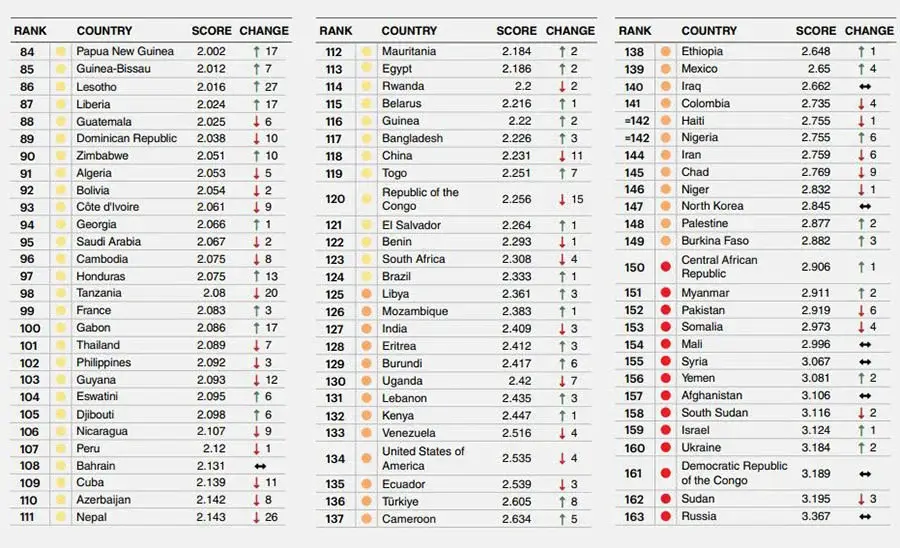
This category includes both developing states in Africa and the Middle East, as well as some of the world’s largest economies. Libya (+3) and Mozambique (+1) lead improvements in this segment.
India ranks 127th, falling by three positions. Improvements were recorded in Lebanon and Eritrea (+3), and Burundi (+6). Uganda declined by seven places, and Venezuela by four.
The most notable development in this group was the continued decline of the United States, which fell by four positions to 134th place. This is linked to rising political instability and increased violence, which has reached its highest level since the 1970s.
In the middle of the group, Türkiye showed a strong improvement, rising by eight places to 136th. Gains were also recorded in Nigeria (+6), Cameroon (+5), and Mexico (+4). Chad lost nine positions and Iran six. The lower part of this category includes Niger, North Korea, Palestine, and Burkina Faso.
Countries with the Lowest Level of Peace
The bottom of the ranking includes states experiencing ongoing large-scale conflicts, high political instability, or the presence of multiple armed groups. These countries represent the highest security risks globally.
At the upper end of this category, Pakistan declined by six positions, Myanmar improved by two, and the Central African Republic gained one. Somalia and Mali are also included.
Syria and Yemen improved by two positions, while Afghanistan and South Sudan declined by two. At the very bottom of the ranking, Israel is 159th (+1), Ukraine is 160th (+2), the Democratic Republic of the Congo is 161st, Sudan fell by three places to 162nd, and Russia ranks last at 163rd.
Overall Trends in Global Relations
The average level of global peace fell by 0.7% over the past year, continuing a 12-year downward trend. Out of 163 countries, 99 experienced deterioration and 62 recorded improvement.
Out of 23 indicators, 14 worsened, 8 improved, and 1 remained unchanged. The most significant changes relate to rising deaths from internal conflict and worsening relations between neighbouring states.
Regionally, the picture is also predominantly negative: seven out of eight regions deteriorated. The only exception was Eastern Europe and Central Asia, which showed improvement.
Internal and External Conflicts
Deaths from internal conflicts recorded the largest deterioration in the history of the index, increasing by 6.5%. The main drivers were prolonged conflicts in Sudan, Ukraine, and the Sahel. The situation in Sudan remains particularly severe, with an estimated death toll of up to 150,000.
Seven out of eight regions showed deterioration. At the same time, state involvement in external conflicts has increased. In 2008, 59 countries were involved; over the past five years, this number has risen to 103.
Human losses remain high. The peak was in 2023, with more than 309,000 deaths. In 2025, around 181,000 people were killed in conflicts, also one of the highest figures recorded.
Military Spending and Peace Agreements
Global military spending has been rising for ten consecutive years. In 2025, increases were recorded in 97 countries, while 44 saw declines. Total global military expenditure reached around $2.9 trillion, or 2.5% of global GDP.
The strongest growth occurred in Europe, where NATO members—including Denmark, Norway, Lithuania, Belgium, and Sweden—increased defence budgets in response to the war in Ukraine. Similar trends were observed in Bulgaria, Slovakia, Estonia, Azerbaijan, and Poland.
Major conflict actors show extreme levels of militarisation: Russia’s military spending reached around 7.1% of GDP, while Ukraine’s reached approximately 40% of GDP.
Fragmentation of the International System
The influence of major European economies has declined over recent decades: Germany from 8.5% to 4.3% of global GDP, France from 5.2% to 2.9%, and Italy from 3.8% to 2.2%.
At the same time, the role of countries outside traditional global leadership is increasing. Since 1991, the number of states with regional influence has nearly doubled, from 9 to 16, while the number of emerging centres of power has tripled.
The international system is becoming less centralised. Decision-making is less concentrated among a small group of major powers, while coordination among a larger number of actors is becoming more complex.
What This Means for Politics, Economy and Security
Analysts observe a high level of readiness for conflict, which is becoming a long-term norm. The share of conflicts ending in peace agreements fell from 23% in the 1970s to 4% in the 2010s. The share resolved through military victory declined from 49% to 9%. The number of prolonged conflicts without a clear political outcome is rising.
The index shows a structural shift in global security. Conflicts are becoming more dispersed and protracted, while the number of actors involved beyond active war zones is expanding. Militarisation is intensifying and defence spending is rising. These developments increase pressure on global politics and economics and heighten uncertainty across the international system.