







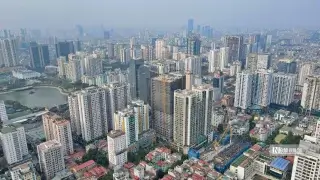
 Vietnam Mortgage Surge Pushes Homes Out of Reach
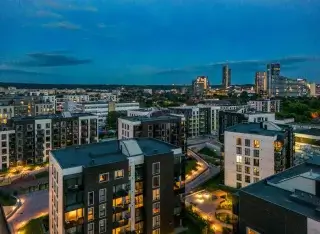 Lithuanian Apartment Prices Accelerate Across Major Cities
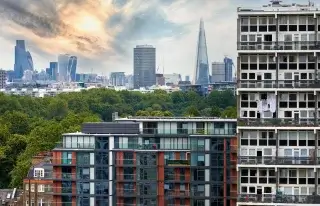 London Flats Lose Value Ahead of Leasehold Reform
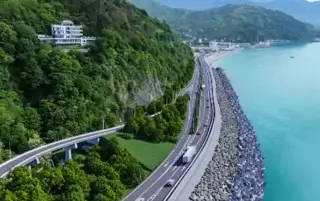 Construction of the Batumi–Sarpi Highway Begins in Georgia
 Baltic Property Investment Accelerates in 2026
 Hong Kong and Singapore Renew Their Expat Rivalry
Serbia’s Tourism Recovery Stays Uneven

Serbia recorded stronger overall tourism traffic in April and a modest increase in foreign arrivals, but a decline in overnight stays by non-residents showed that the inbound recovery remains uneven and more dependent on nearby markets than on longer trips.
Foreign arrivals returned to modest growth
Serbia welcomed 180,320 foreign tourists in April 2026, up 2% from a year earlier, SeeNews reported, citing national statistics. The increase was moderate but notable after 2025, when foreign tourist arrivals to the country fell 1.5%.
Overnight stays by foreign visitors slipped 0.2% year on year to 474,750. That means Serbia attracted more international visitors, but the average length of stay or the structure of trips weakened. For hotels, apartments and urban services, this gap matters more than the arrival figure itself: tourism revenue depends not only on guest numbers, but also on nights spent, accommodation occupancy and local spending.
The broader tourism market looked considerably stronger. In April, 368,450 tourists, including Serbian nationals, stayed in registered accommodation facilities, up 8.6% from a year earlier. Total overnight stays rose 3.8% to 948,944. In other words, domestic tourism drove most of the improvement, while the foreign segment recovered only partially.
Russia was the largest source market
The largest number of foreign tourists in April came from Russia, with 19,280 arrivals. Bosnia and Herzegovina followed with 14,464, Turkey with 13,021, Bulgaria with 10,867 and North Macedonia with 10,722.
This structure shows that Serbia remains primarily a regional and Eurasian destination rather than a mass long-haul leisure market. For Belgrade, Novi Sad, Niš, resort areas and business travel, that creates a stable but limited source of demand: neighboring countries generate frequent trips, but not always long stays.
The Russian market remains important because of migration, business and transit factors. Since 2022, Serbia has become one of the more visible European destinations outside the European Union for Russian citizens, while Belgrade has strengthened its role as a transport and business hub. At the same time, reliance on individual markets increases volatility: any change in air links, visa rules, household income or geopolitics can quickly affect hotels and short-term rentals.
Overnight stays reveal cautious demand
The Statistical Office of the Republic of Serbia said total tourist arrivals in April rose 8.6%, while total overnight stays increased 3.8%. The gap between the two growth rates means the average stay shortened across the market.
For foreign guests, the picture was sharper: arrivals rose, but overnight stays fell. This may point to more short city breaks, business trips, transit visits and regional stays of one or two days. For the tourism industry, that format is less profitable than a full holiday because travelers spend less on accommodation, tours, restaurants and domestic transport.
Serbian tourism is therefore entering the season with a mixed signal. Visitor numbers are rising, but the monetization of inbound traffic remains weaker. For the economy, that means growth in arrivals does not automatically translate into comparable revenue growth for hotels and services.
Domestic tourism supported the market
The April data show that domestic demand became the main support for the sector. Overnight stays by domestic tourists rose 8.2% year on year, offsetting weakness in foreign overnight stays. This is especially important for spa resorts, mountain destinations, smaller towns and regional accommodation markets where domestic tourists provide baseline demand outside peak international periods.
Serbia benefits from the fact that domestic travel is less sensitive to air connectivity and international politics. Local travelers react faster to holidays, school breaks, discounts and weather. However, domestic demand is usually constrained by household income and cannot always replace foreign spending in the premium hotel segment.
For hotel and aparthotel investors, this means the market must be split into two parts. Belgrade and larger cities depend on international guests, business travel and events. Resort areas and regional destinations rely more heavily on Serbian tourists and visitors from neighboring countries.
The 2025 base was weak
In 2025, Serbia welcomed 2,348,495 foreign tourists, down 1.5% from the previous year. Their overnight stays fell 0.4% to 6,072,905. The 2% April increase therefore looks less like a sharp acceleration and more like an attempt to recover after a weak year.
The important point is that both arrivals and overnight stays declined in 2025. That signals weaker demand depth: foreigners either came less often or stayed for shorter periods. April 2026 did not resolve that issue, because non-resident overnight stays again came in slightly below the previous year’s level.
The comparison with last year also shows that Serbia needs not only to restore visitor numbers, but to increase length of stay and average spending. Without that, tourism will support employment and infrastructure use, but its contribution to the balance of payments and regional development will remain limited.
Air connectivity is the main lever
Route expansion remains one of the key factors for inbound tourism. Air Serbia previously announced six new direct destinations for 2026, linking Belgrade with tourism, business and long-haul markets. For a country without a sea coast, air access is crucial.
Belgrade airport already plays the role of a regional Balkan hub. The broader the direct-flight network, the easier it is for Serbia to compete for city breaks, medical tourism, events, conferences and transit passengers. But more flights alone do not guarantee longer stays: Serbia also needs tourism routes beyond the capital, stronger domestic transport and clearer regional promotion.
Serbia has advantages in cultural, culinary, events and wellness tourism, but it does not yet have the same international brand power as the Adriatic coast, Budapest or Prague. That makes marketing and accessibility critical to turning transit traffic into full tourism demand.
Belgrade leads, but regions matter
Belgrade, as the largest city and main transport hub, receives a large share of foreign traffic. For many visitors, a trip to Serbia begins and ends in the capital. That supports hotels, restaurants, short-term rentals and business services, but limits the distribution of tourism income across the country.
Regions could benefit more if tourists stayed longer. Spa resorts, mountain destinations, wine routes, monasteries, the Danube corridor and culinary tourism can increase overnight stays. This part of the market matters for investment in small hotels, countryside resorts and infrastructure.
The April figures show that Serbia already knows how to attract visitors, but not always how to keep them. For the industry, that is a more complex task than increasing arrivals: it requires transport links, service quality, an events calendar and clear tourism products.
Tourism is growing, but the economic effect is limited
Tourism matters for Serbia as a source of foreign-currency income, employment and small-business demand. It supports hotels, restaurants, transport, retail, tour operators and short-term rentals. But the April figures show that growth remains uneven.
The 8.6% rise in total tourist arrivals looks strong, but the foreign segment increased only 2%, while foreign overnight stays declined. That means international demand remains sensitive to prices, flight access and competition from neighboring destinations.
For the government and businesses, the main challenge is to improve the quality of the flow. Serbia needs more travelers who stay several nights, visit places beyond Belgrade and spend money in the regions. Without that, positive arrival statistics will produce only a limited economic effect.
As experts at International Investment report, April’s increase in inbound tourism cannot be seen as a full recovery: higher foreign arrivals combined with lower foreign overnight stays point to shorter and more cautious trips. The critical conclusion is that Serbia is strengthening its position as a regional destination and transport hub, but has not yet proved that it can consistently convert arrivals into higher revenue, longer stays and investment demand outside Belgrade.