







 Vietnam Mortgage Surge Pushes Homes Out of Reach
 Lithuanian Apartment Prices Accelerate Across Major Cities
 London Flats Lose Value Ahead of Leasehold Reform
 Construction of the Batumi–Sarpi Highway Begins in Georgia
 Baltic Property Investment Accelerates in 2026
 Hong Kong and Singapore Renew Their Expat Rivalry
Singapore Overtakes Switzerland
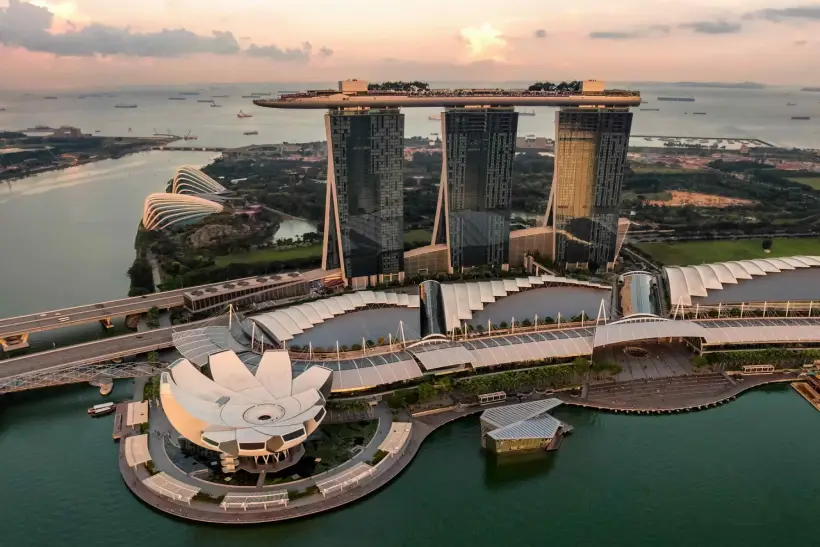
Singapore returned to the top of the IMD global competitiveness ranking, displacing Switzerland after just one year in first place. The shift shows how, in a world of geopolitical fragmentation, expensive capital and weaker investment flows, the advantage is moving toward economies with agile institutions, resilient businesses and the ability to adapt quickly to shocks.
Singapore returns to the top of competitiveness ranking
Singapore ranked first in the IMD World Competitiveness Ranking 2026, rising from second place a year earlier. Hong Kong moved up to second, while Switzerland fell to third after regaining the top position in 2025.
Bloomberg reported that the change was a setback for Switzerland’s reputation as one of the world’s most stable and predictable economies. For investors, the ranking matters not as a political symbol but as an indicator of a country’s ability to attract capital, retain companies, provide stable rules and sustain business productivity.
Competitiveness in this context is not just about the size of an economy or gross domestic product growth. Gross domestic product is the total value of goods and services produced in a country over a given period. The ranking also measures governance, business conditions, infrastructure, education, financial systems, labor markets and confidence in institutions.
Why Switzerland lost first place
The main reason for Switzerland’s decline was a sharp deterioration in economic performance. According to the International Institute for Management Development, that component fell 24 places to 37th. For a country traditionally viewed as a safe haven for capital, the drop sent a clear signal about rising vulnerability.
The result was driven by weaker direct investment flows. Foreign direct investment means capital placed by companies or investors into overseas businesses, assets or production with long-term control or participation. When such flows weaken, an economy receives less capital for business expansion, technology projects and job creation.
High operating costs added to the pressure. Switzerland’s profile in the ranking pointed to an elevated cost-of-living index, expensive energy and weaker employment dynamics. Employment growth slowed, while long-term employment growth turned negative. For competitiveness, this matters because an expensive economy can remain wealthy while gradually losing appeal for new investment.
Expensive franc becomes a capital problem
The strong Swiss franc has long been a source of advantage, reflecting investor confidence in Switzerland’s financial system, low inflation and political stability. In the current environment, however, the expensive currency has become part of the problem.
A strong currency makes Swiss goods and services more costly for foreign buyers. It also raises the price of domestic assets for international investors. For exporters, that reduces price competitiveness. For companies choosing where to allocate capital, it raises the entry cost.
Switzerland still has strong positions in government efficiency and infrastructure, but the ranking shows that even advanced institutions do not fully shield a country from a weaker investment environment. That is especially visible at a time when capital is more mobile and companies are comparing tax conditions, labor costs, market access and supply-chain resilience more aggressively.
Singapore wins through business efficiency
Singapore’s return to first place was driven mainly by a sharp improvement in business efficiency. Business efficiency refers to companies’ ability to operate productively, secure financing, manage workers, innovate and remain profitable in changing conditions.
Singapore rose seven places in this category and ranked first globally. The gains covered productivity, labor markets, finance, management practices and executive assessments. For a small city-state, this is crucial: its competitive model depends not on the size of its domestic market but on being a highly efficient platform for international business.
Singapore also remains a major financial and logistics hub in Asia. Its advantage is built on predictable regulation, advanced infrastructure, openness to capital and fast administrative decision-making. In a period of global uncertainty, those qualities matter more than low costs alone.
Hong Kong strengthens its Asian finance role
Hong Kong rose to second place, continuing three years of improvement. Its main strength is government efficiency, including tax policy, legal infrastructure and financial systems. For international companies, this means access to capital, clear rules and a bridge to mainland China.
Hong Kong’s rise also reflects growing competition between Asian and European financial centers. For Switzerland, that is a sensitive signal because the country has long been seen as the leading cross-border private wealth hub. Asian platforms are now competing more aggressively for banks, family offices, investment funds and technology companies.
Hong Kong, like Singapore, faces high costs. The ranking highlighted expensive office rents and a high cost of living. So far, however, these weaknesses have not prevented the city from improving its overall position because its strengths in taxation, finance and institutional performance outweighed cost pressures.
Asian economies consolidate at the top
The top five ranking points to a broader shift in global competitiveness. After Singapore, Hong Kong and Switzerland, Taiwan took fourth place, rising two positions. The United Arab Emirates held fifth.
This composition shows that competitiveness is increasingly less dependent on the historical status of advanced economies. Institutional speed, regulatory quality, access to capital, infrastructure, business flexibility and the ability to adapt to external shocks now matter more.
Taiwan improved its position on the back of gross domestic product and export growth. The United Arab Emirates stayed in the top five amid strong employment and long-term infrastructure investment. These examples show that small and mid-sized economies can compete with traditional European leaders if they reshape their business environments faster.
Europe loses some of its edge
Switzerland remains in the top three, but its decline came alongside broader pressure on European economies. Denmark and Sweden also slipped in the upper part of the ranking. They are being weighed down by high fiscal burdens, rising costs and softer labor markets.
Fiscal burden means the combined pressure of taxes, social contributions and public-sector obligations on an economy. When it becomes too high, companies find it harder to expand, hire workers and compete with jurisdictions where costs are lower.
European economies retain advantages in education, social stability, infrastructure and institutional quality. But with expensive energy, ageing populations and weaker investment momentum, those advantages are no longer enough to guarantee automatic leadership.
US returns to top ten with caveats
The United States returned to the top ten after ranking 13th a year earlier. The main driver was a rebound in executive sentiment. Business confidence is not only a view of current conditions; it is the willingness of companies to invest, hire and launch new projects.
Stronger sentiment, however, does not always mean stronger fundamentals. The US still faces questions over fiscal sustainability, trade policy and regulatory predictability. Its return to the top ten is therefore a signal of the US market’s strength, but not proof that structural risks have disappeared.
For investors, this means the ranking increasingly captures both data and business expectations. When executives believe rules are clear and demand is resilient, the economy receives an additional boost. When trust weakens, even strong indicators can quickly lose significance.
Institutions become the main competitive asset
The 2026 ranking shows that the main asset of competitiveness is no longer low taxes alone or market size, but institutional reliability. Institutions include rules, laws, courts, regulators and government practices that determine how predictably an economy functions.
Amid rising trade barriers, sanctions, technology rivalry, the Ukraine-Russia conflict, tensions in the Middle East and fragmented supply chains, businesses need jurisdictions where contracts are enforced, courts are independent, administrative decisions are predictable and policy does not shift abruptly after each external shock.
That is why Singapore, Hong Kong and Switzerland remain at the top despite very different political and economic models. What they share is the ability to maintain business trust. The difference in 2026 is that Singapore and Hong Kong showed stronger momentum, while Switzerland faced a weaker investment and cost profile.
What the shift means for investors
For international investors, the change at the top does not mean an immediate capital exodus from Switzerland. The country remains one of the world’s most stable financial centers, leads in government efficiency and infrastructure, and retains strong positions in pharmaceuticals, technology, wealth management and precision manufacturing.
But losing first place shows that reputation no longer guarantees leadership. If business costs rise faster than productivity and investment flows weaken, even the most stable economies can fall behind jurisdictions that adapt more quickly.
For Singapore, first place strengthens the case for further inflows of capital, headquarters and financial firms. Yet its own weak spots — high rents, high living costs and social inequality — may become constraints if costs begin to undermine its attractiveness for companies and skilled workers.
as reported by International Investment experts, the change in the competitiveness ranking is a warning for wealthy economies: high trust and historical reputation no longer protect countries from losing ground if capital sees weaker returns and rising costs. Singapore won not because it became a low-cost jurisdiction, but because it preserved speed, predictability and business flexibility. Switzerland remains strong, but its decline shows that in the new global economy competitiveness must be proven every year, not inherited from the previous decade.
FAQ on the IMD competitiveness ranking
Why did Singapore rank first in competitiveness?
Singapore ranked first because of stronger business efficiency, higher productivity, a resilient financial system, a strong labor market and the ability of companies to adapt quickly to external shocks.
Why did Switzerland lose the top position?
Switzerland fell to third because of weaker economic performance, lower direct investment flows, high living costs, an expensive currency and weaker employment dynamics.
What does the IMD World Competitiveness Ranking measure?
The ranking evaluates economies across economic performance, government efficiency, business efficiency and infrastructure. It uses statistical indicators and survey responses from business executives.
Why did Hong Kong rise to second place?
Hong Kong improved because of strong government efficiency, tax policy, financial infrastructure and institutional performance, despite high living and office-rent costs.
What does the ranking mean for investors?
The ranking helps investors assess how well a country can attract capital, support business, provide predictable rules and remain resilient in global instability.