







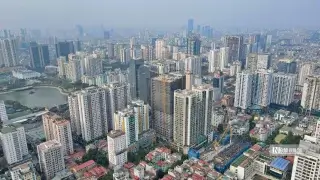
 Vietnam Mortgage Surge Pushes Homes Out of Reach
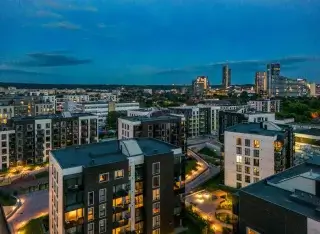 Lithuanian Apartment Prices Accelerate Across Major Cities
 London Flats Lose Value Ahead of Leasehold Reform
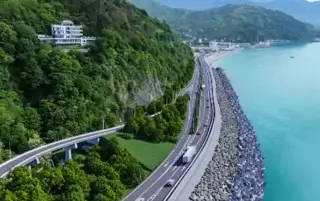 Construction of the Batumi–Sarpi Highway Begins in Georgia
 Baltic Property Investment Accelerates in 2026
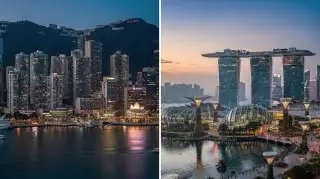 Hong Kong and Singapore Renew Their Expat Rivalry
Spain Reaches Tourism’s Breaking Point

Spain is heading toward another historic high in visitor numbers, but record tourism revenue is increasingly colliding with a housing crisis, resident protests and tighter regulation of short-term rentals in major cities and resort regions.
Tourism remains a core engine of Spain’s economy
Spain is entering the 2026 summer season with one of Europe’s strongest tourism cycles. Hotel News Resource reported that the country could receive about 100 million foreign visitors in 2026, while tourism contributes roughly 13% of gross domestic product. For Spain, this is not only a seasonal industry but a major source of jobs, foreign spending, tax revenue and regional growth.
Since the pandemic, Spain’s tourism sector has recovered faster than many parts of the economy. The country has maintained its position as one of the world’s largest travel markets through a mix of beach holidays, city tourism, gastronomy, business travel, air access and mature hotel infrastructure. Catalonia, the Balearic Islands, the Canary Islands, Andalusia, Valencia and Madrid remain central to that model.
But another record is no longer viewed only as an economic win. More visitors mean more pressure on housing, transport, historic districts, public services and residents’ daily lives. In Spanish politics, tourism is increasingly discussed not as an unconditional benefit but as a sector that must be limited, regulated and made more socially acceptable.
Spain has already broken its tourism record
Spain’s National Statistics Institute said the country received 96.8 million foreign tourists in 2025, a new record and 3.2% more than in 2024. The United Kingdom, France and Germany remained the main source markets.
The 2026 trend also points to continued growth. In April, Spain received 9.1 million international tourists, 5.2% more than in the same month of 2025. In the first four months of 2026, arrivals approached 26.6 million and increased by 3.4%.
These numbers show that demand is no longer concentrated only in the summer peak. Visitors are spreading more across spring, autumn and winter. For businesses, that helps reduce seasonality. For residents in popular areas, it means tourism pressure is becoming almost permanent.
Revenue is rising faster than arrivals
Tourism matters to Spain not only because of visitor numbers but also because of spending. CaixaBank Research estimated international arrivals in 2025 at about 97 million and tourist spending at a record €135 billion. It expects tourism gross domestic product to grow by 2.5% to 2.7% in the coming years, with the sector reaching 13% of the economy in 2026 and 2027.
For a country where some regions depend heavily on services, that is a major support. Tourism drives demand for hotels, restaurants, transport, retail, culture, property, maintenance, cleaning, digital services and finance. It also supports employment in regions with a weaker industrial base than northern Europe’s large economies.
Yet higher revenue does not remove the social conflict. More expensive hotels, restaurants and short-term rentals increase business income, but they also raise living costs in areas where local wages do not keep pace with tourist prices. The debate in Spain is therefore no longer whether tourism is needed, but who benefits and who pays the cost.
Housing has become the central conflict
The main complaint from residents in tourism-heavy cities is housing. Short-term rental means letting homes to visitors for a few days or weeks. It reduces the supply of long-term rental housing for local residents. In areas with strong tourist demand, owners can often earn more from short stays than from regular annual leases.
As a result, residents in Barcelona, Madrid, Malaga, Palma, Valencia and other destinations face higher rents, displacement from central areas and changes in the urban fabric. Everyday shops give way to souvenir stores, tourist cafés and services designed for short stays.
Associated Press reported that a Spanish court left in place an order to block almost 66,000 Airbnb listings that the government said violated local rules. Authorities said some listings lacked proper registration information or failed to meet requirements for tourist accommodation.
For the state, this is part of a broader policy line: tourism must not undermine residents’ right to housing and urban well-being. For short-term rental platforms and property owners, it means rising legal risk, higher compliance costs and greater uncertainty over the business model.
Barcelona has become the symbol of the clash
Barcelona remains Europe’s clearest example of tension between the tourism economy and residents’ interests. The Guardian wrote that the Barcelona area attracted 26 million visitors in 2025 and that the city appointed its first commissioner for sustainable tourism. His job is not simply to promote the city but to curb the effects of overtourism and return part of urban life to residents.
Barcelona plans to end licences for about 10,000 legal tourist apartments in 2028. City officials hope some of that housing will return to the long-term rental market. This does not guarantee an immediate fall in rents, but it marks a political shift: the city no longer wants to measure success only by visitor numbers.
The problem goes beyond housing. Residents complain about crowded streets, noise, queues, higher prices, the loss of local shops and the feeling that the historic centre is becoming a stage set for visitors. Measures against overtourism therefore target not only rentals but also cruise traffic, tour buses, tourist taxes and group behaviour.
Short-term rentals face tighter control
Short-term rentals have become one of the most contested parts of Spain’s tourism market. For tourists, they offer flexibility, access to residential neighbourhoods and sometimes lower prices than hotels. For property owners, they can generate higher income than long-term rentals. For cities, they increase accommodation capacity without new hotel construction.
But the effect on housing can be painful. When thousands of apartments shift from long-term rental to tourist use, supply for local residents shrinks. This is especially visible in areas with limited construction, historic housing stock and strong demand from foreign buyers.
Spanish authorities are gradually moving this market from a grey area into licensing, registration and municipal limits. That changes the balance between hotels and rental platforms. Hotels operate under stricter rules, pay taxes and comply with safety and labour standards. Tourist apartments are increasingly facing similar scrutiny.
Spain’s economy benefits, but risks are rising
The European Commission expects Spain’s economy to remain robust in 2026, although growth is forecast to slow gradually. Gross domestic product is projected to expand by 2.4% in 2026 after 2.8% in 2025. That remains one of the stronger performances among the eurozone’s major economies.
Tourism helps Spain maintain that momentum. It supports employment, domestic demand, regional businesses and tax receipts. But reliance on tourism also makes the economy sensitive to external shocks: energy prices, aviation disruption, geopolitics, climate risks, drought, protests and changing consumer behaviour.
If tourism grows faster than urban infrastructure and housing supply, economic success turns into social strain. This is already visible in Barcelona, the Balearic Islands, the Canary Islands and other regions where residents are demanding limits on tourist pressure and the return of housing to the long-term market.
Spain is changing its tourism model
Officials and industry leaders increasingly speak about shifting from quantity to quality. This does not mean rejecting tourists. It means trying to increase average spending, broaden destinations, reduce dependence on the summer peak and attract visitors who place less pressure on housing and infrastructure.
That approach includes business, cultural, gastronomic, sports and domestic tourism, as well as promotion of less crowded regions. For Spain, this is a strategic shift: the country cannot keep increasing visitor numbers in the same cities and resorts indefinitely without political consequences.
But changing the model takes time. Airlines, hotels, booking platforms, investors and regional authorities still benefit from high volumes. Residents, by contrast, want restrictions now. This conflict will shape Spanish tourism policy for years.
Hotels may gain from pressure on rentals
Tighter control of tourist apartments could strengthen the hotel sector. If part of the short-term rental supply disappears or becomes more expensive because of licensing, demand may move toward hotels, aparthotels and regulated serviced apartments.
For hotel investors, that is a positive signal, especially in cities with strong international demand and limited quality room supply. But the benefit will not be automatic. Municipalities may also restrict new hotels in central areas, raise tourist taxes and demand a larger business contribution to urban infrastructure.
Hotels also face rising costs for labour, energy, food, debt service and environmental compliance. Record visitor numbers do not always translate into proportional profit growth. Margins will depend on pricing discipline, off-season occupancy and the ability to attract higher-spending guests.
Record tourism deepens investment contradictions
For real estate, tourism remains a powerful driver. Spanish resort and urban assets continue to attract international buyers, hotel operators and funds seeking resilient demand. But the political cost of these investments is rising.
Authorities increasingly link housing, migration, tourism and social stability in a single policy agenda. Investors will have to assess not only the yield on an asset but also regulatory risk: licence restrictions, tax changes, new registration rules or bans on specific rental models.
Spain is not closing itself to tourism or capital. But it is gradually changing the rules toward a more regulated, transparent and socially acceptable market. In the short term, that may reduce investor flexibility. In the long term, it could help preserve the appeal of destinations that otherwise risk resident fatigue and reputational damage.
As experts at International Investment report, Spain’s tourism record should not be viewed only as a success story: 100 million visitors may strengthen the economy, but with a housing shortage and heavy concentration in a few regions, the model is politically vulnerable. The critical risk is that industry revenue is rising faster than housing supply and infrastructure capacity. If authorities cannot combine tourism growth with affordable rents and liveable cities, Spain will face not a collapse in demand but growing domestic resistance to the tourism economy.