







 Egypt Prepares New Law for Property Developers
 Young Japanese Buyers Turn to 50-Year Mortgages
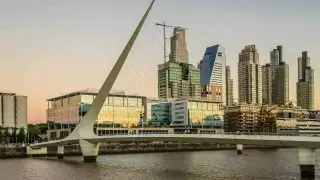 Argentina Narrows Tourism Gap as Arrivals Rise
 Seattle Luxury Housing Loses Its Former Momentum
 The World’s Strongest Passports for Travel, Living and Investment
 Russian Developers’ Debt Nearly Doubled in a Year

Spain is turning immigration from a politically sensitive issue into one of the central drivers of its economic growth and cultural influence. Bad Bunny’s large-scale concerts in Madrid became more than a music-market event: they offered a public display of how Latin American migration is reshaping demographics, consumption, the labor market and the country’s image in Europe.
Madrid becomes the showcase of a new Spain
Bad Bunny’s ten concerts at Madrid’s Riyadh Air Metropolitano stadium from late May to mid-June 2026 became one of Spain’s biggest music events of the year. Spanish media estimated that each show drew about 50,000 people, bringing the total Madrid audience close to 500,000.
For the entertainment industry, it was a major commercial success. For Spain’s politics and economy, it was a broader signal. Madrid showed that Latin American culture is no longer a niche confined to specific neighborhoods or migrant communities. It has become part of mass demand, the urban economy and the national brand.
Bloomberg linked the cultural moment to a larger shift: unlike many European countries, Spain is not building its policy primarily around sharper migration restrictions, but increasingly presents immigration as a resource for the economy, demographics and the labor market.
Foreign workers become central to Spain’s labor market
Spain entered 2026 with a record population. The National Statistics Institute reported that the country had 49.57 million residents on January 1, 2026, and that the number of residents born outside Spain exceeded 10 million for the first time. The main nationalities among recent immigrants in the final quarter of 2025 were Colombian, Venezuelan and Moroccan.
That demographic shift is directly linked to the labor market. Spain’s Ministry of Inclusion, Social Security and Migration said the country ended 2025 with more than 3 million foreign workers registered in the social security system. Social security is the public system that records employment and contributions used to finance pensions, benefits and other welfare payments.
Foreign workers already represent a significant share of employment in tourism, construction, elderly care, agriculture, logistics, retail and services. These sectors are especially dependent on labor supply as Spain faces population aging, low birth rates and shortages in low- and medium-paid occupations.
Latin American migration reshapes consumption
Latin Americans occupy a special place in Spain’s new migration model. A shared language, historical ties, relatively clear adaptation pathways and strong family networks make Spain one of the main destinations for migrants from Colombia, Venezuela, Peru, Argentina, Ecuador and other countries in the region.
Madrid has become the main magnet in this system. Large communities have created demand for Latin American restaurants, clubs, media, banking services, remittances, rental housing and cultural events. Bad Bunny’s concerts showed that migration is not only about labor supply, but also about consumer and cultural capital.
El País estimated the economic impact of Bad Bunny’s Madrid concert series at between €185 million and €220 million, including hotels, transport, restaurants, retail and related events. According to those estimates, about 40% of spectators came from outside Madrid, increasing pressure on hotels and city infrastructure.
Spain moves against Europe’s restrictive trend
In 2026, Spain’s migration policy looks noticeably softer than the course taken by many European countries. While several EU governments are tightening rules on entry, asylum and residence permits, Madrid emphasizes legalization, integration and migrants’ participation in the economy.
The Guardian reported that Spain’s government approved a mechanism to regularize about 500,000 undocumented migrants and asylum seekers. In this context, regularization means granting temporary residence and work rights to people already in the country who meet specific requirements.
Associated Press noted that the program is designed to give participants one year of legal residence and work authorization, provided they have no criminal record and can prove residence in Spain before the required date. For the government, the measure is a way to move people out of informal employment, increase tax and social contributions and reduce the risk of worker exploitation.
Economic growth strengthens the government’s case
Spain’s economy remains one of the more resilient among the euro area’s large economies. The European Commission forecasts real gross domestic product growth of 2.4% in 2026. Gross domestic product is the value of all goods and services produced in a country in a year and is one of the main measures of economic size.
Growth is supported by domestic demand, tourism, investment, employment and population inflows. Unlike countries where immigration is presented mainly as a burden on the budget, Spain’s government stresses its role in sustaining the pension system, consumption and labor supply.
The economic effect, however, is uneven. Migrant inflows help businesses fill vacancies, but they also increase pressure on rental housing, schools, healthcare and municipal services in large cities. For Madrid, Barcelona, Valencia and Málaga, this is no longer an abstract political issue but a daily challenge for housing and infrastructure.
Culture becomes part of migration policy
Bad Bunny’s concerts showed that migration changes not only output and employment indicators, but also the symbolic economy. Music, language, style, food and urban habits are becoming part of how Spain sells itself to tourists, investors and new residents.
Politically, this matters. In countries where immigration is discussed mainly through security and border control, the cultural visibility of migrants often becomes a source of conflict. Spain’s authorities are trying to integrate that visibility into the image of an open, growing and multilingual country.
The contradictions remain. Southern regions face tensions over agricultural employment and migrant working conditions. The Canary Islands remain a pressure point because of maritime routes from Africa. Far-right parties use migration growth as an argument against Prime Minister Pedro Sánchez’s government.
Why Spain’s model remains risky
Spain is betting on immigration at a time when many European governments are moving in the opposite direction. This gives the country an advantage in labor supply, demographics and consumer demand, but it also creates political risks.
The main economic challenge is job quality. If migrants remain concentrated in low-paid sectors, the country gains more workers but not necessarily higher productivity. Labor productivity measures how much output each worker produces over a given period. For Spain’s long-term growth, it is not enough to attract people; the country must also integrate them into education, vocational training and more technology-intensive industries.
The second risk is housing. The faster Madrid, Barcelona and coastal cities grow, the stronger the pressure on rents and home prices. If migration-led growth is not accompanied by affordable housing construction, transport and schools, public support for an open policy may weaken.
As reported by International Investment experts, Spain is demonstrating a rare approach in Europe: immigration is presented not as an exception or a crisis, but as part of the economic model. Yet the success of that model will depend not on the number of permits issued or sold-out concerts, but on the state’s ability to convert demographic growth into productivity, a broader tax base and more affordable housing.