







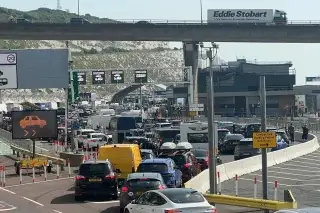
 Border Delays Are Changing Some British Holiday Plans
 US Housing Becomes a Buyer’s Market Without Buyers
 Reykjavik Airbnb Supply Falls Nearly 20% as Revenue Slips
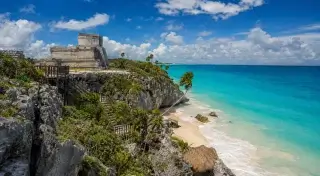 Mexico Sets New Tourism Record in First Half
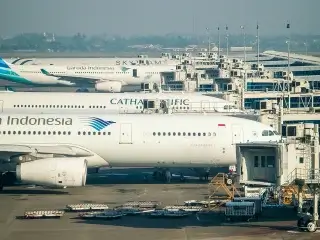 Indonesia Plans to Double Visa on Arrival Fee
 Australia’s Housing Downturn Tests Its Biggest Banks

As many as 60,000 people may have crossed from Morocco into Spain’s autonomous city of Ceuta within 24 hours, according to the city’s president, Juan Jesús Vivas. Spain’s Interior Ministry issued a lower preliminary estimate of about 50,000. Police sources reported 43 bodies recovered by 15:21 Central European Summer Time on July 31, 2026, while about 25,000 arrivals had voluntarily returned to Morocco. No final count of crossings, deaths or minors was available.
Arrival Estimates Differ by 10,000
The mass movement began early on July 30 and continued on July 31. People entered through the land border, walked around parts of the coastal breakwater and swam to Ceuta’s beaches.
Vivas estimated that about 60,000 people had entered. Ceuta’s regular population is around 83,600, making his estimate equivalent to more than 70% of the city’s population.
Spain’s Interior Ministry put the number closer to 50,000. About 25,000 people had voluntarily returned to Morocco by 13:00 local time on July 31. Departures were estimated at as many as 150 people a minute during parts of the day, although officials did not disclose the counting method.
The report by BBC News, last updated at 13:04 Coordinated Universal Time, carried both estimates. The difference reflects the breakdown of routine border registration, simultaneous movement in both directions and the continuing identification process.
Neither figure should therefore be treated as a final registered total. The most accurate description is a preliminary range of 50,000 to 60,000 crossings.
Police Sources Put the Death Toll at 43
The reported death toll increased repeatedly during July 31, rising from 18 to 27 and then 34.
A later update from El País, citing police sources, said 43 bodies had been recovered by 15:21 Central European Summer Time. Spain’s central government had not published a consolidated final tally at that point.
Most victims were believed to have drowned while trying to swim around the El Tarajal breakwater. Some people died in a crush near the border structures. Eight specialist Guardia Civil divers were searching the surrounding waters, leaving open the possibility of further recoveries.
The Associated Press reported that Moroccan security forces used water cannons and tear gas and fired warning shots as they tried to stop additional groups. Morocco’s ambassador to Spain, Karima Benyaich, said the crisis had unfolded against Rabat’s wishes but did not explain why the initial movement was not contained.
Spain Sends Military Support to Ceuta
Spanish military personnel began assisting the police and Guardia Civil with border security and public-order operations. Defence Minister Margarita Robles said as many as 3,000 personnel were available. The figure represented potential capacity rather than a confirmed number simultaneously stationed at the border.
Prime Minister Pedro Sánchez travelled to Ceuta with Interior Minister Fernando Grande-Marlaska. Sánchez described the mass crossing as a violation of Spain’s territorial integrity and said return procedures would be accelerated.
He also announced plans to install a line of maritime buoys near the El Tarajal breakwater. The government wants to create a visible and physical barrier, but the proposal has not been tested in court. It cannot yet be assumed that the buoys would legally permit simplified border rejection in every maritime case.
Attempts were also made to enter Melilla, Spain’s second autonomous city in North Africa. Early reports contained higher estimates, but the Spanish government delegate later confirmed that 130 people had entered, including a substantial number of minors.
Supreme Court Did Not Ban Migrant Returns
Spanish officials linked the surge to messages circulating about a recent Supreme Court judgment. Claims that the ruling completely prohibited returns to Morocco are incorrect.
Judgment 814/2026, issued on June 29, concerned people intercepted at sea while attempting to swim to Ceuta or Melilla. The underlying case involved an Algerian national intercepted on November 14, 2024, and handed to Morocco without a separate administrative decision.
As EFE explained, Spain’s special border-rejection procedure applies to people attempting to cross physical border-control structures. Interception at sea does not automatically fall within that provision.
Authorities must instead follow the return procedure under Article 58.3 of Spain’s immigration law. That requires an administrative decision and the observance of legal safeguards. Any application for international protection must also be processed under the relevant rules.
The court neither legalized unauthorized entry nor created a blanket prohibition on returns. It ruled that a person intercepted at sea cannot be immediately handed to Morocco without the procedure required by law.
The Surge Dwarfs Earlier Migration Figures
Pressure on Ceuta had already been increasing before July 30. Spain’s Department of National Security recorded 14,479 irregular arrivals nationwide between January 1 and July 15, down 25% from the comparable period of 2025.
Ceuta recorded 2,826 land entries, a category that also includes people swimming around the border structures. The figure was 150% higher than a year earlier. Melilla recorded 165 land arrivals and another 16 by sea.
Even the lower estimate of 50,000 crossings is about 18 times the number recorded in Ceuta during the previous six and a half months of 2026.
During the May 2021 crisis, around 9,000 people entered Ceuta. The European Parliament linked that episode to Morocco’s temporary easing of border controls and a diplomatic dispute over Spain’s decision to provide medical treatment to Polisario Front leader Brahim Ghali.
The latest movement was at least five times larger. No evidence has yet been presented proving that Moroccan authorities deliberately organized the new crossing.
The Immediate Trigger Remains Unproven
Sánchez blamed criminal smuggling networks for circulating a false interpretation of the Supreme Court judgment and creating the impression that maritime arrivals could no longer be returned.
Some Moroccan rights activists questioned whether tens of thousands of people would have known about the legal decision. No verified evidence has established who circulated the calls to cross or how centrally organized the movement was.
Economic pressure was also a factor. One migrant said he had left because of the lack of jobs in Morocco. Most arrivals were young Moroccan men, but the crowds also included women, families, children and nationals of other countries.
Ceuta’s Reception System Was Already Full
Ceuta’s Temporary Stay Centre for Immigrants has a capacity of 512. It was already full on July 26, with about 150 people waiting outside, according to material distributed through Reuters Connect.
After the mass entry, thousands of people were left on beaches, pavements and in public parks. The preliminary estimate of minors reached 7,000, but authorities had not published a separate confirmed count of children travelling without parents.
Spanish law prohibits placing minors in adult immigration detention centres. Unaccompanied children must be transferred to child-protection services, and prosecutors must be notified.
The consolidated Spanish immigration law requires an individual process before a minor can be returned. Authorities must consider the child’s best interests, the possibility of safe family reunification and reception conditions in the country of origin. Promises to return all arrivals therefore cannot automatically apply to every child.
Ceuta Is Covered by Schengen Rules
Ceuta and Melilla are Spanish autonomous cities and part of the European Union. Their borders with Morocco are external borders of the Schengen area.
Claims that Ceuta is entirely outside Schengen are inaccurate. The European Commission has stated that the Schengen acquis applies throughout Spain, including Ceuta and Melilla.
A special arrangement nevertheless requires identity and document checks for travel from the two cities to mainland Spain or other Schengen countries. Unauthorized entry into Ceuta therefore does not provide an automatic right to continue to mainland Europe.
People may leave Ceuta after completing the relevant procedures, obtaining authorization or being transferred under an official programme. Describing every arrival as permanently trapped in the city would also be inaccurate.
European Commission President Ursula von der Leyen called for dangerous crossings to stop, smuggling networks to be dismantled and lawful returns to be accelerated. Several European governments discussed tighter controls on travel connected with Spain, but no formal measure restricting Spain’s participation in Schengen had been adopted.
As International Investment experts report, the most significant weakness is the absence of a single verified count and Ceuta’s limited capacity to register tens of thousands of people. The gap between the estimates of 50,000 and 60,000, the changing death toll and the unknown number of unaccompanied children mean the initial data cannot be treated as final. The Supreme Court judgment may have contributed to rumours, but there is no evidence that it was the sole cause of the crisis. Maritime buoys will also be insufficient without durable border control, reception procedures and sustained cooperation between Spain and Morocco.
FAQ on the Ceuta Migration Crisis
How many people crossed into Ceuta?
Ceuta’s authorities estimated about 60,000, while Spain’s Interior Ministry estimated around 50,000. Both figures remain preliminary.
How many people died?
Police sources reported 43 bodies recovered by 15:21 Central European Summer Time on July 31. A final government tally was not available at that time.
Did the Supreme Court prohibit migrant returns?
No. The court required authorities to follow the statutory return procedure for people intercepted at sea instead of immediately handing them to Morocco without an administrative decision.
Why does Spain want to install maritime buoys?
The government wants to mark a physical maritime barrier near the El Tarajal breakwater. A court has not determined whether those buoys would be sufficient to permit simplified border rejection.
Can the arrivals immediately travel to mainland Spain?
No. Special identity and document checks apply to journeys from Ceuta to mainland Spain. Unauthorized entry into the city does not grant a right of onward travel.
Can unaccompanied minors be returned to Morocco?
A return is possible only after an individual assessment, identification and review of the child’s safety and family circumstances. Children cannot be automatically removed with adults.