












Swiss Inflation Slows to 0.4%
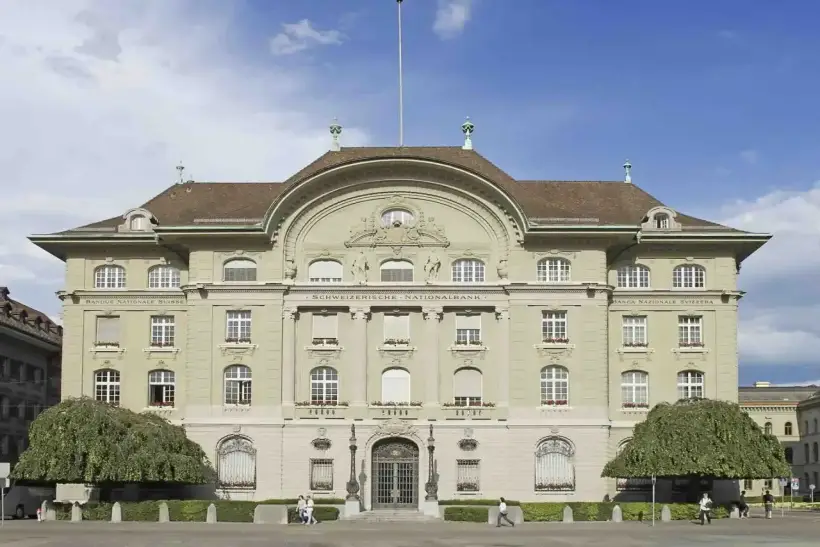
Swiss annual inflation eased to 0.4% in July 2026 from 0.5% in June, reaching its lowest level since March. Consumer prices declined by 0.1% during the month. The result matched economists’ expectations and strengthened the case for the Swiss National Bank to keep its policy rate at zero at its September 24 assessment.
Inflation falls to a four-month low
The Consumer Price Index declined by 0.1% from June to 101.1 points, with December 2025 equal to 100. Prices were 0.4% higher than in July 2025, down from annual inflation of 0.5% in June. The reading matched the median estimate in Bloomberg’s economist survey.
Core inflation remained unchanged at 0.3%, indicating that underlying price pressures remain weak.
The slowdown occurred even though the franc weakened and global oil prices rose during July, two developments that would normally increase imported inflation.
Airfares and motor fuel became cheaper
The monthly decline reflected lower prices for air transport, diesel and petrol. Clothing and footwear also became cheaper during seasonal sales.
Heating oil, car rental, car sharing and other parahotel accommodation became more expensive. The earlier version of this article incorrectly placed car rental among the categories that declined. The official statistical release records an increase.
The contrasting fuel movements show that higher international oil prices have not yet produced a uniform increase across Switzerland’s consumer-energy categories.
Swiss inflation remains well below the euro area
Under the European harmonised methodology, Swiss inflation was 0.7% in July, compared with 2.9% in the euro area. The gap illustrates the relatively limited effect that the latest energy-price shock has had on Swiss consumers.
A strong franc generally lowers the local-currency cost of imports. A weaker exchange rate can produce the opposite effect, particularly when commodity prices are elevated.
July’s data nevertheless show little evidence of a broad pass-through into consumer prices. Headline inflation slowed and the core rate was unchanged.
The result contrasts with the SNB forecast
The SNB’s June forecast anticipated a slight increase in inflation during the coming quarters, followed by a moderate decline in the first half of 2027. Higher raw-material and energy prices were the main reason for the projected near-term acceleration.
Bloomberg reported that the quarterly inflation rate was expected to peak at about 0.8% early next year. That would remain comfortably within the SNB’s definition of price stability, which covers annual inflation between 0% and 2%.
The July reading does not invalidate that forecast. Future inflation will depend on oil prices, the franc, energy tariffs and the extent to which companies pass higher costs to customers.
It does show that the expected acceleration has so far been weaker than anticipated.
The SNB maintains a zero policy rate
The Swiss National Bank left its policy rate unchanged at 0% on June 18. Officials said medium-term inflationary pressure was virtually unchanged and that the current policy setting remained consistent with price stability and support for economic activity.
The SNB forecasts average inflation of 0.6% in 2026, 0.6% in 2027 and 0.7% in 2028. The projection is conditional on the policy rate remaining at 0% throughout the forecast horizon. That is a technical assumption rather than a commitment to keep rates unchanged.
The next monetary policy assessment is scheduled for September 24. The July data strengthen the case for another hold, but the decision will also depend on August inflation, the exchange rate, energy prices and the international outlook.
Zero rates may last until the end of 2027
Bloomberg reported, citing people familiar with discussions inside the central bank, that borrowing costs may remain at zero through the end of 2027 in the absence of new shocks and rise thereafter.
That scenario is not formal SNB guidance. The central bank has not publicly provided a date for its next rate increase and says it will adjust policy when necessary to preserve price stability.
Low inflation reduces the need for higher rates. A return to negative rates is also not the central scenario while inflation remains positive and the SNB can influence monetary conditions through foreign-exchange operations.
Currency intervention remains an alternative tool
The SNB has expressed an increased willingness to intervene if the franc appreciates rapidly and excessively. Officials argue that such a move could threaten price stability by pushing imported inflation lower.
The central bank purchased CHF3.94 billion of foreign currency in the first quarter of 2026. Positive values in the official series represent purchases of foreign currency and sales of francs.
Foreign-exchange operations allow the SNB to limit franc appreciation without immediately returning to negative interest rates. Second-quarter intervention figures had not yet been published when the July inflation data were released.
The immediate deflation risk remains limited
Inflation of 0.4% is close to the lower end of the SNB’s price-stability range, but the figures do not indicate broad or persistent price declines.
The monthly fall was concentrated in air transport, motor fuel, clothing and footwear. Heating oil, car rental, car sharing and some accommodation categories moved higher.
At its June assessment, the SNB concluded that inflation was not expected either to rise rapidly above 2% or to fall into negative territory. It therefore saw no immediate need to change policy.
Deflation risks could increase if the franc appreciates sharply, global demand weakens or commodity prices fall. A sustained energy shock would create the opposite risk.
Economic growth remains moderate
The SNB expects Swiss GDP to expand by around 1% in 2026 and 1.5% in 2027. Economic activity remained resilient in the first quarter, although weaker global momentum may restrain growth during the remainder of the year.
Low inflation supports household purchasing power when incomes rise. It also limits the ability of businesses to pass higher costs through to customers.
Exporters benefit from cheaper imported inputs but remain vulnerable to an excessively strong franc, which makes Swiss products more expensive for foreign buyers.
As International Investment experts report, inflation of 0.4% makes an unchanged September rate the most likely scenario but does not guarantee it. The SNB has an additional instrument in foreign-exchange intervention and used it during the first quarter. Policymakers must balance the risk of excessive franc appreciation against the possibility of renewed energy inflation. A rate increase could strengthen the currency and weaken price growth further, while a return to negative rates could make monetary conditions unnecessarily loose. Maintaining the current rate would allow the SNB to await clearer evidence before changing course.