







 Fines for Illegal Rentals in Spain Reach €800,000
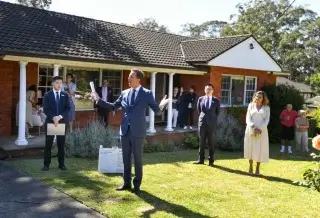 Australia’s Spring Auctions Rise but Remain Well Below 2025
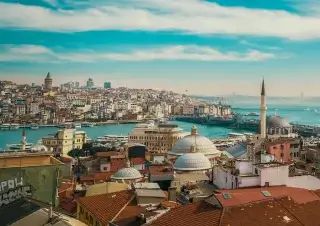 Number of Foreigners Holding Turkish Residence Permits Exceeds 1.27 Million
 Demand from Russian Tourists for Holidays in Georgia Rises by 20–25%
 Montenegro Property Buying Costs in 2026
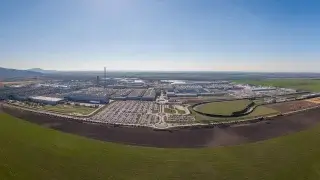 Four in Ten Companies Would Not Choose Slovakia
City Tourism Drove Austria’s Travel Growth

Urban travel helped lift Austria’s tourism industry in 2025
Austria’s tourism sector kept growing in 2025, with city travel emerging as one of the clearest sources of additional momentum. Statistics Austria said the country recorded 157.27 million overnight stays in 2025, up 1.9% from 2024, while arrivals rose 3.1% to 48.17 million. Against that backdrop, urban destinations outperformed the national market. According to figures cited by Austrian tourism reporting, the nine provincial capitals generated 29.1 million overnight stays, up 6% from a year earlier, while arrivals increased by 5% to almost 13.55 million.
Vindobona reported that cities accounted for a meaningful share of overall tourism growth. According to the publication, without the strong performance of urban destinations, Austria’s overnight-stay growth would have been closer to 1% rather than nearly 2% for the year. That makes city tourism more than just one segment of the market. It makes it one of the main drivers of a sector that has already returned to record territory.
Vienna remained the core of Austria’s city tourism
Vienna continues to dominate the urban tourism picture. Vindobona said the capital accounts for about 69% of all overnight stays generated by the nine provincial capitals. That means most of Austria’s urban tourism growth is still tied to Vienna, even if other cities are also benefiting from the broader upswing. Vienna has for several years positioned tourism as part of a wider visitor economy framework, linking travel growth with quality of life, sustainability and the management of urban capacity.
That strategy matters more as international demand keeps strengthening. Statistics Austria said overnight stays in December 2025 alone rose 9.9% from a year earlier, with non-resident guests driving most of the increase. The year-end acceleration suggests that international demand did not fade as 2025 closed, which in turn reinforces the role of Vienna and other major cities as the main entry points of Austrian tourism growth.
Austria is debating resident rates as tourism grows
A second major theme is not about volumes, but about how to make tourism growth more acceptable to local communities. In Austria, debate has intensified around so-called resident rates, meaning special tariffs or discounts for local residents for selected tourism or leisure services. Vindobona said the issue has long been legally sensitive because the European Union’s Regulation (EU) 2018/302 seeks to prevent unjustified geo-blocking and discrimination based on residence or nationality. At EU level, the regulation indeed aims to stop unjustified differences in access conditions for goods and services based on where a customer lives.
That is why the current EU review matters for Austria. The European Commission officially launched an evaluation of the Geo-blocking Regulation in February 2025 to determine whether further measures or legal adjustments are needed. This does not mean resident rates have already been approved across the EU. It does mean the issue has entered a formal European review process. For Austria’s tourism industry, that is being treated as a political signal rather than a final legal outcome.
Austria’s tourism industry is seeking a balance with local acceptance
According to Destinations-Netzwerk Austria, which brings together more than 200 members across the country’s tourism sector, rapid polling showed strong support for legal clarity on resident rates. Vindobona reported that more than 85% of regions viewed the European-level signal positively, while almost three quarters said it would matter for strengthening public acceptance of tourism. More than one third of regions were already using their own bonus or discount schemes for local residents, according to the report. Destinations-Netzwerk Austria itself says it represents more than 200 members across all nine federal states, making the reaction notable at industry level.
For Austria, the dispute is practical rather than theoretical. With tourism volumes at record highs, the question is no longer only how to attract more visitors. It is increasingly about how to preserve resident support in places where tourism has a visible effect on daily urban life. In that sense, Austria is moving in the same direction as several other European destinations that are trying to combine visitor-economy growth with liveability for local communities.
Record results are raising the stakes for tourism policy
Austria’s 2025 data suggest the sector entered 2026 in strong shape. Statistics Austria recorded a new all-time high in overnight stays, and industry reporting noted that Austria crossed the 150 million mark for only the third time in its history. Against that backdrop, the debate over resident rates and access rules for tourism services is part of a broader strategy for managing success rather than a crisis response. In other words, the issue is not how to rescue the sector, but how to distribute the benefits and pressures of a fast-growing market more evenly.
As International Investment experts report, Austria’s case shows that the next phase of European tourism is being defined not only by visitor growth, but by how well that growth is integrated into urban and regional life. The strong 2025 results confirm resilient demand for Austrian cities, especially Vienna, yet that is exactly why legal clarity around resident discounts and access rules is becoming more important for the sector. For investors in hotels, rentals, commercial real estate and city infrastructure, the key issue is no longer just rising visitor numbers, but whether destinations can maintain local acceptance of tourism under record levels of demand.
FAQ
How much did tourism grow in Austria in 2025?
Statistics Austria said Austria recorded 157.27 million overnight stays in 2025, up 1.9% from 2024, while arrivals rose 3.1% to 48.17 million.
How important was city tourism in Austria’s 2025 results?
Urban tourism performed better than the national average. The nine provincial capitals recorded 29.1 million overnight stays, up 6%, while arrivals rose by 5% to nearly 13.55 million.
Why is Vienna central to Austria’s city tourism story?
Vindobona reported that Vienna accounts for about 69% of all overnight stays among the nine provincial capitals, making it the dominant urban tourism hub in Austria.
What are resident rates in Austria?
Resident rates are special tariffs or discounts for local residents for certain tourism or leisure services. They are being discussed as a way to strengthen local acceptance of tourism.
Why are resident rates linked to EU law?
Because the EU’s Geo-blocking Regulation, Regulation (EU) 2018/302, aims to prevent unjustified discrimination based on nationality or residence in access to goods and services.
Has the EU already approved resident rates?
No final approval has been given. But the European Commission has launched an evaluation of the Geo-blocking Regulation, which Austria’s tourism sector sees as an important political signal.