







 Egypt Prepares New Law for Property Developers
 Young Japanese Buyers Turn to 50-Year Mortgages
 Argentina Narrows Tourism Gap as Arrivals Rise
 Seattle Luxury Housing Loses Its Former Momentum
 The World’s Strongest Passports for Travel, Living and Investment
 Russian Developers’ Debt Nearly Doubled in a Year
World Cup Tests Digital Borders
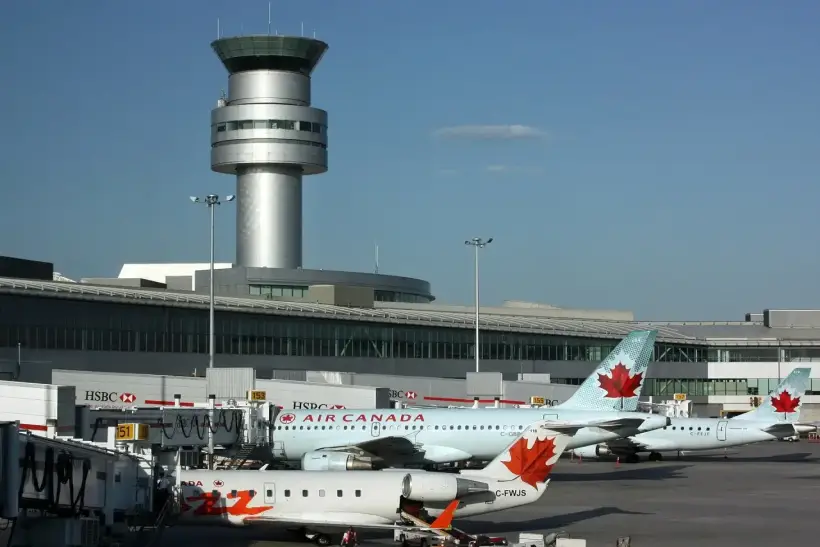
The 2026 FIFA World Cup is becoming not only the largest tournament in FIFA history, but also a stress test for visa systems, airports, hotels and border infrastructure across North America. The United States, Canada and Mexico are hosting the event together, while millions of fans turn digital entry authorizations and fast-track clearance programs into a central part of the tourism economy.
The World Cup becomes a border test
The 2026 FIFA World Cup is being staged across three countries — the United States, Canada and Mexico — and for the first time features 48 national teams. The expansion to 104 matches has sharply increased pressure on air travel, hotels, border agencies, visa centers and urban infrastructure.
For the travel industry, this is not just a sports calendar. The tournament has become a large-scale test of whether North America can manage people movement during a period of extreme peak demand. Fans cross borders between three countries, combine matches with multi-city trips, book hotels in advance and expect fast, clear and predictable entry procedures.
Hotel News Resource, citing research from the World Travel & Tourism Council, reported that the 2026 World Cup is accelerating a new era of digital border management. The World Travel & Tourism Council is an international organization representing the private sector in global travel and tourism and assessing the industry’s impact on economies, jobs and investment.
Digital border management becomes part of tourism
Digital border management is a system in which identity checks, entry authorization, visa status and risk assessment begin before a traveler reaches an airport or land border. Unlike a paper-based model, it uses electronic forms, biometric data, pre-screening, mobile applications, automated kiosks and data exchange between agencies.
For the 2026 World Cup, this model has become especially important. The tournament is spread across three jurisdictions, and a fan may fly into the United States, watch a match in Canada, travel to Mexico and then return. In that structure, the border becomes part of the tourist journey, not only a control point.
The main task for governments is not simply to admit more people. They need to maintain security, reduce queues, protect match schedules, safeguard the tournament’s reputation and allow hotels and city services to handle peak guest volumes without entry chaos.
The United States relies on pre-screening
In the United States, the Electronic System for Travel Authorization plays a major role. It is a digital entry authorization for citizens of countries that can travel to the U.S. without a regular visa under the Visa Waiver Program. Travelers complete an application before departure, and authorities decide in advance whether they may board a flight.
According to figures cited in the WTTC research, more than 5.9 million such applications were submitted before the tournament, with more than 5 million approved. For hotels, airlines and host cities, that is a critical indicator: the more decisions are made before travel, the lower the risk of sudden airport delays and canceled bookings.
Trusted traveler programs are also important. These are schemes under which a person undergoes enhanced vetting in advance and then receives faster border clearance. In North America, such programs include Global Entry, NEXUS and SENTRI. According to WTTC, more than 1.6 million people were enrolled in them ahead of the tournament.
Canada and Mexico build their own corridors
Canada uses either an electronic travel authorization or a visitor visa depending on the traveler’s nationality. An electronic travel authorization is a digital document required for some foreign nationals arriving by air. The ArriveCAN application also allows travelers to submit customs and immigration declarations in advance, reducing airport processing time.
Mexico remains a more open destination for many tourists. Citizens of more than 65 countries can enter visa-free for up to 180 days. Travelers with valid visas or residence permits from the United States, Canada, Japan, the United Kingdom or the Schengen Area are exempt from Mexico’s tourist visa requirement.
For a North American tournament, this creates a flexible but complex system. Each country has its own rules, applications, processing times and categories of permits. A fan may view the trip as one football journey, but legally it remains a series of separate entries, each governed by national rules.
FIFA PASS and digital assistants shift visa logic
One new tool is FIFA PASS, a system designed to help ticket holders receive priority for visa appointment scheduling. This model does not override national rules, but it makes the sporting event a basis for more organized application processing.
Digital assistants are also being used, including COMPASS, which applies artificial intelligence to help travelers navigate entry requirements. Artificial intelligence is a technology that allows software to analyze data, understand requests and produce recommendations based on rules and trained models.
For the travel business, the purpose of these tools is direct. The clearer the visa process, the more likely a fan is to complete bookings for flights, hotels, transfers and additional trips. During major tournaments, uncertainty at the border becomes a commercial risk for the whole chain, from airlines to restaurants near stadiums.
Hotels expect guests but depend on visas
The hotel sector receives one of the clearest short-term boosts from the 2026 World Cup. Fans travel not only for matches, but also for several days before and after games, spending money on food, transport, entertainment, tours and retail. The longer the itinerary, the larger the benefit for hotels and urban services.
Room demand, however, does not guarantee actual occupancy. If a traveler fails to receive entry authorization in time, faces a refusal, is sent for additional screening or is delayed at the border, a booking can be canceled or moved. For hotels, this means a risk of sudden changes in occupancy even when advance demand looks strong.
Host cities with short match-driven peaks are especially exposed. On such days, the difference between a functioning border system and delays can involve thousands of guests. The tournament is testing not only stadiums, but also airports, land crossings, transport, security services and hotel operating systems.
Past World Cups shaped the new model
WTTC views the 2026 tournament as part of a 20-year evolution. Germany in 2006 focused on visa facilitation. South Africa in 2010 used a special event visa and pre-screening. Brazil in 2014 introduced dedicated legal frameworks for the tournament. Russia in 2018 launched the Fan ID system. Qatar in 2022 used the Hayya digital ecosystem.
These examples show that major sporting events increasingly act as laboratories for migration policy. Governments test new formats for identity checks, data exchange, pre-registration and faster clearance, and some of those solutions later move into regular tourism.
The difference in 2026 is that the tournament is spread across three countries. That makes the challenge harder: digital systems must work not within one border, but across several national regimes. That is why interoperability has become a central issue.
Digital borders do not remove political risk
Despite technological progress, the 2026 World Cup is already showing the limits of the digital model. A fast form and an automated kiosk do not help if a traveler falls under visa restrictions, enhanced vetting or a politically sensitive category.
There have already been reports of visa difficulties involving officials, individual participants and fans around the tournament. This shows that digitalization speeds up standard cases, but does not replace political decisions, national security concerns and the discretion of immigration authorities.
For business, this is an important warning. Investment in tourism around mega-events should not be based only on forecasts of fan numbers. Visa risks, travel costs, entry rules, insurance expenses, security, country perception and possible geopolitical restrictions all matter.
2030 will require even more coordination
The next major test is already visible. The 2030 FIFA World Cup is expected to span six countries across three continents. That will require an even more complex combination of visas, flights, borders, security rules, digital platforms and hotel markets.
If the 2026 World Cup shows that digital authorizations, pre-screening and fast-track programs can reduce pressure, this model will become a standard for future tournaments, exhibitions, summits and festivals. If border problems become widespread, the industry will draw the opposite lesson: technology works only when political rules are clear and aligned.
For international tourism, this is a turning point. The border is becoming less like a line a traveler crosses at the airport and more like a digital process that begins when a ticket is purchased.
As reported by International Investment experts, the 2026 World Cup reveals a new travel economy: tourist flows now depend not only on stadiums, hotels and flights, but also on the quality of digital migration infrastructure. For hoteliers and investors, this means the future returns from mega-events will be determined not only by demand, but by whether governments can turn the border from a bottleneck into a predictable service. The main risk remains unchanged: digital tools accelerate standard travelers, but they do not protect the market from political decisions, visa refusals or system overload on peak days.