







 Australia’s Spring Auctions Rise but Remain Well Below 2025
 Number of Foreigners Holding Turkish Residence Permits Exceeds 1.27 Million
 Demand from Russian Tourists for Holidays in Georgia Rises by 20–25%
 Montenegro Property Buying Costs in 2026
 Four in Ten Companies Would Not Choose Slovakia
 Gulf Countries Prepare Unified Tourist Visa
Moscow airports out of service again: drone attacks
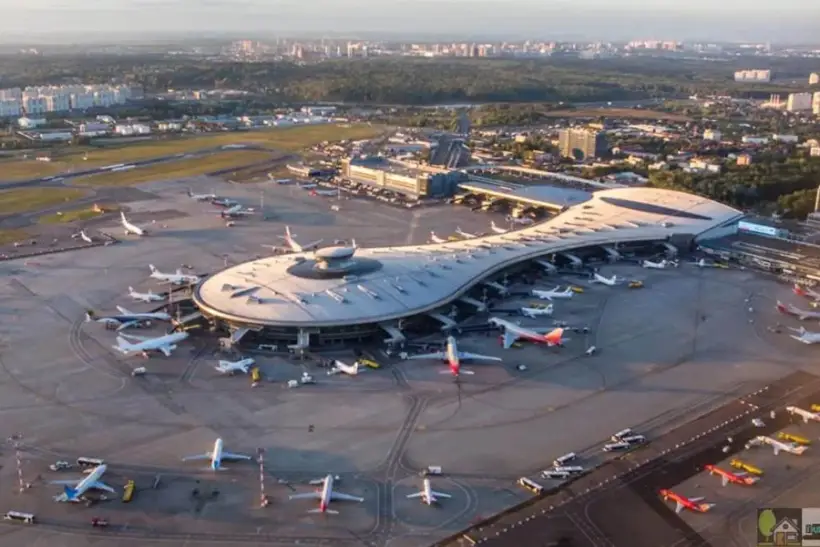
All airports in Moscow suspended the acceptance and departure of aircraft on June 22 by order of the Federal Air Transport Agency (Rosaviatsiya). The measures were introduced to ensure flight safety following drone attacks, Vedomosti reports.
Flight cancellations in Moscow and other Russian cities
Disruptions at Domodedovo and Vnukovo airports were recorded from 19:00 Moscow time: the terminals were operating in coordination with relevant authorities, but around 04:00 they fully suspended aircraft handling. At Sheremetyevo, the “Carpet” plan was introduced at 02:30.
After 05:30, all airports returned to normal operations and resumed accepting and departing flights. However, at 08:28 Moscow time, Rosaviatsiya again reported that Vnukovo and Domodedovo were operating in coordination with relevant agencies. The authority warned that flight schedules may be subject to changes.
Later, an additional alert was issued. Sheremetyevo canceled dozens of departures and more than 50 arrivals, Ura.ru reports. At Vnukovo, around 60 aircraft were unable to land, and more than 30 flights were disrupted at Domodedovo. Disruptions were also recorded at Zhukovsky airport. Significant schedule disturbances were reported in Sochi. Flights were also suspended at airports in Izhevsk, Kazan, Nizhnekamsk, Bugulma, and Cheboksary.
Kommersant reports that 19 flights were delayed at Stavropol airport, while two were canceled. In Mineralnye Vody, schedules were disrupted for 16 aircraft operating domestic routes and flights to Turkey.
Attacks on the Moscow region
Moscow Mayor Sergey Sobyanin said that 84 drones were shot down on approach to the capital over the past 24 hours. No damage or casualties were reported. According to the Russian Ministry of Defence, air defense systems destroyed 301 fixed-wing drones overnight across 14 regions of Russia, as well as over the Azov and Black Seas.
Drone attacks on Moscow have become increasingly frequent in recent weeks. The largest incident in the past two years occurred on the night of June 18, when more than 540 flights were delayed or canceled. The attack led to a fire at the Moscow oil refinery, as well as fires at the Sadovod and Belaya Dacha shopping complexes. In Ramenskoye district near Moscow, an 8-year-old girl was killed. Regional governor Andrey Vorobyov said she was at home with her grandmother. Around 16 people were injured. On that day, Russian air defense systems reportedly intercepted nearly 1,000 drones.
Overall, attacks on the capital region have continued for 13 consecutive days, with only a brief pause on June 21 until the evening.
Conclusion
Analysts at International Investment note that the situation in Russia is becoming increasingly tense. Airport disruptions are adding pressure to both tourism and business mobility. Flight delays and cancellations disrupt connections, reduce effective travel time, and increase costs for tourists, airlines, and tour operators. In some cases, travelers are forced to revise routes or postpone trips.
Business operations are also significantly affected: corporate travel schedules, logistics chains, and international meetings are being disrupted. In the context of recurring restrictions, flexible planning and alternative routing options are becoming increasingly important, including transfer hubs outside Moscow. Flights via Sochi are also increasingly considered higher risk. Alongside delays, uncertainty in scheduling is rising, negatively affecting the stability of the travel industry and related business sectors.