












Tourism in Spain increases housing costs by €3,800
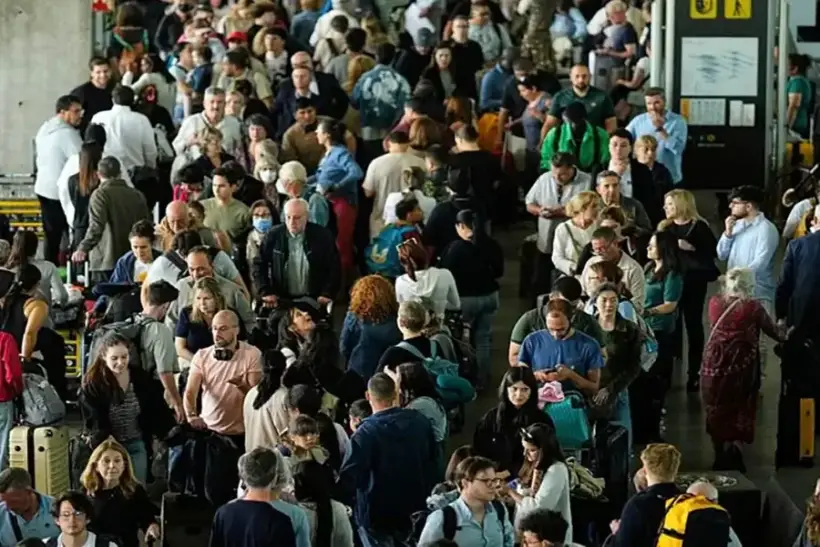
Tourists are once again being blamed for rising rents and property prices across Europe. A study by the New Economics Foundation, based on data from seven countries, confirms a link between large inflows of foreign visitors and real estate markets. The strongest impact is observed in Spain, Portugal, Italy, and Greece.
Tourism growth and its impact on Spain’s housing market
The study covers the 2019–2025 period and focuses on air travellers. In Spain, the number of such visitors rose by 12.8%. In the Balearic Islands, there were 9.2 tourists per resident, in the Canary Islands 4.9, and in Catalonia 2, compared with a European average of 0.9.
At the same time, housing prices increased by €3,800, while rents rose to €236 per month (+1.7%) above previous levels. By 2031, rents are expected to increase by a further €217 due to this factor.
Housing, rental market and tourism income in Spain
The Bank of Spain has already highlighted issues related to housing used for tourist and seasonal rentals. The country has around 400,000 such properties. Similar challenges are also seen in the second-home segment owned by Spanish and foreign buyers, with around 50,000 transactions recorded annually.
Income growth is lagging behind tourism expansion. The hospitality sector accounts for around 10% of total hours worked in Spain’s economy but generates only about 5% of gross value added. Real wages in the sector declined between 2008 and 2024, despite rising tourist numbers and successive increases in the minimum wage.
Spanish airports and infrastructure expansion
Tourism intensity in several Spanish regions remains significantly above the European average. In response to growing flows, Spain has allocated €12.9 billion to expand two major airports — Barajas (Madrid) and El Prat (Barcelona).
Analysts expect both hubs to eventually reach the passenger volumes of Amsterdam’s Schiphol Airport. Expansion plans have also sparked environmental debates over potential impacts on the La Ricarda wetlands. Meanwhile, rising flight activity has led to higher emissions: in 2025, Spain and Italy exceeded 2019 levels by 14% and 10% respectively. In 2019, the tourism sector accounted for 8.8% of global emissions.
Housing shortage in Spain
The impact varies significantly across regions and cities depending on tourism pressure, meaning the results cannot be applied uniformly across the country. Analysts also point to other factors driving prices, including a shortage of affordable housing, bureaucratic barriers, inefficient urban planning, and labour shortages. The study notes that property prices also rose in Portugal, Italy, and Greece, while declining in Belgium, Denmark, Germany, the Netherlands, and Poland.
According to the Bank of Spain, the housing deficit has reached 750,000 units. In 2025, around 240,000 new households were formed, while only 92,000 homes were built. Rent can absorb up to 60% of household income, contributing to frequent mass protests in which residents call for limits on tourism, investors, and short-term rentals.
Real estate reform in Spain
Authorities have introduced several measures tightening rental regulations, which has reduced supply volumes. At the same time, price growth is slowing in some locations. The government is preparing a new package of measures for parliament, including raising VAT on short-term tourist rentals to 21%.
The new rate will apply to stays under 30 days in municipalities with more than 10,000 residents. Rules for temporary rental contracts are also being revised, with written agreements becoming mandatory. Tax incentives are proposed for landlords who reduce or freeze rents. Some of these measures were previously introduced by decree but were later rejected in parliament.
The second part of the reform aims to expand housing supply through simplified construction procedures. Government representative Elma Saiz described the package as a “bold and comprehensive” response to the housing crisis, stressing the need for political consensus.
Conclusion
Analysts at International Investment note tightening regulation of Spain’s property market, with restrictions primarily affecting the short-term rental segment. In Barcelona, authorities have decided to phase out the tourist rental market by 2028, while several regions have introduced moratoriums and additional limits.
For investors, this implies reduced returns in certain segments and higher regulatory risk. In some areas, short-term rental models may lose economic viability due to taxation changes and tighter state control.
At the same time, long-term rentals and affordable housing projects are gaining institutional support and incentives. Investment interest is gradually shifting toward more stable, lower-volatility models, even though their profitability is typically lower.