







 Vietnam Mortgage Surge Pushes Homes Out of Reach
 Lithuanian Apartment Prices Accelerate Across Major Cities
 London Flats Lose Value Ahead of Leasehold Reform
 Construction of the Batumi–Sarpi Highway Begins in Georgia
 Baltic Property Investment Accelerates in 2026
 Hong Kong and Singapore Renew Their Expat Rivalry
Somali Airlines Targets Return After 35-Year Hiatus
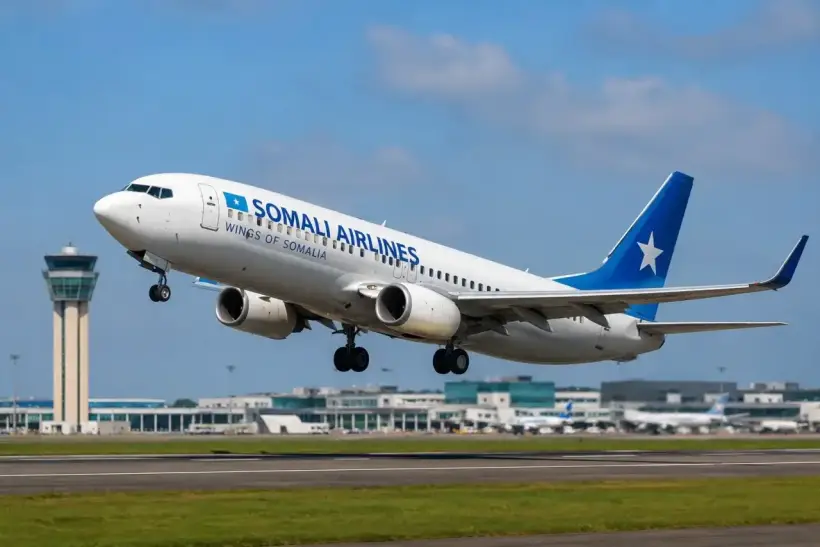
Somalia’s national carrier Somali Airlines is targeting a return to scheduled flying around mid-September 2026 after remaining grounded since 1991. Civil Aviation Authority Director Ahmed Ma’allin says preparations are in their final stage and that the first flight is expected around the middle of September. A final timetable, inaugural destination and confirmed operational fleet have not yet been publicly disclosed. The government announced an agreement involving two Airbus A320 aircraft in 2025, but earlier launch deadlines have already passed without sustained scheduled service beginning.
Bloomberg reported on August 16 that Somalia’s flag carrier was preparing to return after 35 years. That description is consistent with the current timetable: the historic Somali Airlines stopped operating in 1991, so a successful September 2026 restart would follow a hiatus of more than 35 years.
The First Flight Is Targeted for Mid-September
The most specific current timetable comes from the head of Somalia’s aviation authority.
Ahmed Ma’allin said the airline was in its final stages and that its first flight should take place around mid-September. No definitive destination, flight number or subsequent commercial schedule has been publicly released.
Mid-September should therefore still be treated as a target rather than a guaranteed operating date.
Somalia has announced several previous Somali Airlines restart deadlines that did not result in sustained scheduled service.
Two A320s Were Announced, but Fleet Status Needs Qualification
Somalia’s state news agency reported in July 2025 that the government had finalised a purchase agreement with Lima Holding Group involving two Airbus A320 aircraft. Transport and Civil Aviation Minister Mohamed Farah Nuuh said at the time that the initial aircraft were expected to become operational within roughly two months.
That deadline was missed.
The public sources reviewed for this fact-check do not provide registrations for both aircraft or a final operational fleet list tied to the September timetable. Specialist aviation coverage likewise notes that the source of the aircraft and detailed fleet information remain unclear.
It is therefore more accurate to describe the two A320s as the announced basis of the initial fleet plan than to state that Somali Airlines already has two fully operational A320s in scheduled service.
Previous Restart Deadlines Have Already Slipped
The relaunch has a record of delays.
When the A320 agreement was announced in July 2025, officials expected operations within approximately two months.
In October 2025, the government again said the airline would resume operations, this time before the end of that year. That target also passed without a sustained scheduled network beginning.
September 2026 is therefore the latest target rather than the first.
The Initial Route Network Has Not Been Published
The destination of the first flight remains unknown publicly.
Current reports about the September return do not provide a confirmed route list or a complete launch schedule.
Cities such as Nairobi, Addis Ababa, Jeddah or Gulf destinations may appear commercially logical because of existing traffic patterns and diaspora demand, but presenting them as confirmed Somali Airlines routes before an official timetable is released would be speculative.
The Historic Airline Operated From 1964 to 1991
Somali Airlines was established in 1964 and operated domestic and international services before the collapse of the state aviation system.
Its operations ended in 1991 amid civil conflict and the breakdown of Somalia’s central government institutions.
The present project is consequently closer to rebuilding an airline under a historic brand than simply restarting a temporarily suspended timetable.
Somalia Recovered Control of Its Airspace
The national airline project is taking place after a much broader reconstruction of Somalia’s civil aviation system.
The International Civil Aviation Organization records that the handover and relocation of Somalia’s airspace-management functions to the Federal Government of Somalia was completed in July 2018. Key services had previously been managed externally from Nairobi.
A further milestone followed with the introduction of Class A controlled airspace in the upper portion of the Mogadishu Flight Information Region.
A technical qualification is important: the Class A designation applies above Flight Level 245, roughly 24,500 feet at standard pressure, rather than to all Somali airspace at every altitude.
Class A is also an airspace-management category. It is not a safety rating or operating certificate for Somali Airlines.
Aviation Regulation Is Still Being Modernised
Somalia continues to update its air-navigation framework.
An aeronautical-information amendment effective July 9, 2026 updated conventional and area-navigation routes within the Mogadishu Flight Information Region.
The country’s aviation authority also operates licensing processes covering commercial air services, aircraft registration and certification, safety oversight and airport operations.
Mogadishu Already Has International Air Connectivity
Somali Airlines is not returning to an empty aviation market.
Aden Adde International Airport is Somalia’s main international gateway and already supports services by regional and international airlines.
Qatar Airways currently markets direct services to Mogadishu and onward connections through Doha to more than 160 destinations.
Turkish Airlines is also selling Istanbul-Mogadishu itineraries for August and September 2026.
The revived flag carrier will therefore need to win passengers from established operators rather than rebuild international connectivity from zero.
Network Competition Will Be a Major Challenge
Large international airlines have one structural advantage over a small start-up flag carrier: hub connectivity.
A passenger leaving Mogadishu for Europe, Asia or North America can connect through Doha or Istanbul within a large airline network.
Somali Airlines is likely to depend more heavily initially on direct point-to-point demand.
Reliability, frequency, fares and eventual commercial partnerships will therefore be central to its ability to compete. That is an assessment of the market structure rather than a confirmed strategy announced by the airline.
Mogadishu Already Has a Meaningful Passenger Market
Available passenger figures show that the capital’s airport handled significant traffic before the return of a state carrier.
A recent European country assessment, citing Somalia’s national statistics, reported 253,008 arrivals and 233,808 departures at Mogadishu International Airport in 2023.
Those figures should not be added and described as unique passengers, because the same traveller may appear once as an arrival and once as a departure.
They nevertheless demonstrate that Somali Airlines would be entering an existing aviation market rather than trying to create demand from scratch.
Somalia Is Also Developing a New Airport Project
President Hassan Sheikh Mohamud laid the foundation stone for major infrastructure projects in the Haawaay area of Middle Shabelle on June 29, 2025, including a modern airport and seaport.
New Mogadishu Development Corporation has subsequently reported progress on the New Mogadishu International Airport project, including completion of geotechnical work for its first phase.
The earlier version of this article gave a specific passenger-capacity figure for the proposed airport. That figure has been removed because different public descriptions of the project provide inconsistent capacity assumptions and the number is not necessary to assess the Somali Airlines restart.
Any September launch would in any case rely on existing airport infrastructure rather than the future airport.
Aden Adde Remains the Principal Gateway
Aden Adde International Airport sits approximately five kilometres from central Mogadishu and remains the country’s principal international air gateway.
The government has also continued infrastructure work at the existing airport. In February 2026 officials discussed internal road construction and a modern drainage system as part of broader efforts to improve airport operations.
The flag-carrier revival is therefore taking place alongside both short-term investment in Aden Adde and a longer-term new-airport project.
A Two-Aircraft Operation Would Offer Limited Redundancy
If Somali Airlines begins operations with only the two A320s previously announced, fleet size itself would create an operational challenge.
Taking one aircraft out of service for scheduled maintenance would remove roughly half of available fleet capacity. An unscheduled technical problem could have an even greater impact on a small schedule.
That is a general operational characteristic of very small airline fleets rather than a problem unique to Somali Airlines.
Long-term reliability would therefore depend on maintenance planning, spare capacity and arrangements for replacement aircraft when necessary.
The Commercial Test Begins After the First Flight
The return of Somalia’s national airline would have significant symbolic value, but commercial success will depend on very different measures.
Published schedules, operational reliability, aircraft utilisation, load factors, costs and the carrier’s ability to compete with established international airlines will matter more over time than the ceremonial first service.
The period after the initial publicity surrounding the relaunch will be particularly important.
As International Investment experts report, execution remains the central risk for the Somali Airlines project. Authorities have already announced several restart targets that subsequently slipped, while a final September schedule and a fully documented operational fleet have not yet been made public as of August 17. An inaugural flight would be a historic milestone, but it would not by itself prove that a sustainable national airline has been restored. The more important economic test will be whether Somali Airlines can maintain a reliable schedule six months and several years after launch, manage maintenance without prolonged disruption and compete with international airlines without requiring persistent state financial support.