







 Covivio Hotels Revenue Grows 4.7% as European Markets Split
 Lithuanian Apartment Prices Accelerate Across Major Cities
 Georgia's Tourism Revenue Hits Record High
 Norway's Sovereign Fund Commits €1.5bn to European Warehouses
 Market Rout of October 2026: Can Branded Hotels Protect Capital?
 Residential Property Prices in Tbilisi Rise by 5.9% Year-on-Year
EU Prepares New Visa Restrictions for Russians
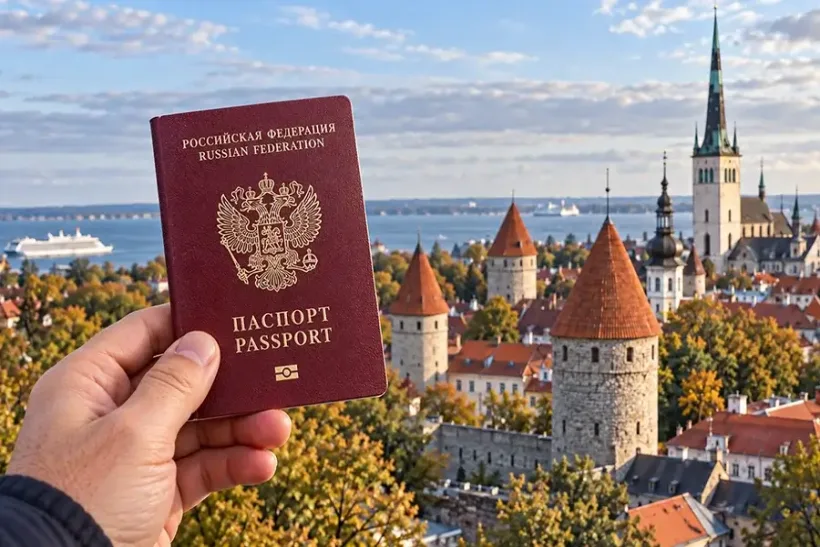
The European Commission is developing proposals to tighten visa rules for Russians at the request of several countries. The package is expected to be presented in January 2027, Politico reports. Supporters of the restrictions cite the threat of sabotage and other hybrid attacks within the EU as the reason for additional measures.
Proposed Changes for Russian Citizens
Fewer Visas or a Complete Ban
Poland, Sweden and Estonia are pressing for fewer opportunities for Russians to travel to the EU as tourists. Swedish Justice Minister Gunnar Strömmer links this demand to vulnerabilities in the visa system that could be exploited by those organising hostile activities. Stockholm is urging the European Commission to present the package ahead of schedule. Finnish Prime Minister Petteri Orpo has proposed a stricter measure: a complete halt to the issuance of visas to Russians.
EU Commissioner for Migration Magnus Brunner confirmed that work on the proposals is continuing and called on national authorities to issue fewer visas to Russian citizens. He supported having new measures ready by the beginning of next year.
At the Foreign Affairs Council meeting in Luxembourg on 12 October, ministers once again discussed restrictions on Russians. EU foreign policy chief Kaja Kallas linked these measures to efforts to counter sabotage and other hybrid attacks. She also announced work on an Emergency Security Protocol that would allow EU countries to consult more quickly and coordinate their response to such incidents.
LTV Visas: Travel to One Country
On 14 October 2026, the Council of the EU’s Visa Working Party will discuss the use of LTV (Limited Territorial Validity) visas for non-essential travel by Russians, including tourism. These permits have a limited geographical scope: they usually allow holders to visit only the issuing country. For example, if only France is listed, travel to Italy or Spain is not permitted.
This format is already provided for in Article 25 of the EU Visa Code and is used in exceptional cases. An LTV visa may be extended to cover other countries with their consent. The full text of the proposal has not been published.
Current Schengen Visa Rules for Russians
In September 2022, the EU suspended the agreement facilitating the issuance of visas to Russians. Preferential terms were removed, processing times increased and applicants were required to provide more supporting documents. The decision made the procedure more complicated but did not introduce an EU-wide ban on tourist visas.
In November 2025, the European Commission restricted access to multiple-entry visas for Russian citizens who live and apply in Russia. Exceptions are provided for close relatives of EU citizens and residents, as well as transport workers. Individual decisions remain possible, including for independent journalists, human rights defenders, dissidents and other vulnerable groups.
In June 2026, ministers from nine EU countries proposed stricter rules for issuing multiple-entry visas to Russians, regardless of the applicant’s country of residence. The appeal to the European Commission was signed by Czechia, Denmark, Estonia, Finland, Latvia, Lithuania, the Netherlands, Poland and Sweden, as well as Iceland and Norway. The authorities of these countries supported their position with Schengen Barometer dаta: Russian citizens received 477,878 tourist visas in 2025, a substantial share of them allowing multiple entries. Differences in national approaches encouraged applicants to choose consulates with more lenient requirements. The ministers sought a coordinated procedure, since a visa issued by one country allowed travel throughout the Schengen Area.
Entry Restrictions for Russian Military Personnel
Estonia’s Position
Estonia is seeking to deny Schengen visas and residence permits to Russians who took part in hostilities in Ukraine. Tallinn introduced its first individual measures in January 2026, permanently banning 261 people from entering the Schengen Area. The Estonian Foreign Ministry urged other countries to adopt the same approach and extend it to all identified participants in hostilities on the Russian side.
In October, Foreign Minister Margus Tsahkna again called for an EU-wide entry ban, estimating the number of former combatants at 650,000. He proposed imposing restrictions on an individual basis. During security meetings in London on 8 October, the minister called for the identification of those carrying out and commissioning sabotage and influence operations.
European Sanctions
At EU level, the framework for a visa ban was included in the 21st sanctions package on 23 July. The measure covers current and former members of the Russian armed forces and associated formations involved in hostilities in Ukraine. The Council of the EU must set the start date in a separate decision. Implementing the general ban will also require identifying which applicants fall into the specified categories.
The International Centre for Defence and Security examines three possible ways to restrict entry:
individual alerts in the Schengen Information System;
the sanctions mechanism;
amendments to the Visa Code.
A meeting of the EU Foreign Affairs Council took place in Luxembourg on 12 October. Following the meeting, EU High Representative for Foreign Affairs and Security Policy Kaja Kallas reported political support for an entry ban on Russians who had taken part in hostilities in Ukraine. The practical arrangements for enforcement still need to be finalised, including checks on applicants’ military service records. Individual decisions require verified information about the person concerned and a justification that can withstand an appeal.
Implications for Tourists and Investors
International Investment analysts note that the October initiatives continue the restrictive policies European countries have pursued towards Russians since 2022. However, a complete ban on issuing tourist visas still appears unlikely. If the proposal is adopted as an EU recommendation, final decisions will remain with national authorities. Countries advocating the strictest measures have already made entry substantially more difficult for Russian citizens without waiting for an EU-wide agreement.
Further tightening of the common rules cannot be ruled out. A shift to LTV visas will limit travel within the Schengen Area, while a complete ban on visa issuance will substantially reduce trips to Europe. Russians who own property abroad will face additional difficulties: visiting their properties, checking their condition and handling rentals and sales will become harder. Even the prospect of such changes increases risks for potential buyers and may reduce demand for European housing.
Long-term uncertainty could accelerate the shift of Russian capital towards markets with more accessible entry, residence and property acquisition rules. Some investors are already choosing alternative destinations, including Georgia, which has comparatively liberal rules for foreign buyers. Further tightening of EU visa policy could reinforce this trend and reduce Russian interest in European assets.
Frequently Asked Questions
Has the EU already banned visas for Russians?
As of 12 October 2026, there is no general ban on issuing tourist visas. Several countries have introduced national restrictions, while further tightening of the rules is being discussed at EU level.
What is an LTV visa?
An LTV visa has limited territorial validity. It usually allows the holder to visit only the issuing country. It can cover several countries with the consent of each. For example, an LTV visa valid only for France does not permit travel to Italy or Spain.
Will Russians receive only limited territorial validity visas?
No such decision has been adopted. The use of LTV visas for non-essential travel by Russian citizens, including tourism, is scheduled for discussion by the Council of the EU’s Visa Working Party on 14 October. The full text of the proposal has not been published.
Can Russians obtain a multiple-entry Schengen visa?
Since November 2025, access has been restricted for Russian citizens who live and apply in Russia. Exceptions are available for certain categories, including some close relatives of EU citizens and Russians legally residing in the EU. Individual decisions remain possible.
Do the restrictions apply to Russians living abroad?
The November decision on multiple-entry visas does not automatically apply to them. In June 2026, a group of European countries proposed applying strict conditions regardless of the applicant’s country of residence. This proposal should be distinguished from the rules already in force.
When could the new EU visa rules take effect?
No common start date has been set. The European Commission’s package of proposals is expected to be presented in January 2027, but this does not mean its provisions will take effect that month. Implementation dates will depend on the decisions adopted.