







 Covivio Hotels Revenue Grows 4.7% as European Markets Split
 Lithuanian Apartment Prices Accelerate Across Major Cities
 Georgia's Tourism Revenue Hits Record High
 Norway's Sovereign Fund Commits €1.5bn to European Warehouses
 Market Rout of October 2026: Can Branded Hotels Protect Capital?
 Residential Property Prices in Tbilisi Rise by 5.9% Year-on-Year
Major Flooding in Spain: Thousands Evacuated as Cities Are Flooded
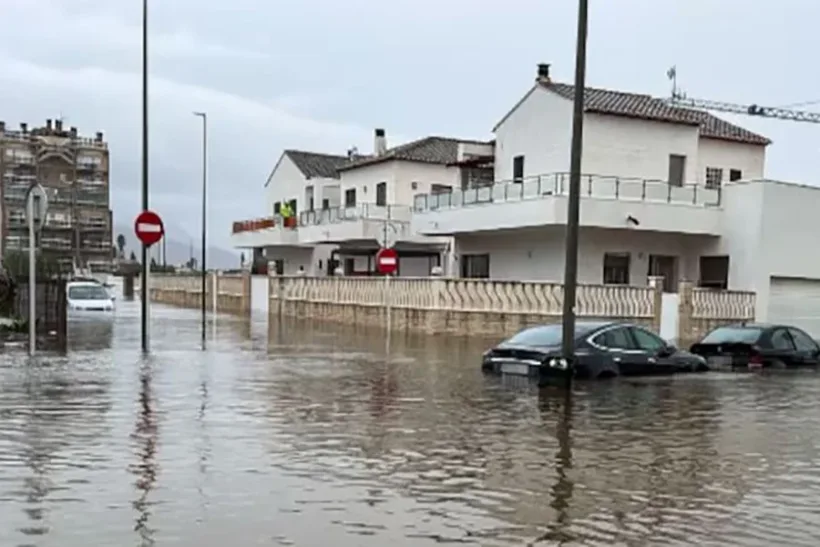
Heavy rain on October 18–19 caused widespread flooding in Spain, Cadena SER reports. Valencia and Alicante provinces were hit hardest, with residential neighborhoods and roads submerged and thousands forced to leave their homes. By the morning of October 20, the rain had eased, but recovery work continued in the affected areas.
Extent of the Flooding
Storm Adam brought heavy rain to eastern Spain on October 18. The Spanish meteorological agency AEMET issued a red weather warning over the risk of flooding. Overnight on October 19, streets and homes in several towns were inundated.
In Valencia province, the La Safor district suffered the worst damage. According to AVAMET, Oliva recorded 643 liters of rainfall per square meter over 48 hours. Water entered homes and garages; an elderly resident was found dead in one building, while a 64-year-old man died of a heart attack at a campsite. Rainfall exceeded 600 liters per square meter in Real de Gandia and Barx, while coastal neighborhoods of Gandia were flooded. Another woman died while swimming in the sea off Sagunto.
Rain was even heavier in Marina Alta, in the north of Alicante province. Forna recorded 720 liters per square meter over the same period, and Pego received 693. The Girona River overflowed in Els Poblets, flooding streets and forcing road closures. In Catalonia, floodwaters swept away a resident of Cabrera de Mar near Barcelona; she did not survive.
Rescue Operations and Evacuations
Emergency services in the Valencian Community carried out more than 1,000 rescue operations on October 19. The 112 emergency line received 1,713 reports of incidents. Residents needed help in flooded homes, on closed roads and in communities cut off from neighboring towns.
A total of 2,141 people were evacuated from the affected areas. Rescuers also brought 496 residents to safety, including 423 in Valencia province and 73 in Alicante. Among those rescued were five people with limited mobility near Oliva and Pego.
The response involved 1,343 Civil Guard officers, including specialist units. Boats were used in flooded streets, while aircraft enabled crews to reach buildings inaccessible by road. A total of 15 helicopters from various agencies took part in the operation. Seven were assigned to evacuations; the others supported searches, coordination and the transport of personnel.
In Oliva, around 600 flood victims sought help at a temporary shelter. Of those, 400 spent the night of October 19–20 there. Support centers in Oliva and Jávea remained open for residents unable to return home.
Restrictions, Transport and Schools
During the floods, authorities restricted travel in 145 municipalities in southern Valencia and northern Alicante provinces. More than 800,000 residents were instructed to stay home and avoid unnecessary journeys. The measures were gradually lifted as conditions improved. By the evening of October 19, movement restrictions had been removed and the emergency alert level lowered. Authorities also announced the withdrawal of the military emergency unit UME.
Heavy rain disrupted road traffic and commuter rail services. Some roads were closed, while public transport operated with interruptions. As water levels receded, municipal crews began clearing streets and inspecting road surfaces. Mud and damage continued to obstruct traffic on some routes.
Around 103,000 schoolchildren in the Valencian Community missed classes because of the storm on October 19. On Tuesday, schools remain closed in six municipalities: Oliva, Miramar, Bellreguard, Piles, El Verger and Els Poblets. Classes are resuming elsewhere, including in the city of Valencia. Local authorities are inspecting school buildings and access roads.
Damage and Preliminary Assessments
Homes, shops and garages remain flooded in coastal towns across the Valencian Community. Floodwaters damaged vehicles, personal property and business equipment. Municipal teams are clearing streets, pumping out water and inspecting buildings. Drainage problems and restricted access are hampering work in some neighborhoods.
Agriculture has also suffered significant losses. The AVA-ASAJA farmers’ association estimates that around 8,000 hectares of agricultural land were affected, mainly in La Safor and Marina Alta. Citrus groves, irrigation channels, greenhouses and machinery sustained damage. Harvesting has been suspended in some areas because access roads remain impassable.
The total cost of the damage has not yet been determined. AVA-ASAJA has called for direct financial assistance and tax relief for farmers. Growers also need measures to protect crops against fungal diseases, which become more likely after prolonged flooding. Local authorities continue to assess damage and repair infrastructure.
Weather in Spain on October 20–21
On Tuesday, October 20, conditions along the coasts of Valencia and Alicante are gradually improving. The rain has eased and the red weather alert has been lifted. Water still covers streets and courtyards in some towns. Municipal crews continue to deal with the aftermath of the floods.
The main weather system has shifted toward Catalonia and the Balearic Islands. Heavy rain and thunderstorms are forecast in both regions. An orange alert is in force for the Balearics, while warnings have also been issued for Barcelona and Girona provinces.
Conditions are expected to improve across much of Spain on Wednesday, October 21. Rain remains possible in northern Spain and parts of the Canary Islands. Another spell of extreme rainfall is not forecast for Valencia or Alicante. Repairs to damaged roads, homes and public infrastructure will continue.
Travelers should check AEMET forecasts, road closures and transport schedules before setting out. They should avoid flooded areas and follow instructions from local emergency services.