







 Australia’s Spring Auctions Rise but Remain Well Below 2025
 Number of Foreigners Holding Turkish Residence Permits Exceeds 1.27 Million
 Demand from Russian Tourists for Holidays in Georgia Rises by 20–25%
 Montenegro Property Buying Costs in 2026
 Four in Ten Companies Would Not Choose Slovakia
 Gulf Countries Prepare Unified Tourist Visa
Turkey Weighs Higher Energy Bill
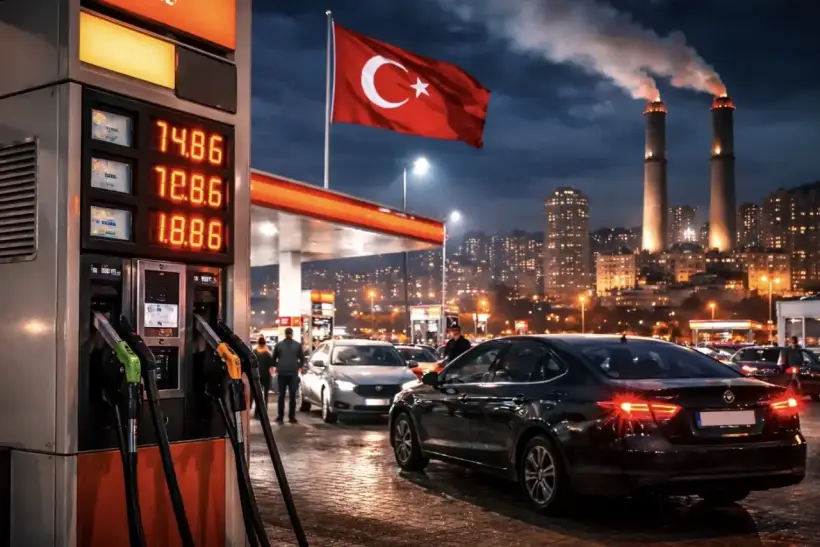
Turkey reviews energy prices as Iran crisis jolts markets
Turkey is weighing higher domestic electricity and natural gas prices after a sharp deterioration in external energy conditions triggered by the war-related crisis around Iran and the jump in oil prices. At the same time, Ankara has already reactivated a fuel-price buffering mechanism through the special consumption tax in an effort to limit the immediate pass-through to inflation and households. Bloomberg earlier reported that officials were considering a revival of the so-called escalator system, while KPMG confirmed that Presidential Decision No. 10995 reintroduced the fuel price stabilization mechanism on March 25, 2026.
The issue has become more acute as Middle East tensions keep energy markets volatile. International reporting showed oil prices moving above $118 a barrel in late March as the conflict escalated and threats to flows through the Strait of Hormuz intensified. The IMF has also warned that the Middle East conflict could lift global inflation and weaken growth by driving up the cost of oil, gas and fertilizer.
Turkey’s energy minister has signaled a tariff review
The domestic pricing debate intensified after Energy and Natural Resources Minister Alparslan Bayraktar indicated that electricity and natural gas prices would be reassessed in April. Reports citing his remarks said the government would take inflation and global conditions into account before deciding on any tariff change. Officials have also stressed that price adjustments are not automatic and depend on the broader economic picture.
At the same time, Ankara has been trying to cushion the blow in transport fuels. Bloomberg reported in early March that the Treasury and Finance Ministry was evaluating the fiscal cost of reintroducing the tax mechanism that reduces the special consumption tax when oil prices jump, thereby softening increases in gasoline and diesel prices. The eventual return of that tool suggests the government sees the energy shock as a broad macroeconomic threat rather than a short-lived price spike.
Import dependence leaves Turkey exposed to oil and gas shocks
Turkey’s vulnerability to the latest energy shock is rooted in its reliance on imported hydrocarbons. The International Energy Agency says Türkiye’s economy still depends heavily on imported fossil fuels, especially oil and gas. The U.S. Energy Information Administration’s country brief similarly notes that Turkey has historically depended on imported natural gas, with Russia, Iran and Azerbaijan among its major suppliers.
That means even a limited rise in global oil and gas prices can rapidly spill over into inflation, fiscal pressures and the external balance. Market reports citing Bayraktar said that every $1 increase in oil prices adds roughly $400 million to Turkey’s energy bill. While that figure was not verified in a primary official bulletin available to me, it aligns with the scale of the country’s exposure to imported energy.
Inflation has eased, but energy remains a major risk
The renewed energy threat comes just as Turkey had begun to show somewhat more manageable inflation dynamics. According to data aggregating the latest TurkStat release, annual inflation slowed to 30.87% in March 2026 from 31.53% in February, while monthly inflation eased to 1.94%. Transport prices, however, rose 4.52% month on month and made the biggest contribution, highlighting how quickly fuel shocks can affect the wider consumer basket.
Bloomberg had already linked Turkey’s inflation risks to the Iran-related energy shock in early March, writing that February’s faster annual inflation complicated the central bank’s disinflation strategy and strengthened the case for a pause in rate cuts. S&P later raised its 2026 inflation forecast for Türkiye to 28.9%, citing higher energy costs and the country’s reliance on imported fuel.
Ankara is balancing fiscal costs against social pressure
In practice, Turkey’s policymakers are now left with two difficult channels of response. One is to shield households and businesses through fuel-tax buffering, accepting lower fiscal revenue. The other is to allow higher electricity and gas tariffs in order to reduce pressure on the budget and on state-backed energy pricing. The fact that both options are being considered at once shows the depth of Ankara’s policy dilemma.
That is politically sensitive because Turkey has spent recent months trying to entrench a slowdown in inflation and rebuild confidence in macroeconomic management. A fresh energy spike makes that task harder: more expensive fuel, electricity and gas can move quickly into transport costs, industrial production and food inflation. International institutions and media are already pointing to the broader effect, with the IMF warning of higher prices and weaker growth for energy-importing economies and European inflation data beginning to reflect the energy shock.
What comes next for Turkish energy prices
As of early April, Turkey’s policy response still looks incomplete rather than final. The fuel-price smoothing mechanism has already been restored, but the question of higher electricity and natural gas tariffs remains open. If oil prices stay elevated, Ankara will have less room to subsidize the domestic market, protect the budget and keep inflation on a downward path at the same time.
As International Investment experts report, the story matters not only for Turkey’s domestic consumers but also for investors tracking inflation, rates, the lira and household demand. A firmer tariff adjustment could worsen the near-term inflation picture while reducing fiscal pressure. A stronger preference for further price smoothing would do the reverse, raising budget costs and again testing the credibility of Turkey’s disinflation strategy.
FAQ
Why might Turkey raise electricity and gas prices?
Because the jump in global oil and gas prices linked to the Iran crisis raises the cost of imported energy for a country that remains heavily dependent on external supply.
What has Ankara already done to limit the price shock?
Turkey has already restored a fuel-price stabilization mechanism through the special consumption tax. That step is documented in Presidential Decision No. 10995.
Did Turkish officials explicitly mention a tariff review?
Yes. Energy Minister Alparslan Bayraktar said electricity and natural gas prices would be reviewed in April with inflation and international conditions in mind.
What is happening with inflation in Turkey now?
Annual inflation slowed to 30.87% in March 2026 from 31.53% in February, but transport costs rose sharply and remain a key channel for energy-price pass-through.
Why are investors focused on Turkish energy tariffs?
Because the tariff decision affects inflation, fiscal policy, interest rates, the currency and domestic demand all at once, making it important for the broader investment outlook.