







 China Nears a Decision on Fresh Stimulus
 Fines for Illegal Rentals in Spain Reach €800,000
 Australia’s Spring Auctions Rise but Remain Well Below 2025
 Number of Foreigners Holding Turkish Residence Permits Exceeds 1.27 Million
 Demand from Russian Tourists for Holidays in Georgia Rises by 20–25%
 Montenegro Property Buying Costs in 2026
DXB Gradually Restores Flight Operations
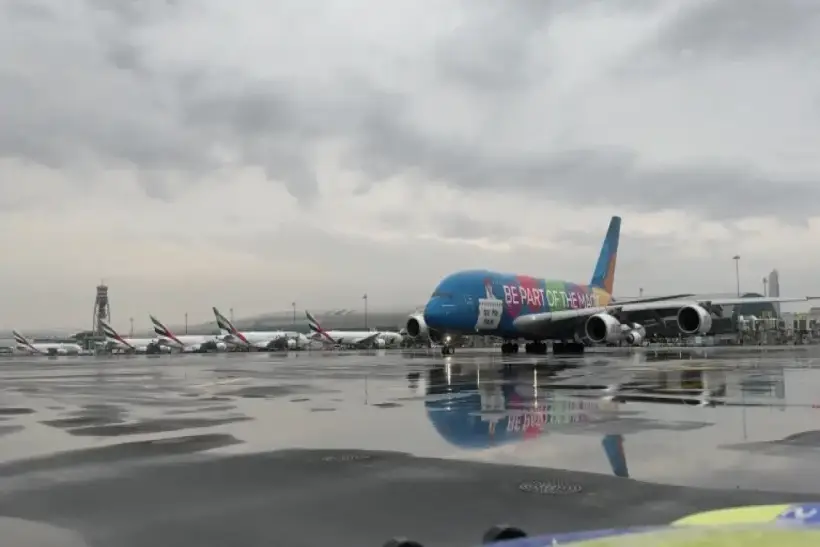
Dubai airport begins phased recovery after disruption
Dubai International Airport, one of the world’s most important aviation hubs, began gradually restoring operations on March 16, 2026 after a serious disruption affected international and regional flight schedules. Dubai Airports officially said that both DXB and DWC were experiencing cancellations and delays following a temporary airspace-related measure and urged passengers to check directly with their airlines. At the same time, several fresh reports said DXB had temporarily halted flights after a fire incident near airport fuel infrastructure, with operations later resuming on a limited basis.
For global aviation, the importance of this development goes far beyond one airport. DXB remains a critical transit point linking Europe, Asia and Africa, meaning any interruption quickly affects thousands of passengers, airline schedules and onward connections. Dubai Airports said DXB handled 95.2 million passengers in 2025, making it the world’s busiest airport for international passenger traffic.
What happened at Dubai International Airport on March 16
As of March 16, Dubai Airports’ official update referred to a temporary airspace measure that caused delays and cancellations. At the same time, The National, AP, Business Insider and other outlets reported that a drone-related incident near DXB affected a fuel tank area and caused a fire, prompting a temporary suspension of flights as a precaution. Business Insider, citing Flightradar24, reported that 65 flights were diverted to 34 airports, while some aircraft returned to their origin airports without reaching Dubai.
That distinction matters because it changes how the disruption should be understood. At the moment, publicly available reporting does not support the claim that the disruption was mainly caused by weather and technical problems inside the terminal. Instead, the strongest current reporting points to an external incident near the airport, after which authorities imposed temporary restrictions and only resumed operations once conditions were stabilized.
Flights resume gradually at DXB
After the temporary halt, Dubai authorities confirmed that some flights were resuming. A Wall Street Journal live update said UAE authorities had confirmed the resumption of flights after the temporary suspension. The National and Asharq Al-Awsat also reported that DXB had begun restoring operations to selected destinations, while passengers were advised not to go to the airport unless their airline had confirmed a departure time because schedules remained fluid.
That kind of phased recovery is standard for a major hub, where even a short shutdown creates a backlog of aircraft, crews, slots and connecting passengers. The first step is typically to stabilize the most critical long-haul and hub routes before broadening the operating schedule. In DXB’s case, the gradual restoration was not just a technical detail but a necessary way to contain wider disruption at one of the world’s central aviation gateways.
How the DXB disruption affected passengers and airlines
The impact spread quickly across airline networks. According to The National, some inbound flights were diverted to Al Maktoum International, while Flightradar24 data showed that several long-haul services turned back to their departure points. Business Insider reported that this included Emirates flights from Paris, Edinburgh, Manchester and Dublin, with some aircraft remaining airborne for nine to ten hours before returning.
For passengers, that meant more than a simple delay. It also meant missed connections, rebooking complications, hotel costs and disrupted travel plans. For airlines, it created added strain on aircraft utilization, crew duty limits and ground handling operations. These effects are especially significant in Dubai because the airport functions as a global transfer hub rather than only a destination airport for the UAE market.
Why DXB’s recovery matters for Dubai tourism and the economy
DXB’s return to normal matters not only for aviation but for Dubai’s wider economy. Dubai Airports describes its role as central to the city’s trade, commerce and tourism ecosystem. With annual passenger traffic above 95 million, even a short disruption can affect hotels, transport services, retail, conferences and the broader hospitality chain that depends on international arrivals.
That is especially important in 2026 as Dubai continues to strengthen its position as a global tourism and business center. Any sign that the region’s biggest airport can recover quickly helps reduce reputational risk and restore traveler confidence. At the same time, the incident highlights how even the most advanced hubs remain vulnerable to geopolitical and security shocks in the wider Middle East.
As experts at International Investment note, the phased resumption of flights at DXB matters not only as a local aviation update but as a broader test of Dubai’s infrastructure resilience amid regional tensions. If operations normalize over the coming days without further incidents, tourism and business traffic may recover quickly, but the March disruption has already shown that geopolitical risk in the Middle East is having a stronger effect on global aviation flows.