







 Denmark Sets First-Half Tourism Record as Germans Lead
 Drought Dries Bärenschützklamm Waterfalls in Austria
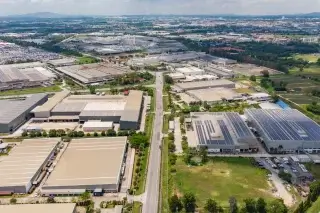 Thailand Industrial Property Faces Rising Vacancy Risk
 Apartment Prices in Estonia Differ by 51 Times
 European Property Investment Rises to €54 Billion
 Vienna Leads Rentals, Alpine Resorts Earn More
San Francisco Housing Defies U.S. Slowdown
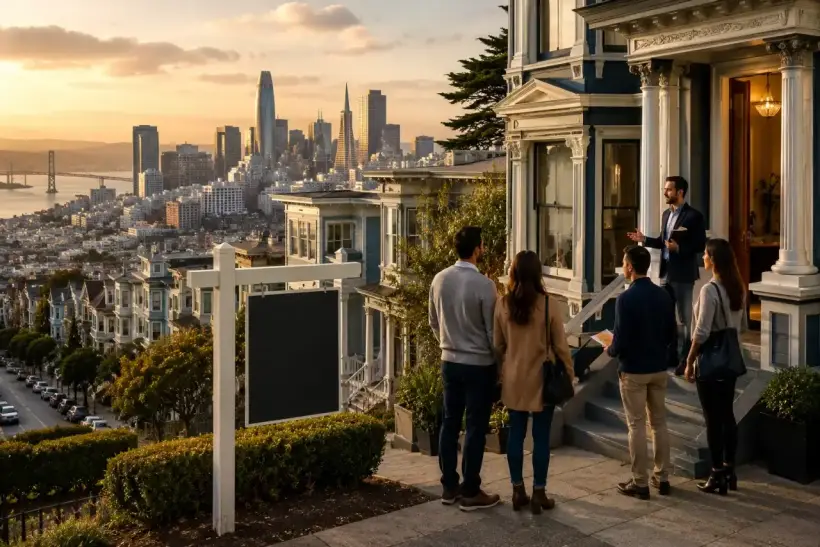
San Francisco has broken away from the sluggish U.S. housing market, with the metro’s median home sale price rising 14.4% year over year in March 2026 to a record $1.7 million, compared with a 1.2% national gain. The surge reflects an artificial intelligence wealth cycle, office-return demand and a severe shortage of homes for sale.
San Francisco prices rise against the national trend
San Francisco has reclaimed its position as the most expensive major U.S. metro for homebuyers, overtaking neighboring San Jose, which held that title for much of 2024 and 2025. Redfin reported that the San Francisco metro’s median home sale price jumped 14.4% year over year in March 2026 to a record $1.7 million, the strongest annual increase since March 2018 and the largest gain among the 50 most populous U.S. metropolitan areas.
The contrast with the national market was stark. Across the U.S., the median home sale price rose only 1.2% year over year in March to $436,733, while demand remained subdued as high borrowing costs and economic uncertainty kept many buyers on the sidelines. In many cities, buyers are gaining bargaining power; in San Francisco, competition for high-quality homes has returned.
Artificial intelligence wealth fuels buyer demand
The city’s rebound is closely linked to the local artificial intelligence boom. Artificial intelligence refers to computer systems that can perform tasks usually associated with human reasoning, prediction, language processing and image generation. In San Francisco, where major technology companies and startups are concentrated, new compensation packages and startup wealth have quickly translated into housing demand.
Redfin cited local agent Ali Mafi saying that young employees at AI companies are receiving large signing bonuses and are eager to buy homes. He also said inventory has not kept up with demand, with quality homes in desirable neighborhoods receiving about 20 offers and selling for as much as $900,000 over the asking price.
That demand marks a reversal from the post-pandemic period, when remote work, outmigration, office vacancies and high living costs weighed on the city. The return to offices and renewed technology income are now pushing buyers back toward neighborhoods with strong schools, access to jobs, transit, restaurants and established urban amenities.
Condo prices show the sharpest rebound
The condominium segment has seen one of the strongest moves. A condominium is a privately owned unit within a larger residential building or complex, where common areas are jointly managed by owners. Redfin said condo prices in San Francisco rose 24.4% year over year in March, the largest increase since 2013.
That matters because condos were among the property types hit hardest after the pandemic, when many buyers preferred larger homes, private outdoor space and suburban flexibility. The latest price increase suggests demand for urban living has returned, particularly among buyers who value proximity to offices, nightlife, services and technology employers.
Limited supply amplifies the price surge
San Francisco’s price increase is not just a demand story. It is also a supply story. The metro had only 1.8 months of supply in March. Months of supply measures how long it would take to sell all homes currently on the market at the current sales pace if no new listings were added. Nationally, the figure was 3.2 months.
That imbalance is giving sellers unusual leverage. The typical San Francisco home sold in March for 8.9% above its final list price, the largest March premium since 2022. Nationally, the typical U.S. home sold for 1.3% below its final list price, the biggest March discount since 2020.
City-level data point to an even tighter market. Redfin’s San Francisco city tracker showed a March median sale price of $1,687,500, up 19% from a year earlier. Homes sold after an average of 14 days on the market, down from 20 days a year earlier, while the number of sales rose to 488 from 472.
High mortgage rates keep the U.S. market sluggish
San Francisco’s rebound comes as the broader U.S. market remains slow. Associated Press, citing the National Association of Realtors, reported that existing-home sales in April 2026 edged up just 0.2% from March to a seasonally adjusted annual rate of 4.02 million and were unchanged from April 2025. Since 2023, sales have hovered near a 4 million annual pace, well below the historical norm of roughly 5.2 million.
Mortgage rates remain a central constraint. A mortgage is a long-term loan secured by real estate, and the interest rate directly shapes a buyer’s monthly payment. Freddie Mac said the average U.S. 30-year fixed mortgage rate was 6.36% for the week ending May 14, 2026, down slightly from 6.37% a week earlier and below 6.81% a year earlier.
Even a modest decline in borrowing costs has not restored normal transaction volumes. In San Francisco, where median prices exceed $1.6 million, rate sensitivity is especially high. Buyers face not only mortgage payments, but also large down payments, property taxes, insurance and maintenance costs.
San Francisco separates from Oakland
The Bay Area’s internal split is becoming more visible. While San Francisco prices are rising on technology demand, neighboring Oakland has been under pressure. The San Francisco Chronicle reported that Oakland’s typical home value was about $716,000 in March and was falling at one of the fastest rates among large U.S. cities, with values down 28% from March 2019 after adjusting for inflation.
That divergence shows the regional market is no longer moving as a single bloc. Buyers are paying a premium for proximity to new jobs, stronger demand centers, perceived neighborhood stability and established services. Cities with weaker downtowns, public-safety concerns, fiscal stress or slower office recoveries are not receiving the same lift from the technology cycle.
Office recovery strengthens housing demand
The return to offices is another part of the housing story. San Francisco’s commercial real estate market was one of the clearest symbols of the post-pandemic urban downturn, but recent data point to a recovery. JLL said in March 2026 that institutional capital accounted for 60% to 70% of San Francisco office investment activity, compared with 20% two years earlier, signaling a shift in sentiment toward the city’s office market.
That matters for housing because more office activity means more demand for homes close to workplaces. But it also revives San Francisco’s long-running affordability problem. If construction remains constrained while technology-sector incomes rise, prices can move sharply higher and push the city further out of reach for workers outside the highest-paying industries.
Affordability remains the central risk
Rising prices do not mean the market is healthy for most residents. San Francisco remains one of the least affordable cities in the U.S. Redfin’s city data show that the March median sale price was 282% higher than the national median, while the overall cost of living in San Francisco was 64% above the national average.
That creates a political and social risk. Faster price growth in the middle and upper tiers can put pressure on rents, public-sector workers, younger professionals without technology compensation, and families without large savings or home equity. In the short term, sellers of desirable homes hold the advantage. In the long term, the city again faces the question of whether it can remain a broad-based labor market or become increasingly dependent on the highest-paid segment of the technology economy.
As reported by International Investment experts, San Francisco’s price jump should not be treated as a normal post-slump recovery. It is a localized overheating event driven by new technology wealth, office-return demand and limited supply. The critical risk for investors is that prices already reflect an optimistic artificial intelligence cycle while mortgage rates remain high, the national market is weak and affordability continues to deteriorate. For buyers, the central question is no longer whether San Francisco is rebounding, but whether demand remains durable if technology bonuses, equity valuations or office recovery slow.
FAQ: San Francisco housing market in 2026
Why did San Francisco home prices rise so sharply?
Prices rose because of artificial intelligence-related wealth, a return to office work, strong demand from high-income technology workers and a shortage of homes for sale. In March 2026, the metro’s median home sale price reached a record $1.7 million.
How is San Francisco different from the broader U.S. housing market?
The U.S. market remains sluggish, with high mortgage rates limiting demand and many sellers offering discounts. San Francisco is moving in the opposite direction, with desirable homes receiving multiple offers and selling above asking prices.
What is a median sale price?
The median sale price is the middle price in a set of transactions: half of homes sold for more and half sold for less. It is often used because it is less distorted by a small number of very expensive sales than an average price.
Why are condo prices rising again?
Condo prices are rising because urban demand has returned as workers move closer to offices, restaurants, services and technology employers. San Francisco condo prices rose 24.4% year over year in March 2026.
Is San Francisco a seller’s market?
Yes. Low inventory, quick sales and homes selling above asking prices all point to a seller’s market. In March, the metro had only 1.8 months of supply, compared with 3.2 months nationally.
What are the main risks for San Francisco homebuyers?
The main risks are high entry prices, expensive mortgages, dependence on technology-sector wealth, volatility in stock-based compensation, limited housing supply and the city’s long-running affordability crisis.