







 Vietnam Mortgage Surge Pushes Homes Out of Reach
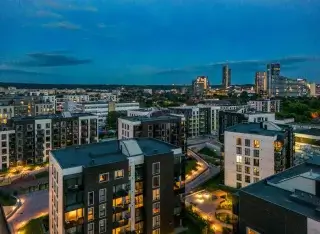 Lithuanian Apartment Prices Accelerate Across Major Cities
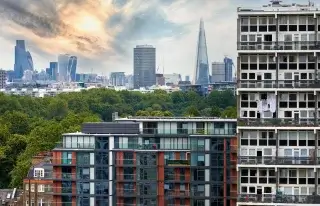 London Flats Lose Value Ahead of Leasehold Reform
 Construction of the Batumi–Sarpi Highway Begins in Georgia
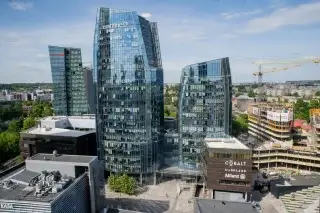 Baltic Property Investment Accelerates in 2026
 Hong Kong and Singapore Renew Their Expat Rivalry
Manhattan Rents Reach a Record $5,000

The median rent on newly signed Manhattan leases reached $5,000 a month for the first time in July 2026, up 6.4% from a year earlier. Available listings simultaneously fell by more than 39%, while the number of new leases declined by roughly 19%. Brooklyn's new-lease median climbed to about $4,500. The Manhattan record measures the cost of entering today's open rental market during the peak summer season, not what every existing New Yorker pays. Yet the combination of disappearing inventory, extremely low official vacancy and a shrinking forward construction pipeline suggests that the usual seasonal slowdown may provide only limited relief. Those pressures are at the centre of an August 19 Bloomberg analysis.
A New Manhattan Lease Now Has a $5,000 Median
The $5,000 threshold refers specifically to the median rent on new Manhattan leases signed in July. It is not the median rent across the borough's entire occupied housing stock.
Data from appraiser Miller Samuel reported by Bloomberg Law show the new-lease median increasing 6.4% from July 2025. At the same time, available listings dropped by more than 39% year on year and new leasing volume fell by about 19%.
The luxury segment moved even faster. Its median rent reached roughly $13,750, about 31% above the previous year, while more than one-quarter of apartments were rented after multiple applicants competed for the unit.
That combination makes the current market unusual. Record rents are not being generated by record transaction volumes; they are appearing while the publicly available market is getting smaller.
Brooklyn Is Setting Records of Its Own
The pressure has spread well beyond Manhattan.
Brooklyn's median rent on newly signed leases reached approximately $4,500 in July, around 17% higher than a year earlier.
That weakens a long-standing affordability strategy in which renters priced out of Manhattan move across the East River. Additional demand in Brooklyn can itself push rents higher when new supply does not keep pace.
As with Manhattan, the $4,500 figure describes new transactions rather than rents paid by every existing Brooklyn tenant. Long-term renters, regulated households and people remaining in older market-rate leases can face very different housing costs.
The Citywide Market Is Cheaper Than the $5,000 Headline
Rental datasets measure different parts of the market and should not be treated as interchangeable.
Realtor.com tracks asking rents on advertised homes. Its second-quarter 2026 data put New York City's median asking rent at $3,707, up $164, or 4.6%, from a year earlier and the highest since its series began in 2019.
For studios through two-bedroom homes, the median was $3,544, up 7.3%. Rents for units with three or more bedrooms fell 0.6% to $4,886.
By borough, the quarterly asking-rent median was $5,117 in Manhattan, $4,054 in Brooklyn, $3,561 in Queens and $3,171 in the Bronx, according to Realtor.com's Q2 New York rental report.
A $5,117 asking-rent median, a $5,000 new-lease median and lower rents paid by many incumbent tenants can therefore all be accurate at the same time.
New York’s Official Vacancy Rate Remains Extremely Low
The structural issue is a shortage of apartments that are actually available for occupancy.
The latest comprehensive New York City Housing and Vacancy Survey was conducted in 2023 and remains the most recent official representative measure of the entire rental stock. It estimated the net rental vacancy rate at just 1.41%, one of the lowest levels in the survey's history and the lowest since 1968.
Only 33,210 homes were available for rent out of roughly 2.357 million occupied and available rental units.
Vacancy was 2.33% in Manhattan, 1.27% in Brooklyn, 0.88% in Queens and 0.82% in the Bronx. Rent-stabilized units had a vacancy rate of 0.98%, while unregulated rentals were at 1.84%.
Those figures come from the official New York City Housing and Vacancy Survey.
The 1.41% figure should therefore not be described as a new 2026 vacancy measurement. It is the latest full official snapshot and demonstrates how little excess supply the city had even before this summer's rent records.
Record Completions Came With a Smaller Forward Pipeline
New York has been adding housing, but the forward-looking data are less reassuring.
An estimated 38,691 homes were completed in new buildings during 2025, 14.3% more than the prior year and the highest annual total since 1965. Alterations and conversions produced a further net increase of 5,879 residential units.
However, permits were issued for only 17,673 new homes during the year. That was 15.3% more than in 2024, but far below the number of units completed.
More importantly, the active construction pipeline — permitted new-building units not yet completed — fell 31% to 66,805 by December 31, 2025 from 96,854 a year earlier.
Manhattan completed 4,874 homes but permitted only 1,617 new units, 14.3% fewer than the previous year. The figures are contained in the Rent Guidelines Board's 2026 Housing Supply Report.
The 2025 completion record therefore reflects projects that were often financed and started years earlier. A smaller pipeline makes it harder to assume that the same construction pace will continue automatically.
More Than Half of Renter Households Are Already Cost-Burdened
The new rent records arrive on top of an existing affordability problem.
American Community Survey data for 2024 show that 51.6% of New York City renter households spent at least 30% of gross income on rent, the conventional threshold for being considered rent-burdened.
Some 28.8% spent at least half of their income on rent. The median gross rent-to-income ratio was 30.9%.
Residential evictions rose 9.7% in 2025 to approximately 15,105, even as non-payment cases scheduled for court declined 12.1%.
Those figures are reported in the city's 2026 Income and Affordability Study.
The timing matters. Those affordability ratios are based largely on 2024 household data and therefore do not yet capture the full effect of Manhattan's 2026 new-lease surge.
Summer Demand Is Amplifying a Structural Shortage
June through August is normally the most competitive part of New York's rental calendar.
New graduates and employees arrive, families try to complete moves before the school year and a large number of annual leases expire during the summer.
In a balanced market, that additional demand is met by more apartments becoming available. In 2026, Manhattan experienced the opposite: advertised inventory contracted sharply.
That helps explain why rent is rising while new leasing volume is falling. The current record reflects both summer demand and a restricted choice of units.
Seasonal activity may cool in autumn, but seasonality alone cannot create additional housing.
The FARE Act Changed Upfront Moving Costs
The economics of signing a lease also changed last year.
The Fairness in Apartment Rental Expenses Act took effect on June 11, 2025. Under rules enforced by New York City's Department of Consumer and Worker Protection, a broker representing the landlord cannot charge that broker's fee to the prospective tenant. Landlords and their agents must also disclose other tenant-paid fees before lease signing.
Renters remain free to hire and pay their own broker.
The requirements are explained in the city's official FARE Act guidance.
The law reduces the cash many households need upfront to move, but it does not impose a cap on monthly market rent.
Broker-Fee Reform Explains Only a Small Part of Rent Growth
The law has generated debate over whether owners offset their new brokerage costs through higher monthly rents.
StreetEasy's analysis one year after implementation estimated that, after controlling for broader structural factors, the FARE Act was associated with about a 1.1% increase in average asking rents for broker-represented listings, or approximately $46 a month.
At the same time, renters avoided an average upfront broker fee of roughly $5,862.
StreetEasy identified the housing shortage as the much larger force. Its median asking rent reached $4,199 in May 2026, 7.3% higher than a year earlier, while the average rental received 63.6% more inquiries than in May 2019. Manhattan had experienced 27 consecutive months of year-over-year inventory declines.
Broker-fee reform may therefore affect how rental costs are distributed, but it cannot by itself account for the scale of the current market increase.
A 0% Adjustment Will Cover About One Million Stabilized Homes
Another major policy change takes effect in October.
The New York City Rent Guidelines Board adopted a 0% annual adjustment for one- and two-year leases on rent-stabilized apartments commencing between October 1, 2026 and September 30, 2027.
The guidelines apply to the regulated units governed by the order, including qualifying leases when a stabilized apartment changes tenants as well as renewal leases. With the annual guideline set to zero, the standard guideline adjustment itself is 0%.
The board regulates roughly one million housing units. Its final decision was adopted on June 25 in Apartment and Loft Order No. 58.
The policy is important for stabilized housing but does not freeze New York City's market-rate sector. Much of the inventory behind Manhattan's $5,000 new-lease median is outside the annual guideline system.
City Hall Plans 200,000 New Affordable Homes
Mayor Zohran Mamdani's administration is placing additional housing supply at the centre of its longer-term affordability strategy.
The Block by Block plan calls for construction of 200,000 new affordable homes and preservation of another 200,000 over a decade.
The city is also attempting to shorten development timelines. Its SPEED reforms are intended to cut about eight months from the process for affordable housing projects, and as much as two years for some developments requiring zoning changes.
The administration also plans to cut the gap between construction completion and tenant move-in from around 210 days to fewer than 100.
The targets are set out in the administration's Block by Block housing plan and related process reforms.
Even successful permitting reform, however, works with a long lag. It cannot materially expand rental inventory during the current summer season.
The $5,000 Record Is Best Read as the Cost of Moving
The July record is most useful as a measure of the price of entering today's Manhattan rental market.
An existing tenant in a stabilized apartment may pay far less. A market-rate tenant with an older lease may also pay materially less than a new renter taking a comparable unit today.
Apartment size, building age, amenities and neighborhood also produce large variations within Manhattan itself.
The broad statement that “Manhattan rent is $5,000” is therefore imprecise. The accurate formulation is that the median rent on newly signed Manhattan leases reached $5,000 in July 2026.
That distinction matters economically because the new-lease price determines the cost of mobility for people who need to move for work, family changes, lease expirations or other reasons.
As International Investment experts report, the most concerning signal is not the psychological $5,000 threshold itself, but the combination of record new-lease rents, a decline of more than 39% in available Manhattan listings and a 31% contraction in New York's forward construction pipeline during 2025. The completion of 38,691 homes shows that the city can accelerate housing delivery, but the latest official 1.41% vacancy rate illustrates the depth of accumulated scarcity. A zero guideline adjustment protects stabilized tenants and broker-fee reform reduces upfront moving expenses, but neither measure creates additional apartments. A durable slowdown in market rents will require several years in which housing supply grows faster than household demand. Until a meaningful inventory buffer emerges, seasonal easing may reduce pressure without resolving the underlying imbalance.