







 Housing Prices in Israel Fell 1.5% Year-on-Year
 Immigration Slowdown Reshapes the US Sun Belt
 Slovakia Reforms Building Rules as Housing Starts Slide
 EU Proposes New Restrictions on Short-Term Housing Rentals
 Canada Fast-Tracks Tax Rulings for C$1 Billion Investments
 China Nears a Decision on Fresh Stimulus
Albania Draws EU Property Buyers
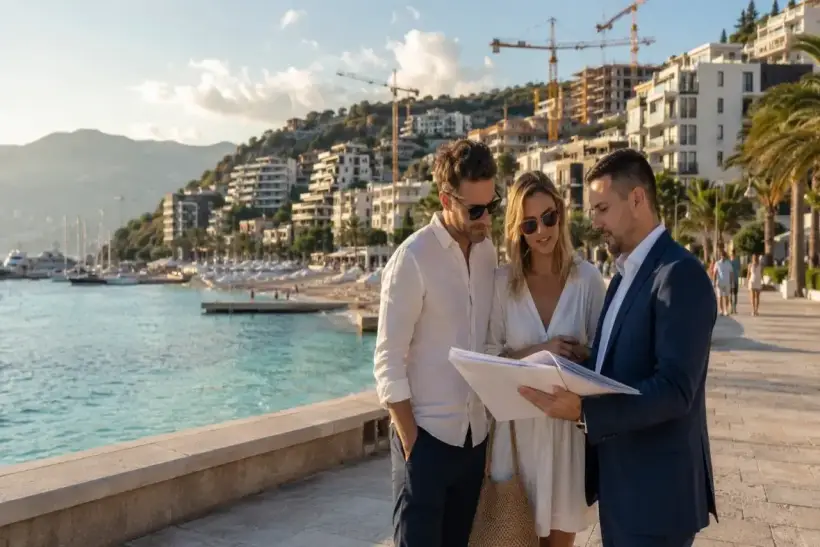
Foreign buyers are becoming a structural force in Albania’s real estate market, with European Union citizens accounting for about 61% of non-resident property purchasers, according to Investropa. Tourism growth, a low price base and relatively simple acquisition procedures are turning Tirana, Vlora, Saranda and the Albanian Riviera into one of Southeast Europe’s fastest-moving property markets.
Foreign buyers are reshaping Albanian real estate
Albania’s housing market is entering a new phase in which foreign demand is no longer marginal but increasingly central to price growth and development. Investropa estimates that EU citizens account for about 61% of foreign property buyers in Albania, benefiting from a transaction process already familiar to local agents, developers and notaries. The platform lists central Tirana, Saranda’s waterfront, Vlora’s Lungomare district, the Durres beach area and Riviera towns such as Himara, Dhermi and Ksamil among the most popular locations.
The report carried by Tv Klan and Klankosova reflects a broader shift: Albania is no longer seen only as a low-cost summer destination, but as a property market for buyers seeking coastal assets, seasonal rental income and capital appreciation. The basic appeal remains clear. Prices are still lower than in Croatia, Greece or parts of Montenegro, while tourism and infrastructure growth are lifting expectations for returns.
Real estate leads foreign investment inflows
Foreign direct investment data show that real estate has become one of Albania’s main capital-inflow channels. According to SeeNews, citing the Bank of Albania, foreign investment in Albanian real estate reached €560.9 million in 2025, ahead of insurance and financial activities at €291.14 million and wholesale and retail trade at €161.89 million.
Local Albanian reports also said total foreign direct investment exceeded €1.6 billion in 2025, with property accounting for roughly one third. That means housing and commercial real estate are now competing for foreign capital with more traditional sectors such as finance, energy, trade and manufacturing.
In 2024, foreign real estate purchases were estimated at about €379 million to €380 million, already a record level and close to a quarter of total foreign direct investment. The rise to about €561 million in 2025 points to an acceleration rather than a one-off jump.
Tourism is driving apartment and villa demand
Tourism is the main foundation of investment demand. INSTAT data cited by SeeNews and Albanian media show that foreign tourist arrivals rose to 12.47 million in 2025 from 11.7 million a year earlier. That was an increase of about 6.6% after a strong 2024, when arrivals grew 15.2%.
For real estate, the link is direct. More visitors to Saranda, Vlora, Ksamil, Dhermi and Tirana increase demand for short-term rental apartments, serviced accommodation and villas. Foreign buyers often assess Albanian property not only for personal use but also for its potential to generate income through tourist platforms during the high season.
The tourism-property link is strongest on the coast. Saranda and Vlora have become investment showcases where buyers from Italy, Northern Europe and Eastern Europe see a lower entry price than in neighboring Mediterranean markets.
Tirana and the coast attract different buyers
Tirana remains the center of urban and business property demand. It is supported by jobs, universities, internal migration, rising incomes and foreign interest in capital-city living. For investors, it offers year-round rental demand, offices, retail space and new residential projects.
The coast follows a different logic. Vlora, Saranda and the Albanian Riviera attract buyers seeking seasonal returns and land appreciation. Demand is concentrated around sea-view apartments, new projects near beaches and villas designed for short-term rental.
This split makes Albania’s market uneven. Tirana is supported by urbanization and domestic demand, while the coast is driven by tourism and foreign capital. In both cases, foreign buyers increase competition for quality assets, but the consequences differ: in the capital, housing for permanent residents becomes more expensive; on the coast, land and resort apartments become the main pressure points.
Low prices are becoming a relative advantage
Albania still looks inexpensive by Adriatic and Mediterranean standards, but that advantage is narrowing quickly. In 2024, the average housing price in Albania rose 8%, the fastest increase in five years, while new developments in Tirana were offered at €2,300 to €2,700 per square meter and roughly 10-year-old apartments on the secondary market started around €1,500 per square meter.
On the coast, price growth can be sharper. Tirana Times reported that real estate prices in coastal regions rose by an average of 25%, while in resort areas such as Palasa, Orikum and Saranda, upper-tier apartment prices reached €4,000 per square meter. Vlora’s Lungomare area saw prices of up to €3,500 per square meter.
That is no longer an ultra-cheap market. Albania may still be affordable for buyers from Italy, Germany, Poland, Czechia or Scandinavia, but for local households the rise is becoming increasingly painful. The higher the share of external demand, the wider the gap between domestic incomes and property prices.
Simple procedures support capital inflows
One reason Albania attracts buyers is its relatively open foreign-ownership regime. Investropa says foreigners can buy apartments, houses, villas and commercial property in their own name, making Albania one of Europe’s more accessible markets for non-residents. In practical terms, buyers generally need a passport, an Albanian tax number and standard notarial processing.
Some restrictions remain for agricultural land. Foreign individuals may face limits on direct ownership of larger agricultural plots and often use a local company structure. For urban apartments, villas and commercial premises, however, entry barriers remain comparatively low.
That distinguishes Albania from some European markets where non-residents face extra taxes, second-home restrictions or local purchase bans in overheated areas. Albania is still betting on openness, giving foreign capital access at an early stage of market growth.
Rental income is the core investment argument
Foreign buyers in Albania often combine two strategies: capital appreciation and rental yield. In Tirana, that means long-term rentals to students, professionals, expatriates and employees of international companies. On the coast, it means short-term tourist rentals during the peak season.
This demand is changing developer behavior. Builders are increasingly designing small and medium-sized apartments, serviced units, beach-adjacent complexes and properties that can be managed by rental agencies. That improves liquidity for investors but may reduce the supply of housing for permanent residents, particularly in tourist cities.
For the economy, the effect cuts both ways. Foreign capital supports construction, employment, services, renovation, furnishing and rental management. But the market may start producing too many assets for investors and tourists, and too few for local families.
Overheating risks are becoming clearer
Foreign purchases support prices, but they also make the market more vulnerable. If EU demand slows because of interest rates, recession, tax changes or saturation in short-term rentals, coastal projects could face excess supply. Properties bought solely for seasonal income are especially exposed.
Infrastructure is another risk. Albania’s tourist areas are growing quickly, but roads, water, sewage, parking, beach management and waste systems do not always keep pace with construction. If development outruns public infrastructure, the quality of the resort product can decline, hurting rental returns.
Market transparency also remains important. A simple purchase process does not remove the need for legal due diligence. Ownership rights, building permits, land status, utility connections, management of common areas and tax obligations should all be checked before a transaction.
Albania enters the Adriatic investment cycle
Albanian real estate is now moving through a stage previously seen in Croatia, Montenegro and parts of Greece: a local market becomes part of the international map for second homes, tourist apartments and rental investment. Albania’s difference is that it is starting from a lower base and during a period of rapid tourism growth.
That creates potential, but not a guarantee of sustainability. The faster foreign demand grows, the more important construction regulation, coastline protection, cadastral transparency and the balance between investment property and affordable housing become.
As International Investment experts report, the main risk for Albania is not the arrival of EU buyers itself, but the speed at which foreign capital is changing the market structure. If the country links the construction boom to infrastructure, tax transparency and project-quality control, real estate can become a durable growth driver. If the market develops mainly around seasonal rentals and expectations of fast price gains, Albania risks repeating problems seen in other overheated resort destinations: rising prices, limited local affordability and dependence on external demand.
FAQ on Albania’s real estate market
What share of foreign property buyers in Albania are EU citizens
Investropa estimates that EU citizens account for about 61% of non-resident property buyers in Albania. The share reflects geographic proximity, relatively simple procedures and demand for lower-cost Adriatic markets.
Why are foreigners buying property in Albania
The main reasons are lower prices than in Croatia or Greece, tourism growth, seasonal rental potential, open foreign-ownership rules and expectations of further capital appreciation.
Which Albanian cities are most popular with foreign buyers
The main destinations are Tirana, Vlora, Saranda, Durres and the Albanian Riviera, including Himara, Dhermi and Ksamil. Tirana attracts business and urban demand, while the coast is driven by tourism and short-term rentals.
How much foreign capital went into Albanian real estate
Foreign investment in Albanian real estate reached about €560.9 million in 2025, making property the largest sector for foreign direct investment in the country.
Can foreigners freely buy homes in Albania
Foreigners can generally buy apartments, houses, villas and commercial property. Restrictions mainly apply to agricultural land, where a local company or additional legal structure may be required.
What are the risks of investing in Albanian property
The main risks are rapid price growth, overheated coastal markets, infrastructure constraints, legal issues around land and permits, and dependence on tourism seasons and foreign demand.