







 Australia’s Spring Auctions Rise but Remain Well Below 2025
 Number of Foreigners Holding Turkish Residence Permits Exceeds 1.27 Million
 Demand from Russian Tourists for Holidays in Georgia Rises by 20–25%
 Montenegro Property Buying Costs in 2026
 Four in Ten Companies Would Not Choose Slovakia
 Gulf Countries Prepare Unified Tourist Visa
New Entry Rules for Vietnam: Phu Quoc Introduces Online Registration for Foreigners
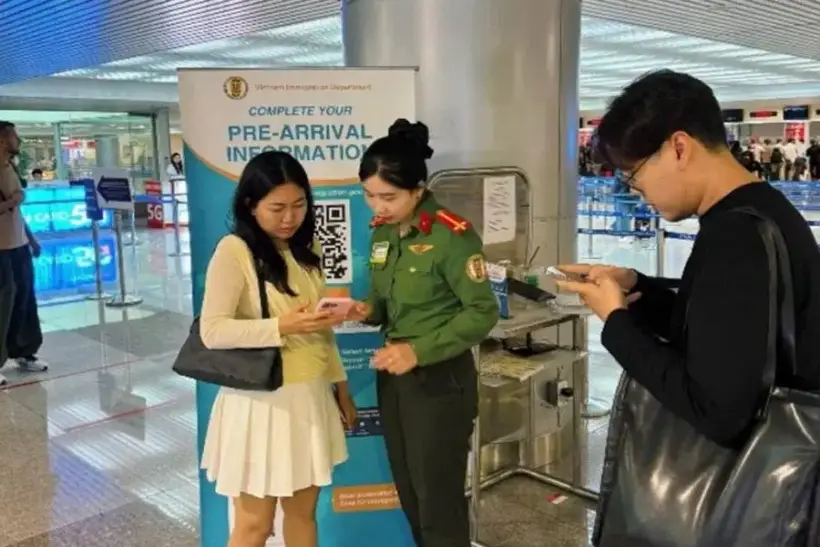
Authorities on Vietnam’s Phu Quoc Island launched a mandatory pre-arrival declaration system for international travellers on June 1, 2026. Passengers on international flights are now required to submit travel information online in advance and obtain a QR code for border control clearance, Dân trí reports.
How the Pre-Arrival Information System Works
The programme is implemented by the Immigration Control Office at Phu Quoc International Airport under the direction of Vietnam’s Immigration Department. The initiative is considered part of the development of a “smart airport” ahead of the APEC 2027 summit.
The pilot implementation of the Pre-Arrival Information (PAI) system applies to all foreign passengers arriving via the island’s international airport. It is an online platform through which travellers must submit their information no later than three days before departure.
The head of the border police unit at Phu Quoc Airport, Bui The Duong, said the installation of the PAI system and automated control gates has been completed. He noted that authorities expect cooperation from passengers, as pre-submitted data helps simplify entry procedures and make passenger processing faster and more convenient. In the future, after Terminal 2 is commissioned, the airport plans to introduce a Total Airport Management (TAM) model and contactless biometric technologies.
For domestic flights in Vietnam, digital identification via the VNeID platform is already in use. Holders of Level 2 accounts can use it throughout the entire journey — from security screening to boarding.
How to Complete the Declaration Before Travelling to Phu Quoc
To complete the procedure, passengers must access the online declaration system at prearrival.immigration.gov.vn or use the QR code provided at check-in counters at departure airports.
After selecting the language, users should open the “Create & Submit Pre-arrival Information” section and fill in all required fields, including personal details and visa-related information.
In the “Visa Type/Purpose” field, travellers must select “Phu Quoc visa exemption” for visa-free entry to Phu Quoc. Flight details and accommodation address in Vietnam are then entered, and the information should be checked before submission.
After successful registration, the system generates a QR code confirming the submission. It can be saved on a phone or screenshot to present to immigration officers upon arrival in Phu Quoc.
Before completing the form, authorities recommend preparing a passport valid for at least six months, flight details, accommodation address in Vietnam, and an active email address for system notifications.
For domestic passengers, it is sufficient to register a Level 2 VNeID account and update biometric data to reduce processing time during security checks and boarding.
Experiment in Ho Chi Minh City
The Pre-Arrival Information (PAI) system has been tested at Tan Son Nhat International Airport since April 15, 2026. The pilot project in Ho Chi Minh City marked the first stage of implementing a digital pre-declaration model for foreign passengers arriving in Vietnam. By April 30, the system had processed 161,596 declarations, of which 119,854 were successfully completed.
Although the PAI system is still in a pilot phase and not mandatory for all international passengers, around 70% of foreign travellers have already used it to submit their information before departure.
This trend is seen as a sign of strong readiness among travellers to adopt digital border services. At the same time, some applications were rejected or contained errors. The most common issues were incorrect flight numbers and Passenger Name Record (PNR) data.
PAI System Not Linked to Visa Processing
Vietnamese authorities clarify that the Pre-Arrival Information system is used exclusively for collecting advance travel data from foreign nationals. It is not used for visa issuance or processing, but serves as a tool for pre-arrival information sharing that helps speed up border procedures.
Recently, fake websites imitating the official PAI portal have been detected in Vietnam. Through these sites, fraudsters may attempt to obtain users’ banking card details and personal information. Immigration authorities urge travellers to use only the official website of Vietnam’s Ministry of Public Security Immigration Department: https://prearrival.immigration.gov.vn
Travellers are advised to carefully verify the website address and avoid third-party platforms offering assistance with the declaration process.
Vietnam’s Digital Entry System
The introduction of the Pre-Arrival Information (PAI) system is an important part of immigration authorities’ strategy to digitalise declaration forms and build a data-driven passenger management system. It reflects a broader transformation of border procedures based on digital technologies, the development of “smart aviation”, tourism services, and pre-travel support platforms.
Authorities emphasise that the system reflects a commitment to digital transformation and administrative reform, as well as improving service quality for international visitors to Vietnam. The PAI system significantly reduces border processing time upon arrival. It reduces the number of procedural steps and eases pressure on checkpoints, especially during peak hours when passenger flow is highest. It is also considered particularly useful for travellers with limited time who need to optimise their itinerary and streamline formalities.
Conclusion
Analysts at International Investment note that interest in Vietnam among tourists and freelancers continues to grow. On the one hand, the new measures are designed to speed up border procedures; on the other, they introduce additional mandatory pre-arrival data requirements. Foreign visitors must now provide their length of stay and accommodation details, which partially limits mobility and flexibility. It becomes more difficult to simply arrive in Vietnam for a few days, move between locations, and decide on plans later.
Vietnam still maintains some of the most flexible rules in the region, including visa runs, which are already being restricted in some neighbouring countries such as Thailand. However, current trends indicate a global shift toward pre-arrival digital data systems and tighter monitoring of migration flows.