







 Australia’s Spring Auctions Rise but Remain Well Below 2025
 Number of Foreigners Holding Turkish Residence Permits Exceeds 1.27 Million
 Demand from Russian Tourists for Holidays in Georgia Rises by 20–25%
 Montenegro Property Buying Costs in 2026
 Four in Ten Companies Would Not Choose Slovakia
 Gulf Countries Prepare Unified Tourist Visa
Polish Tourists Move Abroad
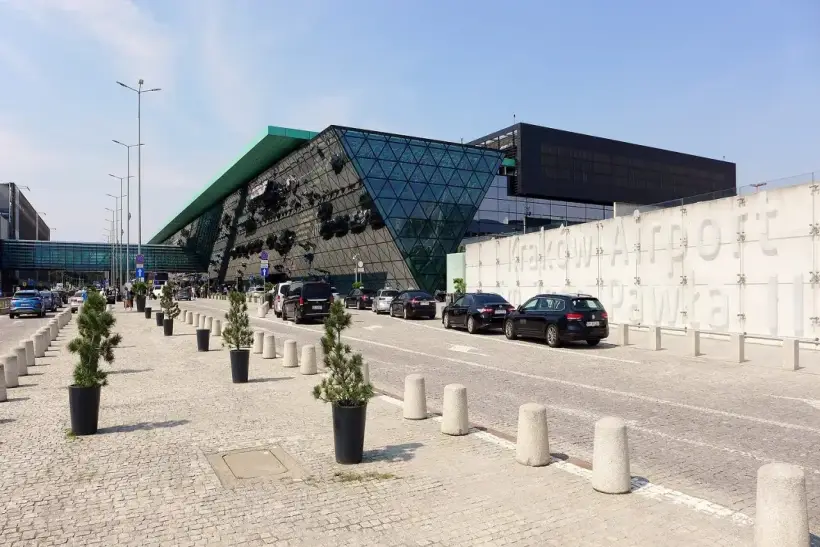
Poland is becoming a more important European source market for travel, as rising domestic mobility, stronger consumer confidence, digital booking habits and expanding air links turn Polish residents into a larger target audience for hotels, airlines, tour operators and destination marketers.
Poland is no longer only an inbound story
Poland’s tourism market is moving beyond the domestic recovery narrative. A new Source Market Insight: Poland 2026 report, highlighted by Yahoo Finance via Research and Markets, treats Poland as a source market, meaning a country whose residents generate outbound travel demand for other destinations. The analysis focuses on tourist profiles, domestic travel, outbound patterns, spending behavior and the attractiveness of destination markets.
For international tourism companies, the distinction matters. Poland is not just a destination for visitors to Warsaw, Krakow, Gdansk, Zakopane and the Baltic coast. It is also a growing exporter of leisure demand. In travel economics, that demand is measured not only by population, but by trip frequency, seasonality, digital booking behavior, air connectivity and willingness to spend on flights, accommodation, tours, insurance and online services.
GlobalData maps the Polish traveller
GlobalData frames the Polish market through both domestic and outbound tourism. Domestic tourism means trips taken by residents within their own country. Outbound tourism means trips taken by Polish residents abroad. For destination markets, the second category is the key commercial opportunity: it feeds European beaches, city hotels, ski resorts, airline routes and digital travel platforms.
The report’s structure covers tourist profiles, domestic tourism, outbound tourism, a source-market attractiveness index, main and developing destination markets, and the outlook. That matters because Polish demand is not uniform. Some travellers prefer short city breaks, others choose family beach holidays, mountains, wellness stays, cultural routes or independent trips assembled through online booking platforms.
Official data show a larger travel base
Statistics Poland reported that 38.8 million tourists stayed in Polish accommodation establishments with ten or more bed places in 2024, generating 97.6 million overnight stays. The figures were up 7.2% and 5.2%, respectively, from 2023. Bed-place occupancy reached 40.1%, down 0.4 percentage point, suggesting that supply was expanding alongside demand.
As of July 31, 2024, Poland had 10,354 tourist accommodation establishments, 545 more than a year earlier. The fastest growth came from guest rooms and private lodgings, other hotel-type facilities and tourist cottage complexes. That detail matters for the market: supply is becoming more flexible and increasingly tied to small accommodation providers, online booking and regional family tourism rather than only traditional hotels.
The first half of 2025 strengthened the trend
In the first half of 2025, Polish accommodation establishments hosted 18.9 million tourists and recorded 44.9 million overnight stays. That was 11.6% and 8.5% more, respectively, than in the same period of 2024. January was the weakest month with 2.5 million tourists, while June was the strongest month of the half-year with 4.2 million, confirming the market’s strong seasonality.
These numbers help explain the outbound opportunity. A growing domestic market usually produces a more experienced travel consumer. People compare prices more often, use booking apps, become accustomed to service standards and then apply those habits to trips abroad.
Tourism’s economic contribution is heading for records
The World Travel & Tourism Council projected that travel and tourism would contribute PLN 165.5 billion to Poland’s economy in 2025, equal to 4.4% of gross domestic product. Gross domestic product is the total value of goods and services produced in an economy over a given period. The forecast would put the sector 5.9% above its 2019 peak.
The same outlook pointed to 901,100 jobs supported by the sector, domestic visitor spending of PLN 44.9 billion and international visitor spending in Poland of PLN 76.9 billion. The latter was still expected to remain 2.8% below 2019, showing that the recovery is uneven: domestic travel has moved ahead of its old peak, while inbound spending still needs more competitiveness and connectivity.
Polish travellers are more valuable abroad
Poland’s growth matters most for countries competing for Central European travellers. With a population of about 37 million, rising incomes in major cities and a broad middle class, Poland generates demand for Mediterranean summer holidays, short trips to European capitals, ski destinations and family resorts with convenient flights.
For hotel operators, the Polish customer offers volume more than ultra-premium margins. Poland is not Europe’s richest source market, but it is large, resilient and geographically close to many regional destinations. For airlines, Warsaw, Krakow, Gdansk, Katowice, Wroclaw and Poznan are important not only for business traffic but also for leisure flows. For online platforms, Polish demand is shaped by price sensitivity, mobile search and interest in package value.
Domestic demand gives the market resilience
Polish tourism rests on a strong internal base. The Baltic coast, Masurian Lakes, Tatra Mountains, Sudetes, Bieszczady, Krakow, Warsaw, Gdansk, Wroclaw and Lublin give residents a wide range of domestic options. That reduces the sector’s reliance on foreign visitors and helps hotels absorb periods of external uncertainty.
Domestic tourism also shapes outbound behavior. Travellers who are used to taking several trips a year at home are more likely to add a short foreign break, build an independent itinerary or combine domestic holidays with a week abroad. For neighboring countries, this supports demand for road routes, rail links, family apartments and low-cost flights.
Poland is also becoming a fashionable destination
Poland’s outbound expansion is happening at the same time as the country strengthens as an inbound destination. Le Monde linked rising foreign interest in Poland to the “coolcation” trend, in which tourists seek cooler summer climates as southern Europe faces hotter seasons. The Baltic coast, with its wind, milder weather and long shoreline, is gaining visibility as an alternative to overheated Mediterranean destinations.
That trend also affects Polish travellers. As domestic infrastructure improves and foreign visitors arrive in greater numbers, service standards rise, competition increases and travel becomes a more regular consumer category. Poland is therefore moving in two directions at once: it is keeping part of the holiday wallet at home while expanding its outbound demand.
Digital platforms see a new growth channel
The report references Skyscanner, Kayak, Trivago, Google Flights, Trip.com, ePodróżnik and Booking.com. Their inclusion is telling: Polish travel demand increasingly moves through digital channels. That includes not only flights and hotels, but price comparison, route planning, rail and bus travel, apartments, short-term rentals and combined itineraries.
For platforms, Poland is attractive because travellers often seek a balance between price and quality. The market responds to promotions, early booking, flexible fares and convenient payment. At the same time, users are becoming more sophisticated: Polish travellers compare destinations, check reviews, consider alternative airports and choose trips by total journey cost rather than destination image alone.
Destination winners depend on access and price
Countries seeking Polish tourists must compete on more than beaches or heritage. Direct flights, ticket prices, accommodation costs, safety, entry rules and seasonal offers are decisive. For family holidays, apartments, food costs, beach infrastructure and predictable budgets matter. For city breaks, short flights, public transport, events and cultural density are critical.
European destinations retain strong positions because they are close and relatively affordable. Mediterranean countries compete for summer holidays, Central Europe for short breaks and road travel, and mountain regions for winter trips. Markets that communicate in Polish, support local payment habits and promote through digital channels are better positioned to win demand.
Prices and infrastructure remain the risks
Fast demand growth does not guarantee even profitability. Polish travellers remain sensitive to inflation, airfares, the zloty exchange rate and accommodation prices. If popular destinations become too expensive, part of demand may shift back to domestic tourism or cheaper foreign markets.
Poland faces another challenge at home: the pressure created by its own tourism boom. Krakow, Gdansk, Sopot, Zakopane and parts of the Baltic coast face seasonal congestion, higher housing costs, short-term rental disputes and transport strain. This is the classic stage of a maturing tourism market: success starts to require regulation, not just promotion.
Why Poland matters for tourism investors
For investors, Poland is relevant across several segments. The first is hotels and aparthotels in cities and resort regions. The second is domestic travel services, including booking, transport, insurance and tours. The third is foreign destinations that can design marketing for Polish customers. The fourth is aviation and ground transport, where demand depends on direct routes and regional airports.
Poland is also a signal for wider Central Europe. Polish tourist behavior often shows how demand changes in countries with expanding middle classes, high mobility and access to low-cost flights. If the Polish market keeps growing, competition for these travellers will intensify not only in Europe, but also in Turkey, Egypt, the UAE, Georgia and other destinations targeting mass and mid-market leisure demand.
As International Investment experts report, the critical conclusion is that Poland can no longer be treated only as an affordable inbound destination with rising foreign arrivals. It is now a maturing source market, with higher trip frequency, stronger digital competition and rising service expectations. The main business risk is overestimating volume while underestimating price sensitivity. The winners will not be destinations that simply add Polish-language advertising, but those offering direct access, clear final prices, flexible booking and service without hidden costs.