







read also
 China Home Prices Continue to Fall
 Housing Prices in Israel Fell 1.5% Year-on-Year
 Immigration Slowdown Reshapes the US Sun Belt
 Slovakia Reforms Building Rules as Housing Starts Slide
 EU Proposes New Restrictions on Short-Term Housing Rentals
 Canada Fast-Tracks Tax Rulings for C$1 Billion Investments
The Cleanest Countries in Europe in 2025: Environmental Sustainability Ranking
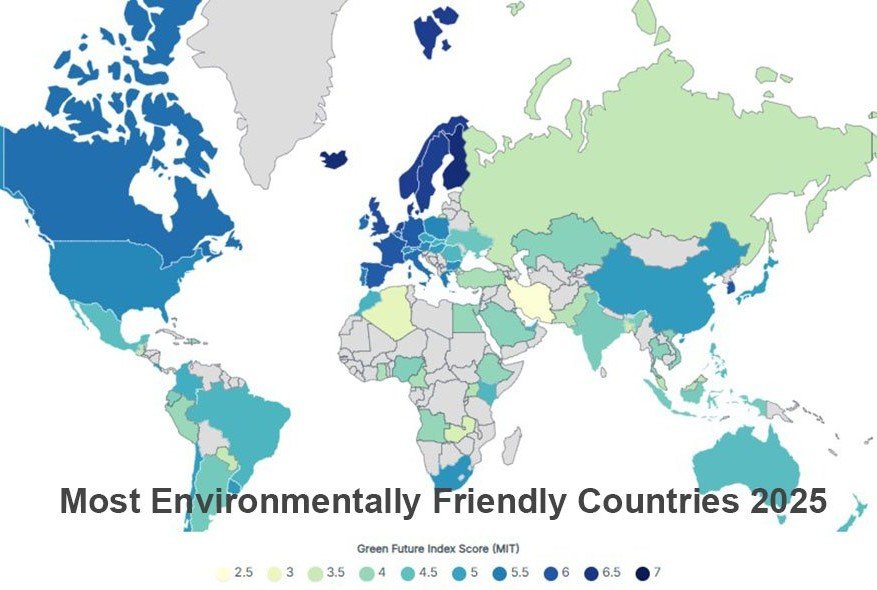
The World Population Review platform has published a ranking of the most environmentally sustainable countries in the world for 2025. Analysts assessed environmental quality indicators, climate policy, the use of renewable energy sources, waste management, as well as levels of air and water pollution. The results highlight the continued dominance of Northern and Western European countries, where environmental standards have long been embedded in public policy and infrastructure development.
Methodology. The World Population Review ranking is not an independent study with its own calculation system; it represents an aggregated assessment based on data from several international indices. The compilation takes into account indicators of environmental performance, climate policy, air and water pollution levels, renewable energy development, waste management, as well as the sustainability of urban and transport infrastructure. The calculations use data from the Environmental Performance Index (EPI), the MIT Green Future Index, US News Best Countries sustainability rankings, and survey-based assessments of environmental living conditions. This approach makes it possible to evaluate not isolated environmental parameters, but the overall quality of environmental policy and conditions in countries at the current point in time.
1. Iceland

Photo: Unsplash
Iceland is considered one of the cleanest countries in Europe thanks to a combination of natural conditions and a consistent environmental policy. Low population density and an almost complete reliance on renewable energy—geothermal and hydropower—result in a low level of anthropogenic pressure and a stable state of the environment.
Air quality in the country ranks among the best in the world. According to the Environment Agency of Iceland, the high share of renewable energy and the absence of coal-fired power generation allow pollutant concentrations to remain minimal. Short-term deteriorations may occur during periods of volcanic activity or due to dust transport from southern regions, but such episodes are limited in scope and are subject to continuous environmental monitoring.
Water resources are a key element of the country’s environmental profile. Rivers, groundwater sources, and glaciers provide the population with clean drinking water, while geothermal waters are used for heating and river systems for electricity generation. In 2025, an updated Act on Water Management is in force, enshrining principles of sustainable water use and ecosystem protection.
The waste management system focuses on waste prevention and recycling. A deposit-return scheme for containers operates nationwide, and the recycling rate for construction and demolition waste reaches 97%, one of the highest levels in Europe. Household waste recycling remains at around 23% and is identified by the authorities as a priority area for further development.
Environmental responsibility is widely supported at the societal level. The government invests in protecting vulnerable natural areas and regulating tourist flows, while tourism develops within the framework of responsible travel, with an emphasis on compliance with environmental requirements, the use of certified operators—including the Vakinn system—and minimising environmental impact.
2. Finland

Photo: Unsplash
Finland consistently ranks among the countries with the most favourable environmental conditions in Europe and holds second place in the European ranking in 2025. In the Environmental Performance Index, the country demonstrates strong results in air quality, water resource management, and ecosystem protection. Finland’s environmental policy is systemic in nature, covering pollution control, sustainable forestry, and biodiversity conservation, and is consistently integrated into public regulation and infrastructure planning.
Air quality in Finland is among the best in Europe. The annual average concentration of fine particulate matter PM2.5 is around 5 µg/cu. m, significantly below the European average. According to the EEA, the level of premature mortality linked to air pollution has fallen below the EU average. The use of wood for heating during winter still leads to local pollution peaks, to which authorities respond by modernising heating systems and tightening standards.
Water resources remain one of the country’s key environmental advantages. According to the EEA, 97% of monitored bathing sites meet minimum water quality standards, with 85.5% classified as “excellent.” The protection of lakes, rivers, and groundwater is regarded as a core element of environmental policy and sustainable natural resource management.
In waste management, Finland is approaching its 2025 targets. In 2022, the recycling rate for municipal waste stood at 43%, with a significant share directed to energy recovery. Deposit-return schemes for containers play an important role, although authorities acknowledge the need to accelerate packaging recycling, particularly for plastic waste.
Environmental responsibility is widely supported at the societal level. High public engagement in recycling, energy efficiency, and public transport use is complemented by the development of sustainable tourism. The national Sustainable Travel Finland guidelines focus on supporting local communities, promoting public transport, and expanding low-carbon leisure activities, allowing tourism growth to be balanced with the preservation of natural ecosystems.
3. Norway

Photo: Unsplash
Norway rounds out the top three of the European environmental ranking and demonstrates strong overall environmental performance indicators. In the Environmental Performance Index, the country ranks highly in air quality, sanitation, and ecosystem protection, reflecting a stable environmental situation and effective environmental regulation.
Air quality in Norway remains among the best in Europe. According to the OECD, the level of premature mortality linked to exposure to fine particulate matter PM2.5 amounts to fewer than 5 cases per 100,000 people, well below the OECD average. This is driven by strict emissions standards, a low share of coal-fired power generation, and a limited concentration of polluting industries.
The country’s water resources are characterised by high quality and accessibility. More than 90% of the population is supplied with centrally treated drinking water, and overall water quality meets strict national and European standards. Authorities focus on infrastructure modernisation and reducing water losses in networks, particularly in the context of climate risks.
The energy model remains a key element of Norway’s environmental profile. More than 90% of electricity generation comes from hydropower, making Norway one of the least carbon-intensive electricity producers in Europe. In waste management, Norway has largely phased out landfilling: most municipal waste is recycled or used for energy recovery.
4. Sweden

Photo: Unsplash
Sweden has developed one of the most advanced environmental regulatory systems in Europe. In the Environmental Performance Index, the country demonstrates consistently high scores in pollution control, climate policy, and ecosystem protection, reflecting a long-term and comprehensive approach to environmental protection.
Air quality has improved markedly in recent years. According to national and European environmental agencies, Sweden is close to achieving its own clean air and toxic exposure reduction targets by 2030. At the same time, exceedances of WHO guidelines for nitrogen dioxide and fine particulate matter are still recorded in certain urban areas. Authorities continue to reduce emissions from transport, residential heating, and industry, focusing on electrification and cleaner fuels.
The country’s water resources rank among the cleanest in Europe. Lakes and rivers are under continuous monitoring, and most bathing sites meet high water quality standards. The Baltic Sea remains a problem area due to eutrophication and pollution linked to shipping and agriculture, prompting measures to reduce nutrient inflows and protect aquatic ecosystems.
Sweden is among Europe’s leaders in waste management. Around 50% of municipal waste is recycled, with the remainder used for energy recovery. Additional emphasis is placed on reducing food waste and expanding textile recycling, supported by active investment in new technologies and infrastructure.
Environmental responsibility is widely supported at the societal level. High public participation in separate waste collection is combined with principles of respectful interaction with nature enshrined in the right of public access (Allemansrätten). Tourism develops within a sustainable travel framework, with a focus on rail transport, electric buses, and eco-certified accommodation facilities.
5. Denmark
[img]https://internationalinvestment.biz/uploads/posts/2025-12/aalborg-denmark.jpg[/img
]
]
Photo: Unsplash
[/size]
Denmark ranks among Europe’s leaders in environmental governance and sustainable development. In the Environmental Performance Index, the country scores highly in air quality and waste management, which [leech=https://epi.yale.edu/country/2024/DNK]reflects[/leech
] the systemic nature of its environmental policy and its deep integration into economic and infrastructure planning.
Air quality has improved significantly in recent years. Between 2005 and 2020, exposure to fine particulate matter PM2.5 [leech=https://www.eea.europa.eu/en/countries/denmark]declined[/leech
] by around 60%, substantially reducing premature mortality. The transition from fossil fuels to renewable energy played a key role. At the same time, authorities acknowledge that wood-burning stoves remain a significant source of local pollution and are implementing programmes to upgrade heating systems.
Water resources remain one of the strongest elements of the country’s environmental profile. According to the European Environment Agency, 98.1% of bathing sites [leech=https://www.eea.europa.eu/en/countries/denmark]meet[/leech
] minimum water quality standards, with 92.9% rated “excellent” in 2024. Strict monitoring and regulation help maintain high water quality across beaches, lakes, and coastal areas.
In waste management, Denmark is close to meeting its 2025 targets. In 2022, the recycling rate for municipal waste [leech=https://www.eea.europa.eu/en/countries/denmark]stood[/leech
] at around 50%, while recycling of packaging waste reached 64.9%. The country is strengthening measures to reduce food waste and investing in the modernisation of recycling infrastructure, combining recycling with energy recovery.
Environmental responsibility is widely reflected in everyday behaviour. Extensive cycling infrastructure, active use of public transport, and a deposit-return system for bottles help reduce waste volumes and increase recycling rates. Tourism develops with an emphasis on sustainable formats, including eco-certified accommodation and careful use of natural and urban spaces.