







 China Nears a Decision on Fresh Stimulus
 Fines for Illegal Rentals in Spain Reach €800,000
 Australia’s Spring Auctions Rise but Remain Well Below 2025
 Number of Foreigners Holding Turkish Residence Permits Exceeds 1.27 Million
 Demand from Russian Tourists for Holidays in Georgia Rises by 20–25%
 Montenegro Property Buying Costs in 2026
US Futures Rise as Tankers Cross Hormuz
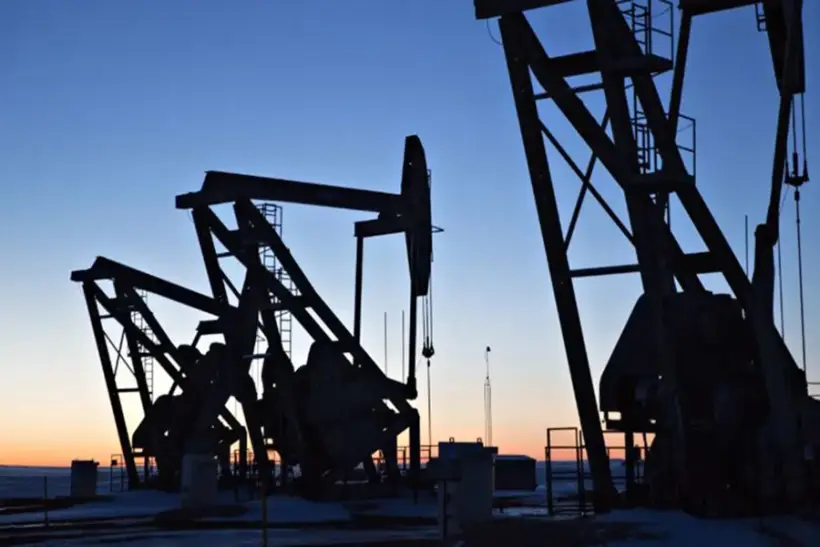
Wall Street finds relief as some vessels keep moving
US stock futures moved higher on March 16 after markets received the first signs that at least some tankers were still managing to pass through the Strait of Hormuz despite the war involving Iran and the sharp jump in oil prices seen in previous days. That combination — easing panic over a total shutdown of the route and a pullback in crude prices — sits at the center of Bloomberg’s latest market narrative. Other fresh reporting supports the same conclusion: investors found some relief in evidence that shipping through Hormuz had not completely stopped, reducing fears of an immediate full-scale energy shock for the global economy.
According to Barron’s, Dow futures were up about 0.5% early on March 16, while S&P 500 futures rose 0.7% and Nasdaq 100 futures added 0.8%. Investors reacted to reports that the Trump administration was trying to build an international coalition to protect shipping in the Strait of Hormuz, as well as to indications that some vessels were still crossing the chokepoint. For markets, that marked an important psychological shift after several days when a near-total disruption of Hormuz traffic had begun to look like a core risk scenario.
Tanker crossings reduced the sense of immediate panic
The main trigger for improved sentiment was evidence that at least some non-Iranian vessels had successfully transited the strait. The Wall Street Journal reported that the Pakistani-flagged Aframax tanker Karachi crossed Hormuz while keeping its transponder on, making it the first openly trackable non-Iranian vessel to do so since the conflict escalated. The paper also said that two Indian LPG tankers had previously passed through, although they turned off tracking for safety reasons. That does not mean shipping has normalized, but it does weaken the most extreme scenario of a complete blockade.
At the same time, conditions remain far from normal. The same WSJ report said traffic through the strait between March 1 and March 12 had plunged 95% compared with the prior period. The Guardian also reported that Iran had effectively closed the strait to a large share of traffic, even though the route normally carries around one-fifth of the world’s oil trade and a significant share of LNG shipments. In other words, the few successful tanker crossings improved market sentiment mainly because they showed the corridor was not entirely lost, not because trade had returned to normal.
Oil stayed elevated but retreated from the highs
Crude prices reflected the same pattern. After spiking above $100 a barrel, both US crude and Brent began pulling back on March 16. AP reported that US crude fell about 5.3% to $93.57 a barrel, while Brent dropped about 2% to $101.09. Barron’s separately reported Brent easing toward roughly $102.79 to $103.05 and WTI moving down toward $96.7 to $97. Those are still elevated levels, but no longer the outright panic pricing seen after reports of Hormuz disruption and attacks on Gulf energy infrastructure.
That matters because equities had recently been hit less by war headlines themselves than by fears of a renewed oil-driven inflation shock. The lower the probability of a prolonged full closure of Hormuz, the lower the risk that expensive oil will force central banks to keep policy tighter for longer. That logic helps explain why even a partial retreat in crude prices immediately improved the tone on Wall Street.
Stocks rose on hopes the damage can be contained
The US market responded quickly. AP reported that the S&P 500 rose 1.2% on March 16, the Dow gained 1.1% and the Nasdaq climbed 1.3%, marking Wall Street’s best day since the start of the Iran war. The rebound was strongest in sectors sensitive to fuel and transport costs, including airlines and consumer-facing companies. That pattern suggests investors are not yet betting on the end of the conflict, but rather on a scenario where the economic fallout can still be contained and prevented from becoming a full energy shock.
Still, volatility remains high. MarketWatch noted that both futures and oil prices were still swinging sharply as traders tried to assess whether the passage of a few tankers signaled genuine stabilization or only a temporary exception. That means any new strike on ports, tankers or Gulf energy facilities could quickly reverse the day’s relief and send markets back into a mix of equity selling and commodity stress.
Hormuz remains the key fault line for the global economy
Even after the market bounce, the Strait of Hormuz remains the central pressure point for global risk. Around 20% of global oil flows and major LNG volumes pass through it, which means every update on vessel traffic affects crude, stocks, bonds, inflation expectations and currencies at once. That is why Donald Trump’s call for allies to help secure the route mattered so much to markets: the issue is no longer only the war with Iran, but the integrity of the world’s energy trade architecture itself.
Yet it is far too early to call this normalization. The Guardian and AP both indicate that international backing for a naval response remains limited and the security of the route is still fragile. So markets have not moved into calm; they have moved into cautious hope. Tankers are getting through, but too slowly and under too much risk for investors to believe the crisis is over.
As experts at International Investment note, the rise in US futures following the passage of some tankers through Hormuz shows that markets are currently reacting above all to the degree of disruption in physical logistics, not only to geopolitical headlines. If shipping continues even in limited form, investors will be more willing to price a scenario of partial containment. But any renewed strike on the strait would quickly bring back fears of recession, inflation and tighter monetary policy.