







 How Ukraine’s New-Build Housing Market Has Changed Over Four Years
 European Prime Rents Rise as Property Yields Turn Higher
 The Most Expensive Airlines in Europe in 2026
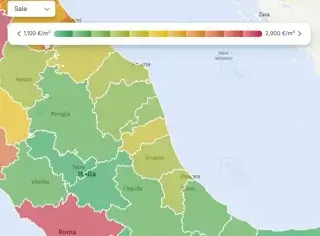 Housing Prices in Italy Reach a Two-Year High
 Travellers Increasingly Choose Cooler Scandinavia
 Serbia Property Sales Decline as Transaction Value Rises
Cyprus Land Registry Faces Deep Systemic Delays

Audit exposes serious failures in Cyprus land administration
A new special report by the Audit Office of Cyprus has identified serious systemic failures in the Department of Lands and Surveys, raising concerns over state land management, property rights protection and public revenue collection. According to the report, uncollected revenue reached €18.5 million in 2024, up €3 million from the previous year. The review covered the department’s activities for 2021–2023 and the Nicosia District Lands Office for 2022–2024.
Auditors describe the problem not as a collection of isolated mistakes, but as a pattern of chronic dysfunction. The report points to complex procedures, slow responses from other public services, poor internal coordination and an outdated legal framework marked by gaps, vague provisions and the absence of objective criteria for allocating state property. In that form, the system risks creating opacity and unequal treatment for applicants.
Cyprus land procedures are taking years to complete
One of the most striking findings concerns waiting times. According to the audit, the average wait for a land or cadastral survey is 17 months, while in some cases the process stretches to as long as 16 years. Boundary disputes between neighbors take an average of 125 months to resolve, which is more than 10 years, and in some cases final decisions were communicated 15 years after the actual survey work took place.
The scale of the backlog reinforces the picture of a structurally overloaded system. At the end of 2023, roughly 25,000 site survey applications were still pending. Each year, the department receives around 15,000 new applications but processes only about 13,000. That means the backlog is not shrinking in a meaningful way and is instead becoming a permanent feature of the system.
Millions of euros remain tied up in unpaid state revenue
The financial implications are also serious. Uncollected revenue linked to the department reached €18.5 million in 2024. Reporting based on the audit indicates that one of the main reasons is weak oversight of state land lease agreements and growing tenant arrears. Slow decision-making and legal inaction, according to the report, are delaying or preventing the recovery of millions of euros owed to the state.
For the property market and for investors, this matters as much as the administrative delays themselves. When the state cannot efficiently manage leases, disputes, payments and property-related procedures, uncertainty increases for transactions, project planning and legal protection. That is especially significant in Cyprus, where land registration and title administration remain central to the real estate system.
Audit calls for major reform of Cyprus land administration
Auditor General Andreas Papaconstantinou said in the report’s foreword that simply acknowledging chronic delays is no longer enough. He called for a deep change in mindset and approach, including modernized procedures, clear deadlines, measurable performance targets and a more transparent management model. Coverage of the report also emphasized that excessive workload and staff shortages have turned dealings with the land registry into one of the most persistent weak points in Cyprus’ public administration.
In effect, the audit raises not only a technical issue about bureaucracy, but a broader institutional challenge for Cyprus’ property framework. If reform is delayed again, the risks to public finances, the real estate market and confidence in state institutions are likely to deepen. In a country where land and property relations play a central role in the investment climate, that is a highly important warning sign.
As experts at International Investment note, the new audit of Cyprus’ land department matters not only as a domestic administrative report, but as an indicator of the institutional quality behind the property market. Long delays, weak revenue control and unclear rules for allocating state land reduce predictability and raise risks for owners, tenants and investors alike.