







 How Ukraine’s New-Build Housing Market Has Changed Over Four Years
 European Prime Rents Rise as Property Yields Turn Higher
 The Most Expensive Airlines in Europe in 2026
 Housing Prices in Italy Reach a Two-Year High
 Travellers Increasingly Choose Cooler Scandinavia
 Serbia Property Sales Decline as Transaction Value Rises
Bali Launches Digital System to Monitor Foreigners
Police to Track Movements of Tourists and Residents
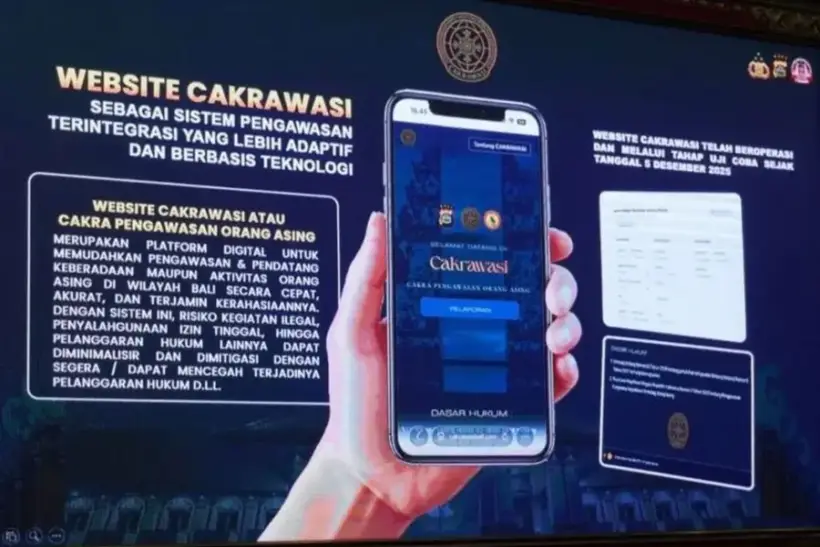
The Bali Regional Police have launched a digital platform called Cakrawasi (Cakra Pengawasan Orang Asing), reports The Bali Times. The new system is designed to enhance monitoring, data collection, and analysis of the presence and movements of foreign tourists and residents on the island. Authorities say the initiative aims to combat illegal stays and other violations of the law.
What is Cakrawasi and How It Works
Bali Police Chief Inspector General Daniel Adityajaya explained that Cakrawasi is not just an application, but a platform for analyzing the presence of foreign nationals. The system functions as an integrated digital database that collects data in real time and transmits it to a central command center.
This approach is intended to close gaps that have previously been used for illegal residence, visa misuse, and other offenses. Some foreigners use multiple passports or forged documents to bypass existing verification mechanisms and legalize their stay.
Police emphasize that relying solely on immigration controls has proven insufficient, and the new system integrates efforts across multiple agencies. The Cakrawasi platform has been tested since December 2025, involving government and private sector entities, as well as accommodation providers, Reddit reports.
Tourism Growth and Emerging Challenges
The introduction of the platform can be seen as part of a broader trend toward the digitalization of immigration control in Indonesia. One of its key objectives is to create a unified picture of tourist movements through coordination between police, the hospitality sector, and security services, allowing for faster identification of suspicious activities and violations. This has become increasingly important amid the growing number of international visitors.
In 2025, the number of international tourists visiting Bali increased by 11.9% to 7.05 million, up by 750,000 compared to the previous year. The island also continues to attract both foreign and domestic investors, who do not always comply with local regulations. In particular, violations related to the construction of tourism-related properties are regularly recorded, prompting authorities to impose restrictions and even bans on certain developments.
The new system is expected to scale up monitoring of foreign nationals. Authorities require hotels, villas, and other accommodation providers to submit guest data in accordance with passport details. It is also noted that some offenders enter the country using genuine passports but conduct transactions domestically using forged documents.
Tighter Control of Short-Term Rentals in Bali
Indonesian authorities are also tightening regulations in other areas. New rules for short-term rentals in Bali aim to increase transparency in the tourism market and ensure compliance with licensing requirements.
All properties must operate within the official licensing and tax framework. By March 31, 2026, property owners are required to obtain a full set of permits. After that, online platforms will be required to verify licenses and remove listings that do not comply with the law.
To operate legally, owners must register a business and obtain several permits, including a Business Identification Number (NIB), a tourism license, zoning approvals, and building compliance certificates. Depending on the type of property, a Pondok Wisata license may be required for smaller guesthouses.
Implications of the Changes
Analysts at International Investment note that stricter regulation of tourism-related sectors is a global trend. However, Bali’s approach appears more comprehensive, as it simultaneously addresses both the movement of foreign nationals and the accommodation market.
In practice, these measures may reduce the number of short-term rental listings, particularly in popular areas such as Canggu, Ubud, and Seminyak, while shifting demand toward fully licensed properties.
At the same time, the new framework is expected to create a more transparent and controlled environment. For authorities, it is a tool to reduce the shadow economy and improve security; for compliant market participants, it offers an opportunity to operate under clearer and more predictable rules.