







read also
 Australia’s Spring Auctions Rise but Remain Well Below 2025
 Number of Foreigners Holding Turkish Residence Permits Exceeds 1.27 Million
 Demand from Russian Tourists for Holidays in Georgia Rises by 20–25%
 Montenegro Property Buying Costs in 2026
 Four in Ten Companies Would Not Choose Slovakia
 Gulf Countries Prepare Unified Tourist Visa
Analytics / Reviews / News / Migration / United Kingdom / Denmark / Germany / France / Italy / Spain / Poland 12.01.2026
Europeans Overestimate Illegal Migration
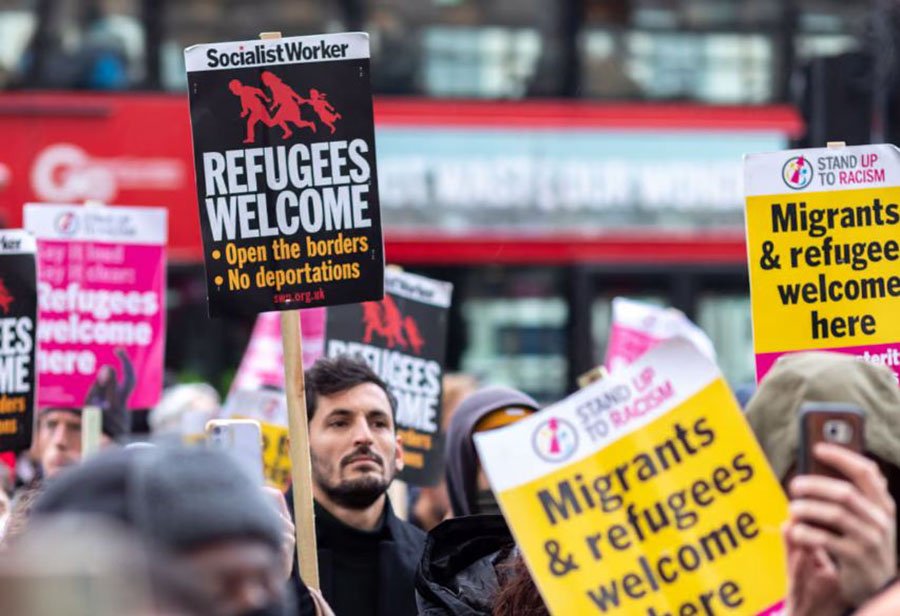
Photo: The Guardian
A new YouGov survey reveals that many Europeans mistakenly believe that most migrants in their countries are present illegally. Conducted across seven European nations, the poll highlights a sharp disconnect between public perceptions and migration realities, alongside strong support for restrictive migration policies.
Public misperceptions of scale
In the UK, Denmark, France, Germany, Italy and Spain, between 44% and 60% of respondents said they believed illegal migrants outnumber legal ones. These perceptions stand in stark contrast to official data, which shows that the majority of migrants in Europe reside legally. In France, for example, research indicates that only around 21% of immigrants have ever lacked valid documentation.
Poland stood apart from this pattern, with public opinion more evenly divided on the issue.
Broad support for reducing migration
The survey found widespread opposition to any increase in migration. In all countries surveyed, majorities or near-majorities favored a significant reduction in the number of migrants allowed to enter. Around half of respondents supported a temporary halt to new arrivals combined with the removal of large numbers of recent migrants.
Strong majorities opposed any substantial rise in migration, while maintaining current levels also failed to gain broad approval.
Who should be deported
Support for deportations was highest for migrants perceived as having broken rules, sought asylum illegally, or worked without valid permits in low-skilled jobs. By contrast, enthusiasm for deporting legal migrants was much weaker.
Notably, even among those backing mass deportations, very few supported the removal of doctors and other highly skilled workers on work visas, highlighting implicit limits to anti-migration sentiment.
Economic trade-offs acknowledged
Respondents generally recognized that cutting legal migration entails economic trade-offs. When asked to choose between reducing immigration and ensuring sufficient healthcare staffing, filling skilled vacancies or attracting top talent, most consistently favored the latter.
However, arguments based on broader economic growth, increased taxpayer numbers or adherence to international humanitarian obligations proved less persuasive.
Identity and integration concerns
Even legal migration remains controversial. Majorities in France and Germany believe legal migration levels are too high, and significant shares across several countries say legal migrants do not share national values or integrate well into society.
Sociologists note that these concerns go beyond economic considerations, touching on deeper issues of identity, integration and national values.
As International Investment experts report, the survey underscores how migration debates in Europe are increasingly shaped by perceptions rather than facts. While economic realities still moderate some attitudes, identity-driven concerns are likely to continue influencing policy, with implications for labor markets, competitiveness and long-term growth.