










Vienna Keeps Rents Lower Through Social Housing
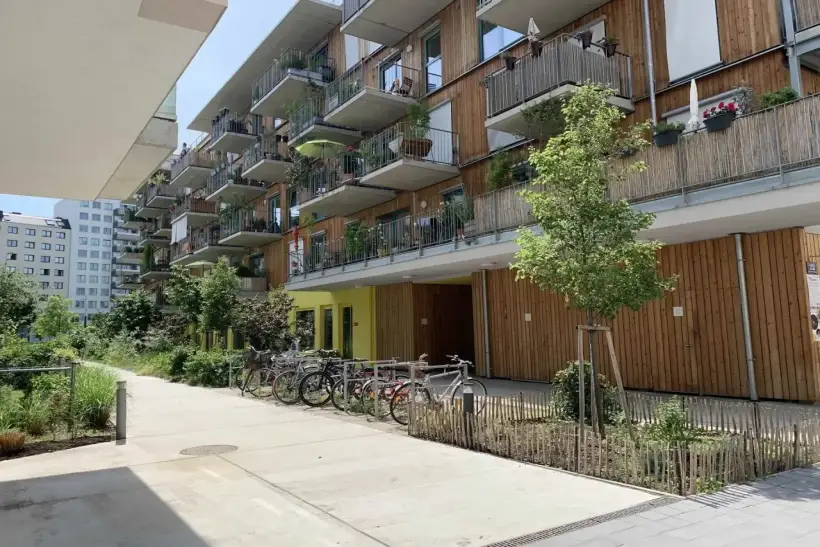
Vienna has maintained more affordable rents than many European capitals through a housing system developed over more than a century. The municipality owns about 220,000 flats, while another 200,000 subsidised homes are operated by limited-profit housing organisations. Access is not universal, however: residency, income and housing-need rules mean that newcomers increasingly depend on the more expensive private market.
Almost half of Vienna’s housing is outside the open market
Vienna has approximately one million homes. Municipal flats account for 22% of the stock and co-operative housing for another 21%. Private rentals represent about 33%, owner-occupied homes 19% and other arrangements 5%. Around 76% of residents rent rather than own their homes.
The scale of the non-market sector allows it to affect more than its direct tenants. Private landlords compete with a large supply of open-ended, cost-regulated housing, which restrains rents across the wider city market.
The Times of India highlighted Vienna as an alternative to the housing model used in many European capitals. About 500,000 residents live in roughly 1,800 municipal estates, while the combined municipal and subsidised sectors accommodate approximately half of Vienna’s population.
The 420,000 homes are not all owned by the city. Vienna owns the municipal stock, while co-operative and subsidised properties are held by associations governed by cost-rent and limited-profit rules.
Municipal tenants pay less than private renters
Austria’s official data show the difference between tenure categories, although the figures cover the entire country rather than Vienna alone. In the first quarter of 2026, rent including running costs averaged €516.3 per month in municipal housing, equivalent to €8.5 per square metre.
Co-operative tenants paid an average of €623, or €9 per square metre. Private main tenants paid €816.7 per month, or €12.5 per square metre. Private rent per square metre was therefore about 47% higher than the municipal average.
Excluding running costs, the respective figures were €5.7 per square metre for municipal homes, €6.4 for co-operative housing and €9.9 for private rentals. Heating, hot water and parking were excluded from the calculation.
The Austrian average across all main rental homes reached €695.1 per month and €10.5 per square metre. It increased by 4.8% from the first quarter of 2025.
Vienna nevertheless remains one of Austria’s most expensive locations when all housing costs are considered. In 2025, the median cost for households in the capital was €11.7 per square metre and the average was €12. These figures include different tenures and owner costs, so they are not equivalent to advertised market rent.
Vienna retained its public housing stock
The foundations of the system were laid after the First World War, when overcrowding, poor sanitation and tuberculosis created an acute housing crisis. Vienna became a federal province with greater fiscal autonomy in 1922, and the city council approved a programme to build 25,000 flats over five years in 1923.
The programme used progressive housing taxation and produced estates with courtyards, green areas, childcare, libraries and communal facilities. Public housing was designed as permanent urban infrastructure rather than emergency accommodation.
Unlike several other European cities, Vienna did not sell most of its municipal housing. The stock remained in public ownership and continued to act as a long-term market regulator.
After pausing direct municipal construction, Vienna resumed it in 2015. More than 4,000 new municipal flats are being built under the Municipal Housing NEW programme.
Eligibility extends into the middle class
Subsidised housing is not reserved exclusively for households with the lowest incomes. In 2026, the maximum annual net income is €61,280 for one person and €91,320 for two. The ceiling rises to €103,330 for three people and €115,360 for four, with an additional €6,730 for each further household member.
The city estimates that about 75% of residents earn less than the limits. Broad eligibility is intended to avoid concentrating poverty and to maintain mixed-income neighbourhoods.
Applicants must be adults, have registered their main residence in Vienna for at least two years, hold Austrian citizenship or an equivalent status and remain below the income ceiling. Longer residence provides a limited advantage on the waiting list.
The cheapest municipal and SMART homes also require a documented housing need, such as overcrowding, disability, single parenthood, age-related accessibility requirements or a young person establishing a first independent household.
Meeting the rules does not create an immediate entitlement to a chosen property. Demand exceeds availability in several categories, so allocation remains a system for distributing a scarce resource.
Municipal rentals require little upfront cash
Municipal tenancy contracts are generally open-ended. Tenants do not pay a security deposit, estate-agent commission, contract fee or equity contribution when moving in.
Co-operative housing often requires a refundable financing contribution. Its size depends on the building’s age, location and floor area. The contribution is returned when the tenancy ends, subject to annual depreciation of 1%.
The distinction allows Vienna to serve households with different savings levels, but the homes with the lowest entry costs can attract the longest queues.
Limited-profit associations recycle housing revenue
Vienna has 54 limited-profit housing associations administering about 200,000 rental and co-operative flats. They build approximately 5,000 homes a year, representing around 30% of the city’s annual housing production.
Rents are set to cover land, construction, administration, financing, repairs and long-term maintenance. Profits are restricted and must be reinvested in land, renovation or new development. The associations receive a corporate-tax exemption in exchange for these obligations.
Across Austria, limited-profit organisations have produced more than one million homes over 120 years. They account for about 20% of the national stock and roughly one-quarter of annual construction.
Vienna spends about €530 million a year
The housing system is financed through taxation, municipal budgets, low-interest public loans, bank credit and developer equity. A housing contribution equal to 1% of combined employee and employer income generates about €250 million a year for Vienna.
The city spends approximately €530 million annually on housing construction. Subsidised projects can receive loans at 1% interest for as long as 40 years, covering around 35% of construction costs.
Rents remain capped at cost level while the loan is being repaid. Vienna estimates that without subsidies and associated cost limits, tenants’ expenses would be about one-third higher.
This differs from paying an allowance to individual tenants. A supply-side subsidy remains attached to the building and can restrain rents for successive households.
Public land limits speculation
Vienna’s housing fund holds approximately 3.1 million square metres of land. Long-term acquisition enables the city to purchase industrial, brownfield or agricultural sites before rezoning sharply increases their value.
A subsidised-housing zoning category introduced in 2018 generally requires two-thirds of residential floor space on qualifying sites to be used for subsidised homes. The rule applies to major redevelopment, densification and high-rise projects.
Subsidised properties can also be subject to a land-register sales restriction, preventing them from moving rapidly into the speculative market without city approval.
Developers compete on quality rather than land price
Vienna frequently allocates subsidised housing sites through developer competitions. Land prices are set in advance, and projects are assessed under four criteria: social sustainability, architecture, ecology and economics.
Both commercial and limited-profit developers can participate. The winning developer may receive subsidies covering as much as 35% of construction costs but must deliver the submitted design, fixed costs and agreed rent levels.
The model uses private construction capacity without allowing the highest land bid to determine the final project.
New residents often face the private market
The most important weakness is access. New arrivals usually fail the residence-duration test and must initially rent privately. The same applies to households above the income ceiling or without a recognised housing need.
This creates a divided experience. A long-term municipal tenant may have a stable open-ended contract and moderate rent, while a newly recruited worker, student or foreign family faces market pricing, a deposit and potentially a fixed-term agreement.
The city’s current rules require a qualifying period of primary residence and an eligible citizenship or residence status. The subsidised stock is limited even for applicants who satisfy the requirements.
Long-term contracts can also reduce turnover. Tenants have little incentive to give up a low-cost home when their income or household circumstances change.
Population growth is increasing pressure
Vienna’s population again exceeded two million in 2023. The city is now the fifth largest in the European Union after Berlin, Madrid, Rome and Paris.
The social-housing share varies widely by district, from about 10% in the eighth district to 65% in the eleventh. Access therefore does not guarantee a home in a preferred neighbourhood.
Vienna must combine new development, higher density and the protection of green space, which covers roughly half of the municipal territory. Population growth and rising land costs make it harder to expand the system at its historic pace.
The ageing stock requires continuous investment
Low rents create long-term maintenance obligations. The city is responsible for roofs, façades, utilities, lifts, courtyards, playgrounds and communal facilities across a very large portfolio.
Since 1984, Vienna’s gentle urban-renewal programme has refurbished 7,463 buildings containing about 322,700 homes. A further 210 buildings with approximately 16,800 flats were undergoing renovation, with another 95 buildings and 6,400 homes scheduled for work.
Maintenance delays and the cost of energy renovation remain major criticisms of the system. Public ownership protects affordability but does not eliminate the expense of keeping century-old assets habitable.
The model cannot be reproduced quickly
Vienna’s position is the result of a century of land acquisition, construction, retained ownership and institutional finance. A city starting today with little public land and a small housing stock would face far higher acquisition costs.
Individual tools can still be adopted elsewhere, including land banks, long-term low-interest loans, cost-rent associations, mandatory affordable shares in large developments and restrictions on the resale of subsidised homes.
As International Investment experts report, Vienna’s success comes less from rent control alone than from controlling a large part of housing supply. The system protects established eligible tenants particularly well, but newcomers and households outside the allocation rules remain exposed to the private market. Replicating the model requires decades of land policy, stable finance and a willingness to maintain public assets through economic cycles. Its performance should therefore be judged not only by the rents paid by current tenants, but also by waiting times, access for new residents, maintenance quality and whether construction keeps pace with population growth.
FAQ
How many municipal flats does Vienna own?
The city owns approximately 220,000 flats in around 1,800 housing estates, accommodating close to 500,000 residents.
How much social housing is there in Vienna?
The city-owned stock is complemented by about 200,000 subsidised and co-operative homes. Together, the sectors represent around 43% of the housing stock.
How much does municipal housing cost?
Across Austria, municipal rent including running costs averaged €516.3 per month, or €8.5 per square metre, in the first quarter of 2026. Vienna-specific contracts vary by property.
How much does private rent cost?
Austria’s average private main rent was €816.7 per month, or €12.5 per square metre including running costs. New listings in central Vienna can be substantially higher.
Who qualifies for subsidised housing?
Applicants must meet age, Vienna-residency, legal-status and income requirements. Access to the cheapest municipal homes also requires a recognised housing need.
What is the 2026 income limit?
The annual net ceiling is €61,280 for one person and €91,320 for two. It rises with household size.
Is a deposit required for a municipal flat?
Normally no. Municipal tenants do not pay a security deposit, agent’s commission, contract fee or equity contribution.
How is co-operative housing different?
A limited-profit association owns and operates the property. Rent is based on costs, and tenants may have to pay a refundable financing contribution.
Why are Vienna’s rents comparatively moderate?
The city controls a large housing stock, owns development land, provides long-term subsidised finance and limits profits in the co-operative sector.
Can another city copy Vienna quickly?
Not in full. Vienna accumulated its land and housing over more than a century. Other cities can adopt individual mechanisms, but comparable scale would require sustained investment over decades.