







 Covivio Hotels Revenue Grows 4.7% as European Markets Split
 Lithuanian Apartment Prices Accelerate Across Major Cities
 Georgia's Tourism Revenue Hits Record High
 Norway's Sovereign Fund Commits €1.5bn to European Warehouses
 Market Rout of October 2026: Can Branded Hotels Protect Capital?
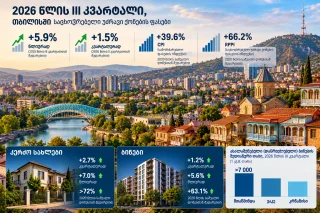 Residential Property Prices in Tbilisi Rise by 5.9% Year-on-Year
Bulgarian Home Sales Fall as Prices Keep Rising
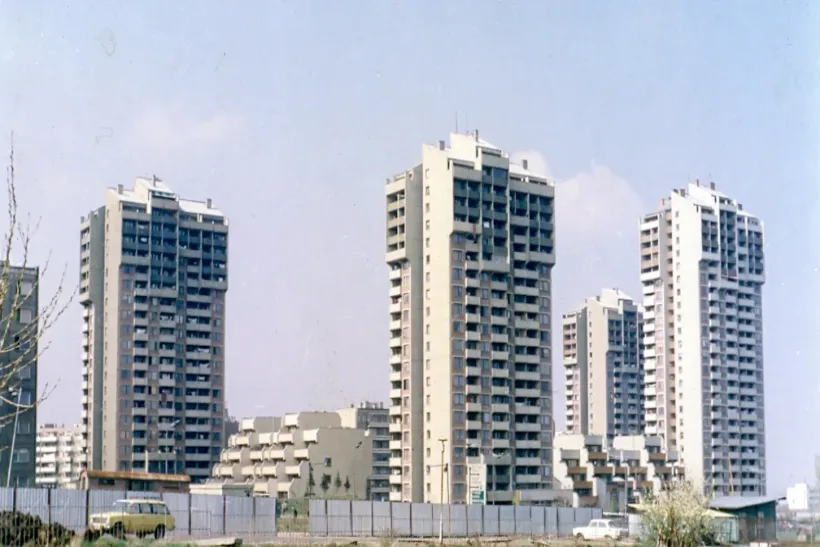
Bulgaria's housing market showed a widening gap between prices and transaction activity in the second quarter of 2026. The number of house and apartment purchases fell 18.1% from a year earlier and transaction value declined 5.8%, yet residential prices rose 15.5%. Sales dropped 21.3% in Sofia, 21.9% in Varna and almost 25% in Burgas.
Novinite highlighted signs that the Bulgarian property market is cooling. The latest official figures confirm a substantial decline in buyer activity, but they do not yet show a broad price correction.
Bulgarian Home Sales Fall 18.1%
The National Statistical Institute reported an 18.1% year-on-year decline in the number of residential property transactions in the second quarter. Purchases of new dwellings fell 15.4%, while transactions involving existing homes dropped 19.2%. The indicator covers market purchases of houses and apartments by households and excludes non-market transfers such as gifts and inheritances.
The value of transactions fell much less sharply than their number. Total residential transaction value was down 5.8% from a year earlier. New-home transaction value declined 7.4%, while the existing-home segment fell 4.7%.
The difference matters. Fewer homes are changing hands, but the amount of money spent on residential property has not fallen at anything close to the same pace. Rising prices and changes in the mix of properties being sold can support transaction value even when the number of deals declines substantially.
The annual comparison is also being made against an unusually active period in 2025, when the market was approaching Bulgaria's transition to the euro.
Bulgarian Housing Prices Rise 15.5%
Lower transaction volumes have yet to translate into lower prices nationwide. Residential property prices rose 15.5% year on year in the second quarter and gained another 4.5% from the first three months of 2026.
Plovdiv recorded the strongest quarterly increase among Bulgaria's largest cities, at 5.8%. Prices rose 2.9% in Stara Zagora, 2.8% in Varna and 2.4% in Sofia. Burgas was the exception, with prices falling 1.5% from the previous quarter.
The annual figures remain strong across most major markets. Prices increased 13.2% in Sofia, 11.3% in Plovdiv, 14.3% in Varna, 9.1% in Burgas and 15.7% in Stara Zagora. Ruse was the only one of the six largest cities to record a decline, with prices down 0.8%.
There were also substantial differences between new and existing homes. In Plovdiv, prices for new dwellings rose only 2.7% year on year, compared with a 19% increase for existing properties. Varna recorded increases of 9.1% and 16.3%, respectively. In Sofia, new-home prices rose 12.6% and existing homes 13.7%. New dwellings in Stara Zagora were 22.3% more expensive than a year earlier.
The pattern differs from a conventional housing downturn in which weaker demand is quickly followed by falling prices. Bulgaria has so far seen a correction in turnover rather than a nationwide correction in property values.
Burgas and Varna Record the Sharpest Sales Declines
The fall in transactions affected almost all of Bulgaria's largest housing markets. Sofia recorded 21.3% fewer sales than a year earlier. New-home transactions fell 24%, while existing-home transactions declined 18.8%.
Varna sales dropped 21.9%, with similar declines in new dwellings, down 21.5%, and existing properties, down 22.2%.
Burgas recorded the largest fall among the six biggest cities, at 24.7%. Transactions involving new homes fell 25.3% and existing-home purchases declined 24.2%.
Plovdiv was significantly more resilient. Total transactions decreased only 3.3%, with purchases of new dwellings rising 5.9% and existing-home sales falling 11.4%.
Ruse recorded a 7.7% overall decline, despite a 53.6% increase in new-home transactions. Stara Zagora sales fell 15%, while transactions in new dwellings increased 13.7%.
The differences underline how fragmented the Bulgarian housing market has become. The two largest Black Sea markets are seeing transaction declines above 20%, while Plovdiv is holding up considerably better and new-home demand continues to expand in parts of Ruse and Stara Zagora.
Buyers Returned After a Weak First Quarter
The annual decline is substantial, but transaction activity improved markedly within 2026.
Sales in Sofia rose 19.7% from the first quarter. Plovdiv recorded a 20.9% quarterly increase, Varna 29.1% and Burgas 22.3%. Transactions increased 25.1% in Ruse and 33.2% in Stara Zagora.
Existing-home activity rebounded particularly strongly. Transactions rose 27.2% quarter on quarter in Sofia, 34.7% in Plovdiv, 29% in Varna and 27.8% in Burgas.
That makes the annual figures more nuanced. Bulgaria's housing market is clearly less active than during the exceptional levels reached in 2025, but the data do not show demand continuing to collapse quarter after quarter. Activity recovered after a particularly weak start to 2026.
Research by Address Real Estate cited by the Bulgarian News Agency described the shift as a move into a stabilization phase after the 2023-2025 boom rather than a market crash. The company also pointed to the unusually high pre-euro comparison base in 2025.
Euro Adoption Changed the Comparison Base
Bulgaria officially joined the euro area on January 1, 2026, converting the lev at the fixed rate of €1 to BGN 1.95583.
The approaching currency change was one of the factors considered by property buyers and market participants during 2025. It would nevertheless be misleading to attribute the entire decline in transactions to euro adoption. Official housing data cannot isolate the effects of the currency transition from high property prices, affordability, mortgage demand or the unusually strong comparison base.
Euro adoption has also not been followed by falling residential prices. Six months into 2026, homes were still 15.5% more expensive than a year earlier.
The adjustment has so far taken place primarily through transaction volumes rather than through the price of housing.
Mortgage Lending Continues to Expand Rapidly
Credit remains an important source of support for housing demand. Bulgaria's outstanding housing loans reached €19.33 billion at the end of August, an increase of 25.2% from a year earlier. Annual growth had been 25.7% in July.
Total loans to households and non-profit institutions serving households reached €32.64 billion, up 20.8%. Consumer loans increased 15.9% to €12.29 billion.
The decline in property transactions has therefore not been accompanied by a contraction in the mortgage stock. Housing lending is still expanding at a pace far above the growth in the number of home sales.
The Bulgarian National Bank has said rapid credit growth requires continued attention. Residential property-backed loans are subject to a maximum loan-to-value ratio of 85%, a maximum debt-service-to-income ratio of 50% and a maximum contractual maturity of 30 years. The central bank said housing loan growth had eased slightly but remained high.
This is an important distinction from a housing downturn driven by an abrupt credit squeeze. Financing remains available, reducing the likelihood that falling transaction numbers alone will trigger widespread forced selling.
Thousands of New Homes Remain in the Pipeline
Housing supply is also continuing to expand. Construction started on 1,774 residential buildings containing 8,913 dwellings and more than 1.04 million square meters of gross floor area during the second quarter.
The largest number of dwellings covered by new building permits was in Sofia, at 2,878. Plovdiv followed with 1,941, Burgas with 1,660, Varna with 1,316 and Pernik with 489. Plovdiv had the highest number of permits for new residential buildings, at 374, followed by Sofia city with 268, Sofia district with 243, Varna with 202 and Burgas with 161.
The number of residential buildings where construction began increased 7.6% from the previous quarter, but the number of dwellings in those projects fell 12.6% and their combined floor area declined 10.3%. This points to a shift toward a larger number of smaller residential projects.
Future supply could eventually increase competition between sellers, particularly if transaction activity remains below the levels seen in 2025. The timing of that effect will depend on when projects are completed and how quickly buyers absorb the additional inventory.
Cooling Has Not Yet Become a Price Correction
The Bulgarian market is currently sending two different signals. Transaction volumes have fallen sharply from last year's highs, particularly in Sofia, Varna and Burgas. At the same time, prices remain in double-digit annual growth, the mortgage stock is expanding by more than 25%, and developers are continuing to bring thousands of homes into the construction pipeline.
The next indication of a deeper slowdown would be a sustained change in price momentum rather than another decline in transaction volumes. That was not visible nationally in the second quarter, when prices rose 4.5% in just three months.
Burgas offers one of the few early examples of a possible transition to the next phase. Transactions there fell 24.7% year on year and prices declined 1.5% from the previous quarter. Even there, however, homes remained 9.1% more expensive than a year earlier.
As International Investment experts report, Bulgaria has clearly moved beyond the period of exceptionally high transaction activity, but the current data are better described as a cooling in turnover than a housing price downturn. An 18.1% fall in transaction numbers alongside 15.5% price growth suggests that the gap is widening between seller expectations and the number of households willing to buy at current prices. If weak sales persist while new supply increases and mortgage growth slows, pressure on prices could become stronger. For now, however, rapidly expanding housing credit and continued price growth show that a nationwide correction has not yet begun.
FAQ
How much have Bulgarian home sales fallen?
The number of residential property transactions fell 18.1% year on year in the second quarter of 2026. New-home transactions declined 15.4% and existing-home sales fell 19.2%.
Are property prices falling in Bulgaria?
Not nationally. Residential prices were 15.5% higher than a year earlier and 4.5% above their first-quarter 2026 level.
What is happening in Sofia's housing market?
Sofia recorded 21.3% fewer transactions than a year earlier, while prices increased 13.2%. Compared with the first quarter of 2026, transaction numbers rose 19.7%.
Where have home sales fallen the most?
Among Bulgaria's six largest cities, Burgas recorded the steepest annual fall at 24.7%. Varna declined 21.9% and Sofia 21.3%.
Are prices falling in Burgas?
Burgas prices fell 1.5% from the previous quarter but remained 9.1% higher than a year earlier.
Is mortgage lending still growing in Bulgaria?
Yes. Outstanding housing loans reached €19.33 billion at the end of August 2026, up 25.2% year on year.
Did Bulgaria's euro adoption affect the housing market?
Bulgaria adopted the euro on January 1, 2026. Strong activity ahead of entry into the euro area raised the comparison base, but official data do not support attributing the entire drop in transactions to the currency change.
Could Bulgarian property prices fall?
That will depend on demand, mortgage lending and new supply. National prices are still rising despite lower sales, although some local markets, including Burgas, have already recorded quarterly price declines.