







 Australia’s Spring Auctions Rise but Remain Well Below 2025
 Number of Foreigners Holding Turkish Residence Permits Exceeds 1.27 Million
 Demand from Russian Tourists for Holidays in Georgia Rises by 20–25%
 Montenegro Property Buying Costs in 2026
 Four in Ten Companies Would Not Choose Slovakia
 Gulf Countries Prepare Unified Tourist Visa
Saudi Arabia Cancels Megaprojects with Major Developers
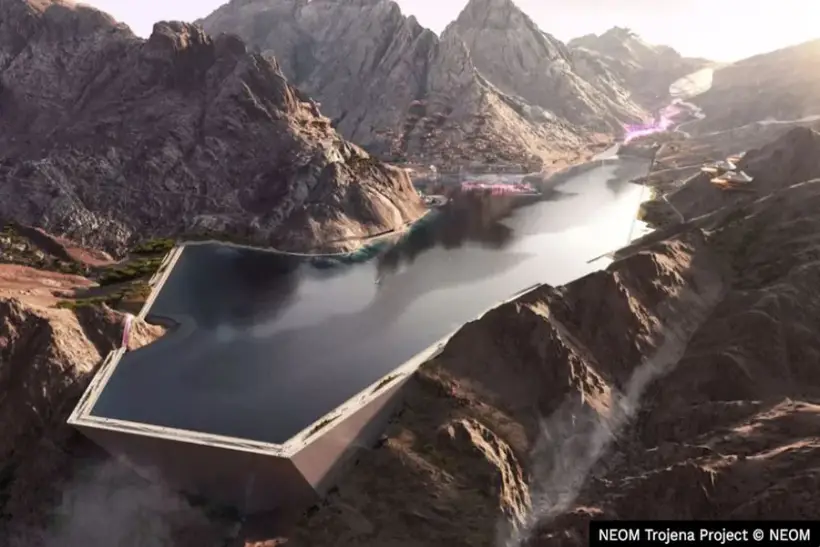
Ski Resort and Linear City Construction Halted
Budget revisions and geopolitical instability have led to a massive reduction in contract obligations for Saudi Arabia's largest project, NEOM. Following the postponement of the 2029 Asian Games, agreements with key global construction players — Webuild, Eversendai, and Hyundai E&C — were terminated. Experts link this to a shift toward strict resource conservation.
Trojena: Cancellation of Infrastructure and Hotel Contracts
In January this year, Saudi Arabia confirmed the postponement of the 2029 Winter Asian Games. The most notable step that followed was the termination of the contract with Italian giant Webuild. The agreement, signed at the end of 2023, was valued at $4.7 billion. It involved creating highly complex engineering infrastructure in the Trojena area: the construction of three dams, the formation of a 2.8 km artificial freshwater lake, and the building of The Bow hotel with a futuristic design overlooking the valley.
The contract termination came into effect on March 29, 2026. Currently, the physical completion of the facilities is around 30%. The remaining order portfolio for this area is valued at €2.8 billion. The company added that the client also exercised the right to terminate other contracts. The Trojena project is part of the larger NEOM portfolio, including Webuild’s contract to build a 57 km high-speed railway between Oxagon and The Line.
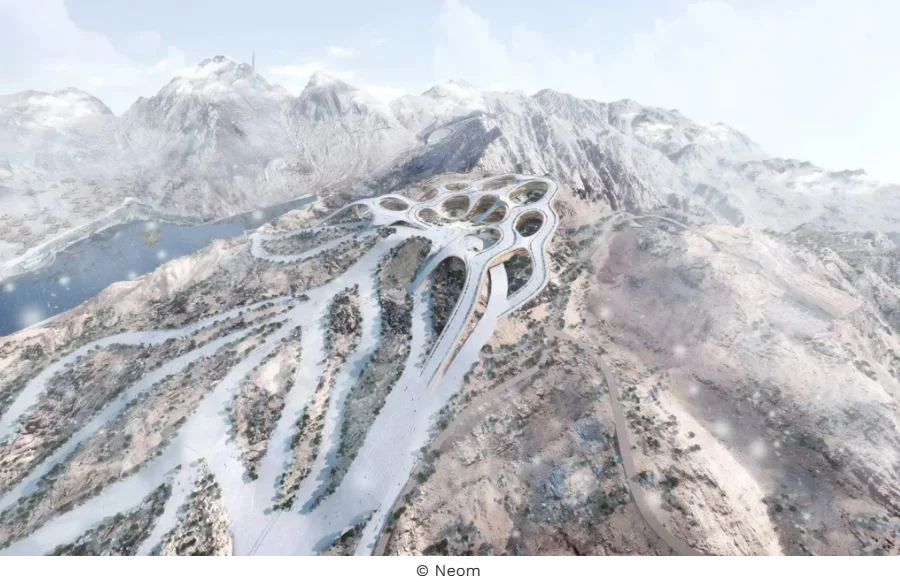
Steel Structures for the Ski Resort
Construction holding Eversendai Corporation, registered in Malaysia, confirmed receipt of a notice of termination. The company, working in partnership with Saudi Al Bawani Company, had been responsible since March 2024 for the supply and installation of steel structures for the Trojena ski resort.
In an official statement, the contractor emphasized that work had been carried out strictly according to technical specifications until the notice was received. Eversendai intends to seek compensation for completed stages of construction, as well as for costs related to demobilizing equipment and personnel. The company does not rule out that the key factor behind the client’s decision was escalating geopolitical tension in the region, which affected supply chains and insurance premiums.
The contract value was not disclosed, but Zawya Projects economists note that the volume of unfulfilled orders decreased to 2.02 billion Malaysian ringgit ($506 million) compared to approximately 4.6 billion ($1.15 billion) in February 2026.
The Line: Tunnels for the New City Will Not Be Built
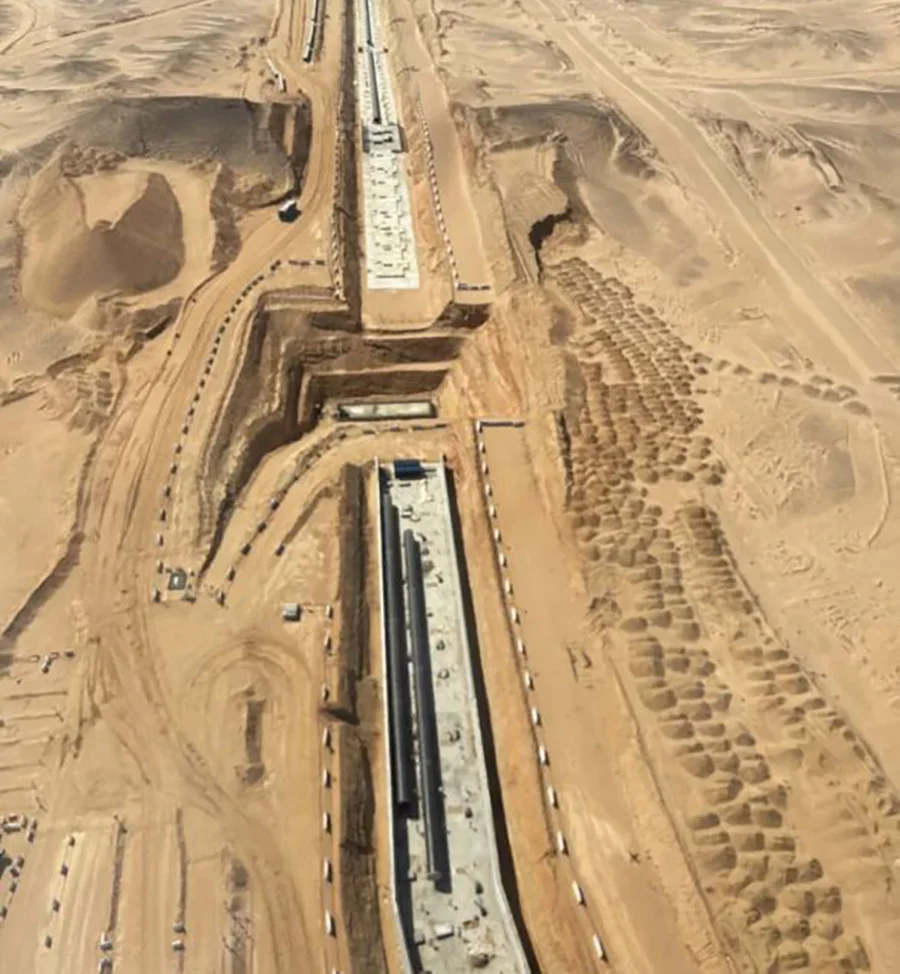
Cuts also affected NEOM’s most ambitious part — the linear megacity The Line. South Korea’s Hyundai E&C reported the cancellation of the contract for tunnel work using the drill-and-blast method.
The agreement was part of a joint venture with Greek Archirodon and Samsung C&T and involved the construction of a 12.5 km double-track tunnel between Wadi Sharma and Tabuk. The contract value is estimated at 6.16 billion Saudi riyals ($1.6 billion).
This work was key to the underground infrastructure of the 170 km linear city. Initially planned for 1.5 million residents, this was later reduced to 300,000. The cancellation indicates a significant revision of the approach to ground works.
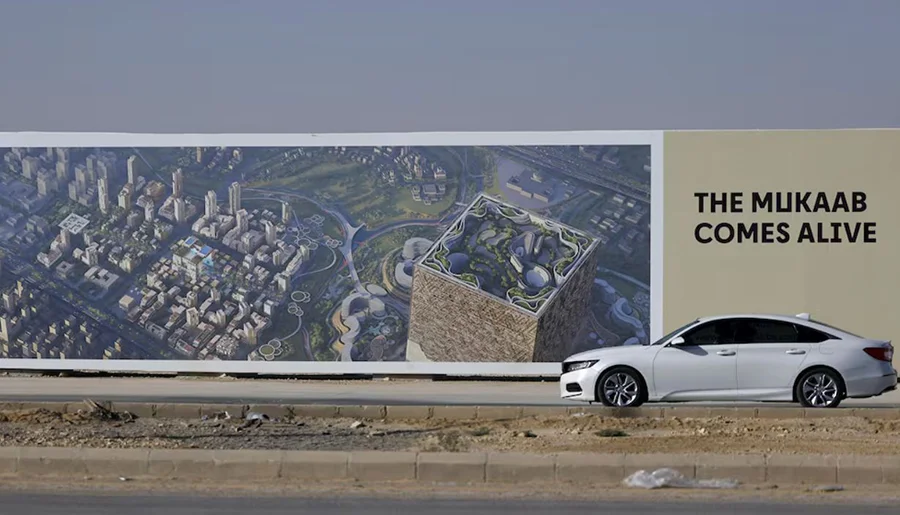
Construction of "The Mukaab" in Riyadh Suspended
Earlier, Saudi Arabia suspended construction of the massive cubic skyscraper The Mukaab in the New Murabba district of Riyadh. The project is frozen at the earthwork and piling stage due to a reassessment of financing and feasibility.
The Mukaab was planned as a 400×400 m metal cube with a dome and the world’s largest AI display, which visitors could view from a terrace over 300 meters high. The project’s future remains uncertain, while development of the surrounding area continues.
Under NEOM’s revised strategy, the focus shifts from tourism and futuristic design to renewable energy and industrial development.
Reasons for Changing Priorities
The series of contract terminations is part of broader strategic changes in NEOM and other major projects. A large-scale project review has been conducted. With the tightening of liquidity in the Sovereign Wealth Fund (PIF) and rising borrowing costs, focus has shifted from individual architectural projects to initiatives with guaranteed international status.
Funds are being redirected toward preparation for Expo 2030 in Riyadh and the 2034 FIFA World Cup, including housing development, transportation networks, and social infrastructure (healthcare, education).
External factors, including geopolitical tensions in the Middle East, also affect logistics and construction material costs, complicating financial planning. For international contractors, this creates a highly volatile environment where budgets become outdated even before the preparatory stage is complete.
Implications for Contractors and Investors
Analysts at International Investment note that NEOM remains a key element of Saudi Arabia’s economic diversification strategy, but recent cancellations highlight the risks of megaprojects. International contractors face vulnerability to shifting priorities and external factors.
For investors and market participants, this underscores the need for caution. The cancellation of contracts of this scale is a marker of heightened risks when participating in the region’s giga-projects. In the coming quarters, further contract revisions and potential legal disputes over cost compensation and penalties are expected.
FAQ: Suspension of Saudi Arabia’s Megaprojects
Why were NEOM project contracts terminated?
The reasons are complex: budget revision, resource conservation, rising material costs, geopolitical tensions, and a shift in the Sovereign Wealth Fund (PIF) priorities toward more profitable and strategically important projects.
Which companies were affected by the cancellations?
The main contractors: Italian Webuild, Malaysian Eversendai Corporation, and South Korean Hyundai E&C. Contracts involved Trojena infrastructure, The Bow hotel, and tunnels for The Line.
What happened to the Trojena project?
Webuild’s $4.7 billion contract for three dams, an artificial lake, and The Bow hotel was terminated. Physical completion of the facilities was around 30%. Eversendai ceased supplying and installing steel structures for the ski resort.
How has The Line project changed?
Hyundai E&C and partners cancelled the 12.5 km tunnel contract for the linear city’s underground infrastructure, initially planned for 1.5 million residents, later reduced to 300,000.
What about the The Mukaab skyscraper in Riyadh?
Construction is paused at the earthwork and piling stage. The project is frozen due to financing reassessment and feasibility review. Surrounding area development continues.
Why is Saudi Arabia changing NEOM’s strategy?
The Sovereign Wealth Fund (PIF) is focusing spending on more urgent and strategic projects, including Expo 2030, the 2034 FIFA World Cup, housing, transport, and social infrastructure. Renewable energy and industrial development now take priority over tourism and futuristic design.
What are the risks for contractors and investors?
NEOM megaprojects show high volatility: contracts can be terminated before completion. International contractors and investors face risks of changing conditions and potential legal disputes to recover costs.