







 Vietnam Mortgage Surge Pushes Homes Out of Reach
 Lithuanian Apartment Prices Accelerate Across Major Cities
 London Flats Lose Value Ahead of Leasehold Reform
 Construction of the Batumi–Sarpi Highway Begins in Georgia
 Baltic Property Investment Accelerates in 2026
 Hong Kong and Singapore Renew Their Expat Rivalry
AP
The US tightens pressure on Iranian crude
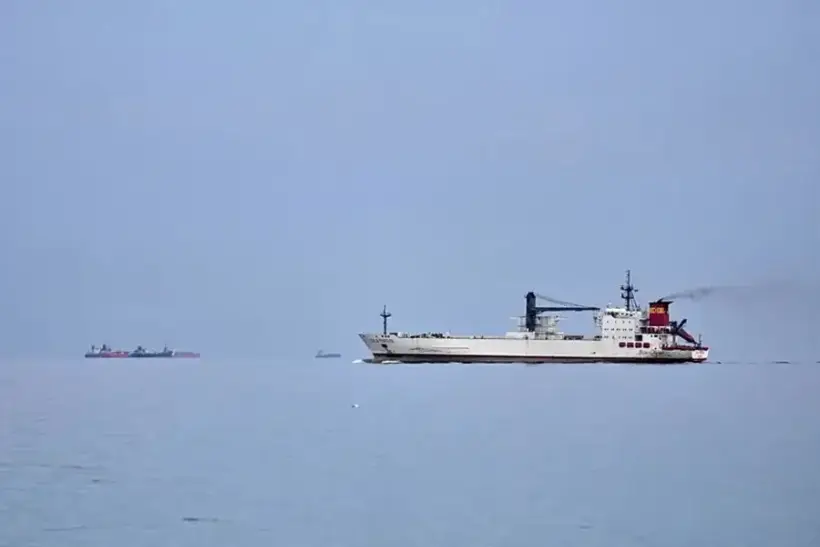
After talks with Iran collapsed, the United States moved to a tougher phase by announcing maritime restrictions tied to Iranian ports. Yet the first practical limit of that strategy was visible immediately: this is not a full closure of the Strait of Hormuz to all global shipping, but a narrower attempt to stop vessels going to and from Iranian ports while still allowing transit to non-Iranian destinations. That distinction matters, because it raises pressure on Tehran without guaranteeing a clean shutdown of Iranian oil exports.
Why the Strait of Hormuz still drives the oil market
The Strait of Hormuz remains one of the world’s most critical energy chokepoints. The US Energy Information Administration says more than one-fifth of global liquefied natural gas trade moved through Hormuz in the first half of 2025, while the International Energy Agency said in March 2026 that nearly 20 million barrels a day of crude and product flows had been disrupted by the regional war. The IEA also said Brent had jumped roughly $20 a barrel from pre-war levels as tanker traffic through the strait fell to a trickle.
What Washington is actually trying to block
The immediate US objective is to hit Iran’s oil revenue without imposing a blanket ban on all international navigation through Hormuz. Shipping warnings linked to the new regime indicate that vessels of any flag can be targeted if they engage with Iranian ports, oil terminals or related coastal infrastructure. That gives Washington a more focused coercive tool, but it also leaves room for evasion through ship-to-ship transfers, shadow-fleet logistics, altered voyage data and cargoes that were already loaded before enforcement tightened.
Why a complete shutdown of Iran’s exports will be difficult
The core problem for the US strategy is that Iran had time to build a cushion. Estimates cited in Wall Street Journal coverage, drawing on Kpler data, put Iranian oil held outside the immediate risk zone at roughly 154 million to 160 million barrels by mid-April. That means even aggressive maritime pressure does not erase export revenue overnight; it mainly makes future shipments harder, slower and more expensive. Iran also retains some flexibility through the Jask export terminal, which sits outside the narrowest part of the strait and could provide a limited rerouting option.
China remains the decisive buyer
China is still the most important external variable. It remains the main destination for Iranian crude, with independent refiners in Shandong playing a key role in absorbing discounted barrels. Recent reporting on the crisis says about 13% of China’s seaborne crude imports had been coming from Iran before the latest escalation. Those refiners are more flexible than large state-owned companies, more willing to work with discounted cargoes and more accustomed to opaque logistics and payment structures. That makes them central to any effort by Tehran to keep oil moving despite pressure from Washington.
The market reaction shows the risk is global, not only Iranian
Oil markets reacted immediately. Brent rose above $100 a barrel on the blockade headlines, while West Texas Intermediate, the main US crude benchmark, also moved above $100. The subsequent swings did not signal calm; they showed how uncertain the market remains as traders try to price three things at once: the risk of real supply loss, the chance of renewed diplomacy and the possibility that US pressure itself deepens the energy shock. The IEA had already warned in March that the shipping disruption around Hormuz amounted to the largest supply interruption in the history of the global oil market.
Logistics, insurance and naval risk constrain any blockade
Even if the political order is clear, maritime enforcement is not simple. Restoring or controlling flows requires insurable shipping, physical protection, predictable navigation rules, vessel screening and, in some cases, escort capacity. The IEA explicitly said the resumption of flows depends on adequate insurance mechanisms and physical protection for shipping. That is why the cost of risk across the region has risen sharply: some operators are delaying voyages, some vessels are rerouting, and the market is trading around the expectation of the next incident. In practice, that means blocking Iranian oil is harder than declaring that it will be blocked.
How much Iran could lose, and why that may not solve Washington’s problem
The potential losses for Iran are large on paper. One widely cited estimate puts the damage at about $435 million a day, including roughly $276 million in lost export revenue. But even that does not guarantee a rapid strategic win for the US. Some oil is already outside the immediate danger zone, Chinese demand remains in place, and any excessive tightening quickly feeds back into higher prices for Asian importers, inflation risks and political costs for the West itself. Washington is trying to cut Tehran’s income without triggering another major oil spike, but those goals are difficult to reconcile.
Why the US threat runs into practical obstacles
The main obstacle is that crude oil is not just about production. It depends on storage, transshipment, insurance, freight, origin masking and payment networks that often run through intermediaries. US sanctions had already targeted Chinese refiners, vessels and companies involved in Iranian oil, yet the trade was not fully stopped. Now that the conflict has moved into the maritime domain, the cost of enforcement is even higher. That raises the economic and political price of pressure for Washington itself and makes a clean blockade of Iranian exports far harder to achieve than the rhetoric suggests.
As International Investment experts note, the US threat can complicate future Iranian shipments and raise the risk premium for buyers, insurers and shippers, but a rapid and total collapse of Iran’s oil exports still looks unlikely. As long as Tehran retains floating storage, some rerouting options and durable Chinese demand, pressure is more likely to work as a tool that delays and makes shipments costlier rather than as an instant economic knockout.
FAQ
What is happening to Iranian oil now?
The US has announced maritime restrictions on vessels connected to Iranian ports after talks collapsed, but this is not the same as a full closure of the Strait of Hormuz to all global shipping.
Why is the Strait of Hormuz so important?
[14.04.2026 10:38] Darovska Батуми: It carries a major share of global oil and liquefied natural gas trade, so any disruption there quickly affects prices, freight costs, inflation and broader supply chains.
Can the US quickly stop Iran’s oil exports?
Not completely and not quickly. Iran has already built up substantial floating storage, and some trade continues through buyers and shipping networks willing to tolerate higher sanctions risk.
Who buys most of Iran’s oil?
China remains the key buyer, especially through independent refiners that are more flexible in logistics, payments and discounted crude procurement.
Why did oil prices jump again?
Markets are pricing the risk of lower supply, higher freight and insurance costs, and the possibility of broader military escalation in and around the Gulf.