







 Israel Cuts Rate to 3.25% for Third Meeting
 Russian and Belarusian Owners List More Latvian Property
 Georgian Law Enforcement Busts Scammers Posing as Real Estate Brokers
 World’s Largest Economies in 2026: GDP and Purchasing Power Rankings
 Turkish Airlines Cancel Flights to Moscow
 Escalation in the Middle East: New US and Iranian Strikes
UK Citizenship: country discusses $6.6 million investor visa
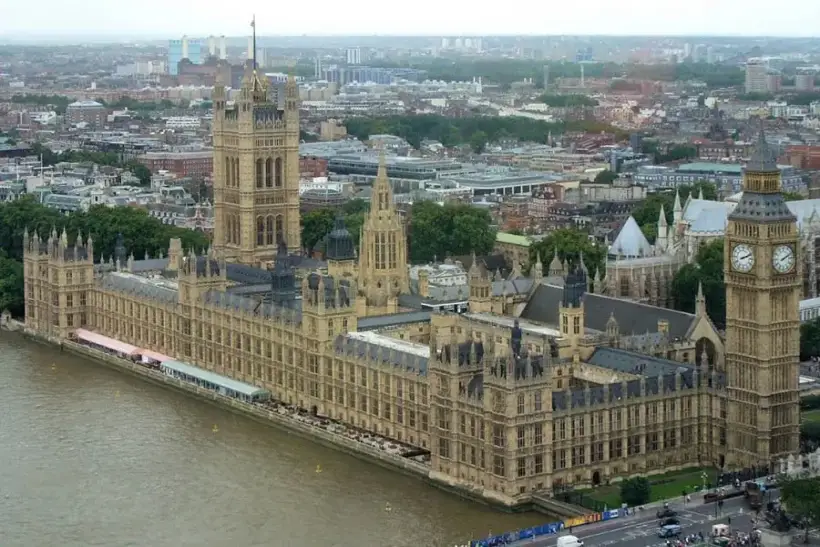
Pxhere
The UK government is considering launching a new investor visa worth £5 million (around $6.6 million), which would allow wealthy foreign nationals to obtain citizenship through an accelerated route. The initiative is still at the discussion stage and is causing disagreements both within the government and among experts, according to IMI Daily.
Conditions of the proposed UK investor programme
In November, the government already proposed an accelerated path to permanent residency — three years — for foreign nationals with an annual income of at least £125,000 (about $167,500). However, no separate mechanism to attract investors was created, and the new initiative is intended to fill this gap.
Information about a potential £5 million investment visa first emerged in May, when programme documents were shared with private wealth advisers. On June 10, the UK Cabinet held a closed-door meeting, previously reported by the Financial Times.
Tax advisers, economists, consulting firms, and anti-corruption organisations were invited to discuss the possible new visa scheme. All participants agreed not to disclose the content of the discussions.
The programme would allow foreign investors to apply for UK citizenship after five years of residence, provided they invest at least £5 million. Funds would be directed into priority sectors of the economy, primarily fast-growing companies.
Real estate investment would be excluded to avoid criticism similar to that faced by previous schemes, which were accused of inflating London’s luxury property market rather than supporting the real economy. Participation in the programme would be by invitation only.
Comparison with the previous scheme: corruption scandals
The UK previously operated a similar programme — Tier 1 (Investor), launched in 2008. It initially required a £1 million investment, later increased to £2 million. A £5 million investment only allowed applicants to obtain accelerated permanent residency after three years instead of five.
In February 2022, the programme was shut down after years of criticism and allegations of facilitating illicit capital. By that time, the Home Office had issued more than 2,580 visas to Russian nationals alone.
Authorities now intend to significantly strengthen due diligence checks on the source of funds to distance the new scheme from the issues of its predecessor. However, Susan Hawley, executive director of Spotlight on Corruption, said that launching a new investor visa would still be a “reputational disaster for the UK.” Tax advisers expressed similar views during the discussions.
Expert views on the UK investor visa
The main supporter of the initiative within the government is believed to be Business Secretary Peter Kyle. He views the new visa as a tool to compete for global capital and skilled professionals, describing the situation as a “fierce competition for global talent.”
The Home Office and the Treasury take a more cautious stance. Treasury officials question whether such a programme would significantly boost economic growth. One government source told the Financial Times that the initiative is “going nowhere.”
Madeline Sumption, director of the Migration Observatory at the University of Oxford, notes that such programmes often fail to meet expectations. Investor visas tend to attract people primarily interested in quality of life, children’s education, and legal stability, while a significant portion of their capital remains outside the country. As a result, such schemes “often do not deliver the expected economic benefits.”
Outlook and reasons behind the initiative
Farzin Yazdi, head of investor visa programmes at Shard Capital, estimates a roughly 70% probability that the UK will reintroduce an investor visa. In his view, existing concerns can be addressed with proper design, and the programme could deliver real economic benefits.
Analysts at International Investment note that the discussion comes amid major changes in UK tax policy. In April 2025, the UK abolished the non-dom regime — a tax status for non-residents that previously allowed individuals to avoid taxation on foreign income. It was replaced with a new Foreign Income and Gains scheme, valid for new residents for four years, which regulates taxation of overseas earnings.
Following these changes, some wealthy foreign nationals began leaving the country. The proposed programme could serve as an additional incentive for investors and a tool to enhance the UK’s attractiveness as a destination for capital and relocation, although its implementation remains uncertain.