











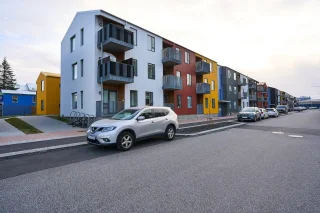

Airbnb in Budapest Faces New Restrictions

Authorities in Budapest’s 8th district, Józsefváros, have approved a new policy framework for the short-term rental market. The proposal introduces quotas, expands the powers of residents in apartment buildings, and adds new requirements for owners of tourist accommodation, according to Daily News Hungary.
What Will Change in the Rental Market in Józsefváros
The Józsefváros municipal council has adopted a regulatory concept that introduces control over short-term rentals at three levels: the district as a whole, individual neighbourhoods, and specific apartment buildings.
The share of short-term rental properties will be capped at 3.5% of the district’s total housing stock. In practice, this effectively freezes the current number of such apartments, as new permits will only be issued within the existing quota.
Separate rules apply to the most popular tourist areas. In the Palota Quarter (Palotanegyed) and Corvin Quarter, the maximum share of short-term rentals will be limited to 5%. According to 24.hu, in apartment buildings such units may occupy no more than 20% of total residential floor space. The calculation will be based on apartment size rather than the number of units, allowing a more accurate reflection of actual housing use.
The main goal of the initiative is to curb further expansion of the short-term rental market in Budapest, improve housing affordability for permanent residents, and enhance overall urban livability.
Ban on Rental Activity Without Owners’ Approval
One of the key changes is the requirement for approval from the condominium owners’ association before any new short-term rental unit can begin operating.
If guests in such apartments repeatedly violate public order or disturb neighbours, the owners’ assembly will be able to withdraw its consent and notify the municipality. Local authorities would then gain the power to prohibit further operation of the property.
Existing short-term rentals will generally be allowed to continue operating unless the owners’ association formally objects. In addition, property owners will be required to display contact details on the entrance door so neighbours can report issues more easily.
When the Restrictions Will Take Effect in Hungary
Hungary currently has a nationwide moratorium on registering new short-term rental properties. It is set to expire at the end of 2026, which is why Józsefváros is aiming to establish a permanent regulatory framework in advance. The initiative is linked to the growing number of such apartments and rising housing costs.
In March 2026, 1,760 short-term rental units were officially operating in the district. Of these, 53 were hotels, guesthouses, or hostels, while 1,707 were private apartments and similar accommodation types. Short-term rentals accounted for around 3.5% of the district’s housing stock, which totals 48,444 apartments.
Józsefváros will become the second district in Budapest to introduce its own short-term rental regulations. Earlier, the neighbouring district of Terézváros (District VI) effectively banned new Airbnb-style rentals from 1 January 2026. An attempt to challenge the decision in court was unsuccessful, making it a key precedent in the debate over the impact of tourist rentals on the city’s housing market.
The final version of the rules for Józsefváros is expected by October 2026, with implementation scheduled for 1 January 2027.
Rental Market Outlook in Budapest for Investors
Analysts at International Investment note that Hungary maintains a relatively strict regulatory approach to the short-term rental market. Alongside limits on the share of such properties in the housing stock and the requirement for owners’ consent, tax pressure on property owners is also increasing. For investors, this implies lower potential returns and a narrowing scope for operating in the short-term rental segment.
These measures align with a broader European trend. In Spain, regulation has intensified amid rising housing prices and a shortage of affordable homes for local residents. In Greece and several other countries, governments are introducing incentives to shift property owners toward long-term rentals, including tax benefits and simplified conditions.
Overall, the market is gradually shifting: short-term rentals are being increasingly restricted within the housing stock, while long-term rental is viewed as more stable and socially prioritised. At the same time, the role of the hotel sector is expanding, where oversight, reporting, and service standards are more structured and consistent.