







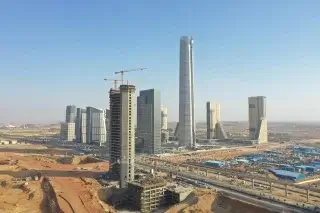
 Egypt Prepares New Law for Property Developers
 Young Japanese Buyers Turn to 50-Year Mortgages
 Argentina Narrows Tourism Gap as Arrivals Rise
 Seattle Luxury Housing Loses Its Former Momentum
 The World’s Strongest Passports for Travel, Living and Investment
 Russian Developers’ Debt Nearly Doubled in a Year
Delays in permits are slowing investment in Cyprus

Lengthy licensing procedures are creating obstacles for investors and developers in Cyprus, according to SigmaLive. This is also limiting housing supply and maintaining upward pressure on property prices.
Investment activity in Cyprus
The President of the Cyprus Real Estate Agents Council, Marinos Kynaigirou, said that long timelines for planning and building permits remain one of the key barriers to market development. He stressed that the issue affects both foreign investors and local businesses.
Delays in project approvals effectively freeze initiatives worth millions of euros and reduce the inflow of new properties to the real estate market. This, in turn, slows down the renewal of the housing stock and limits the expansion of supply.
Against the backdrop of sustained demand and constrained supply, speeding up permit issuance and increasing construction activity has become a key factor in future real estate policy, the expert said.
Supply shortage and rising prices
Insufficient new housing construction remains the main factor supporting high prices. At the current pace of new supply, price pressure persists, while affordability for buyers remains limited.
Marinos Kynaigirou said that without faster construction processes and increased supply, a decline in prices should not be expected. He also called for stronger government action to accelerate approvals and unlock investment projects.
The expert believes that new developments could help stabilise the market, while the lack of new construction reinforces current price levels. The government has developed a programme for more than 10,000 housing units. Its implementation could significantly ease pressure on the market, provided it does not face administrative delays.
Sales dynamics in the Cyprus property market
In late June, a meeting of the Cyprus Land and Building Developers Association took place in Limassol, where continued growth in housing prices was noted. According to Central Bank data, apartment prices rose by 10.8% year-on-year in the first quarter of 2026 compared with the same period in 2025. The overall residential property price index increased by 7.5%.
Limassol remains the country’s largest real estate market. From January to May, 2,537 sales documents were registered in the district, up 11.2% year-on-year. Across Cyprus, total transactions increased by 11.9% over the same period.
The sector remains mixed: on one hand, real estate continues to attract investment, support employment and shape urban development. On the other, concerns are growing about housing affordability for younger buyers and middle-income households.
Risks and outlook for the Cyprus housing market
Analysts at International Investment note that demand in the Cyprus property market remains strong, including from foreign buyers. At the same time, rising construction costs and slow delivery of new projects continue to intensify price pressure. No sharp price surge is expected in 2026, with the market showing signs of stabilisation.
However, risks of fraud and abuse remain, so transactions should only be conducted through licensed real estate agents. It is important to carefully verify documentation, as mistakes or dealings with unlicensed intermediaries may lead to significant financial losses.
Investors should also take into account regulation of the rental segment, which may increase costs and reduce returns. The market is gradually shifting towards a more cautious model, where legal transparency, asset quality and long-term investment stability become central factors.