







 Latvia’s Residence Permits for Real Estate to Be Abolished from September 15
 Egypt Prepares New Law for Property Developers
 Young Japanese Buyers Turn to 50-Year Mortgages
 Argentina Narrows Tourism Gap as Arrivals Rise
 Seattle Luxury Housing Loses Its Former Momentum
 The World’s Strongest Passports for Travel, Living and Investment
Argentina aims to obtain investment-grade status by 2031
Buenos Aires Herald
Argentina’s government has presented its financial strategy for 2026–2027, stating that it is prepared to meet all debt obligations without returning to international capital markets. The authorities have also set a long-term goal of restoring Argentina’s investment-grade credit rating by the end of 2031, El País reports.
Argentina’s financial program
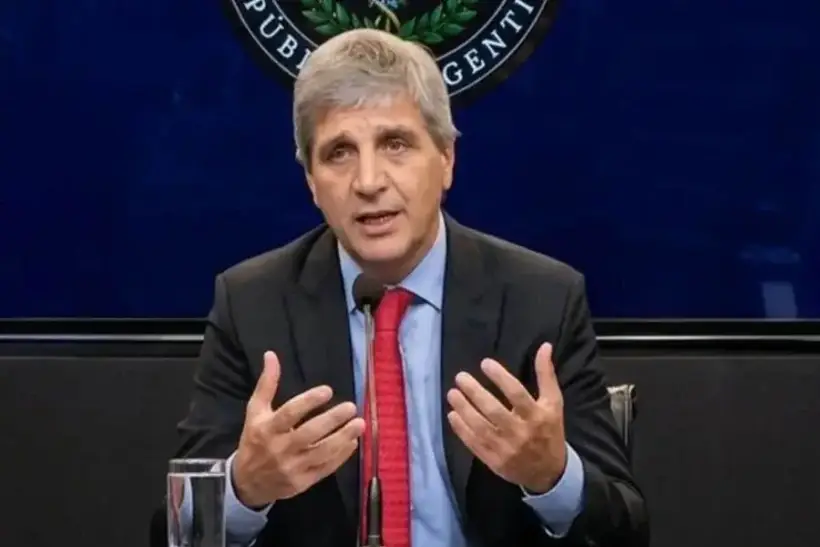
Argentina’s Economy Minister Luis Caputo presented the financial program together with representatives of the government’s economic team. He said the country will need financing of $19.2 billion in 2026 and $24.9 billion in 2027. Finance Secretary Federico Furiase said that the government has already secured around $22.9 billion through domestic market placements, loans from international organizations and other sources.
Caputo said the ministry’s calculations are based on “very conservative” assumptions. The government expects to generate a positive balance of $3.7 billion in 2026, which will serve as a financial reserve and help the country navigate the presidential election period. The minister assured that the government would face no problems refinancing its obligations.
Argentina prepares for privatizations
Privatization deals are expected to become an additional source of funds. The authorities estimate that the sale of state assets will bring around $800 million by the end of 2026 and $1.5 billion in 2027.
The transfer of assets to the private sector has already begun. In particular, the privatization of electricity transmission company Transener has been completed. This year, the government plans to proceed with the sale of AySA (Agua y Saneamientos Argentinos S.A.), which provides water and sanitation services, as well as the Belgrano and San Martín thermal power plants.
Revenue from privatizations is expected to become part of the government’s broader strategy to strengthen financial stability and reduce the need for more expensive external borrowing.
Argentina moves away from external borrowing
Luis Caputo said that the authorities do not plan to use the second tranche of the currency swap line provided by the U.S. Treasury, although the instrument remains available if needed. The minister also said the government does not intend to renegotiate its payment schedule with the International Monetary Fund in the coming years.
Overall, the government does not plan to return to international capital markets, although the option remains open. Argentina’s last major sovereign bond issuance took place in 2018.
Caputo said investors had previously offered Argentina a 10-year bond issue worth $5 billion at an interest rate of 12.5%. The government rejected the proposal, seeking to attract financing at lower rates of around 6%. The minister stressed that lower borrowing costs would reduce pressure on the budget and allow additional resources to be used for other priorities, including further tax cuts.
The minister said Argentina had become too dependent on foreign markets and that this approach needed to change. His comments reflect a shift in government policy that began in December. After the country risk premium declined following Milei’s victory in the November elections, the Economy Ministry abandoned plans for an immediate return to international debt markets.
Argentina seeks to increase investor confidence
Luis Caputo said the government’s long-term economic objective is to secure investment-grade credit status for Argentina by the end of Javier Milei’s potential second presidential term in 2031. Achieving this target is not a government guarantee, as the final decision rests with international rating agencies. However, the goal serves as a benchmark for shaping economic policy.
The authorities have already held consultations with the three largest international rating agencies. According to Caputo, two of them consider achieving investment-grade status a difficult but realistic goal and have outlined the indicators Argentina needs to reach.
The minister linked a potential rating upgrade to stronger macroeconomic stability, lower inflation reaching international levels, greater currency market stability, increased investor confidence and higher capital inflows.
Argentina faces debt repayment challenge in 2027
Reuters notes that Argentina’s main financial challenge will come in 2027, which coincides with the presidential election in which Javier Milei plans to seek re-election. According to the International Monetary Fund, Argentina will need to repay more than $23 billion in foreign-currency principal payments during this period, while total obligations including interest exceed $32 billion.
So far, Milei has managed to maintain strict control over government spending. This has contributed to a decline in monthly inflation from 25.5% in December 2023 to 2.1% in May 2026.
Caputo rejected criticism that import liberalization is harming domestic industry. He argued that previous governments protected inefficient sectors instead of encouraging them to become more competitive. The minister said achieving investment-grade status would become a “sign of reliability and trust” for the country.
Conclusion
International Investment analysts note that President Javier Milei’s popularity has been affected by cuts to subsidies and strict fiscal policies, which have reduced household purchasing power. Corruption scandals have also increased pressure on the government.
However, the authorities do not plan to change their economic course. If Argentina manages to achieve sustained inflation reduction, strengthen currency market stability and obtain investment-grade status, this could increase international investor confidence and expand the country’s access to cheaper capital.
For businesses, this could create improved investment conditions, particularly in strategic sectors such as energy, mining and infrastructure. At the same time, investors should consider existing risks, including upcoming large external debt payments, the economy’s dependence on continued reforms and the potential impact of political developments on financial stability.