







 Covivio Hotels Revenue Grows 4.7% as European Markets Split
 Lithuanian Apartment Prices Accelerate Across Major Cities
 Georgia's Tourism Revenue Hits Record High
 Norway's Sovereign Fund Commits €1.5bn to European Warehouses
 Market Rout of October 2026: Can Branded Hotels Protect Capital?
 Residential Property Prices in Tbilisi Rise by 5.9% Year-on-Year
Dubai Luxury Hotels Hide Discounts in Perks

Some of Dubai's luxury resorts are protecting public room rates by adding dining credits, room upgrades and attraction tickets instead of relying exclusively on headline discounts. Occupancy in the luxury segment fell to 58.4% in August 2026 from 73.9% a year earlier, making the strategy relevant to hotel investors as well as travellers.
According to CoStar figures reported by Skift, average daily rates declined 5.2% while revenue per available room dropped 25.1% to $141.79. The figures refer to Dubai's luxury segment, not every hotel in the UAE.
Why luxury hotels protect their published rates
Repeated public discounts can reset guests' expectations and weaken a premium brand's pricing position. Atlantis Dubai instead offers UAE residents resort credit, complimentary upgrades and attraction tickets. Selected offers still include discounts of up to 25% subject to minimum-stay conditions, so the strategy is selective discounting rather than a blanket refusal to cut prices.
Occupancy is falling faster than room rates
|
Metric |
August 2026 |
Annual change |
|
Occupancy |
58.4% |
−15.5 pp |
|
ADR |
about $243 |
−5.2% |
|
RevPAR |
$141.79 |
−25.1% |
Occupancy declined by 15.5 percentage points. ADR is revenue per occupied room, while RevPAR measures room revenue across all available rooms. A sharp reduction in occupancy therefore hurts performance even if headline prices barely move.
Perks have a different cost from discounts
Dining credit, resort experiences and room upgrades may be highly valuable to guests while carrying a lower marginal cost for a hotel with spare capacity. They are not free, however: hotels absorb the expense, and sustained weak demand can still erode operating profits.
International arrivals remain a major exposure
Around 80% of guests at Atlantis' two Palm Jumeirah resorts in July and August were international. Following disruption associated with the Iran conflict, some airlines planned to restore Dubai services in late 2026, while others delayed certain routes into 2027.
Dubai and Batumi have different supply structures
Dubai is a mature luxury hospitality market with substantial competing supply. Batumi has a large short-term apartment rental sector and a smaller internationally branded hotel inventory. Galt & Taggart estimated 2,966 internationally branded rooms in Batumi in 2024, potentially increasing to 3,764 in 2026, versus roughly 18,000–20,000 short-term rental apartments at the end of 2024.
Comparing demand and supply
|
Feature |
Dubai luxury |
Batumi branded hotels |
|
Demand |
International, weaker |
Tourism, seasonal |
|
Supply |
Mature luxury market |
Smaller branded supply |
|
Pricing |
Perks protect rates |
Service-led positioning |
|
Risk |
Weak foreign demand |
Seasonality and new openings |
These figures do not establish a shortage of accommodation in Batumi. They point to different property types and service models. The success of branded hotels still depends on international demand, seasonality, room rates and operational execution.
Wyndham Grand Batumi Gonio targets resort differentiation
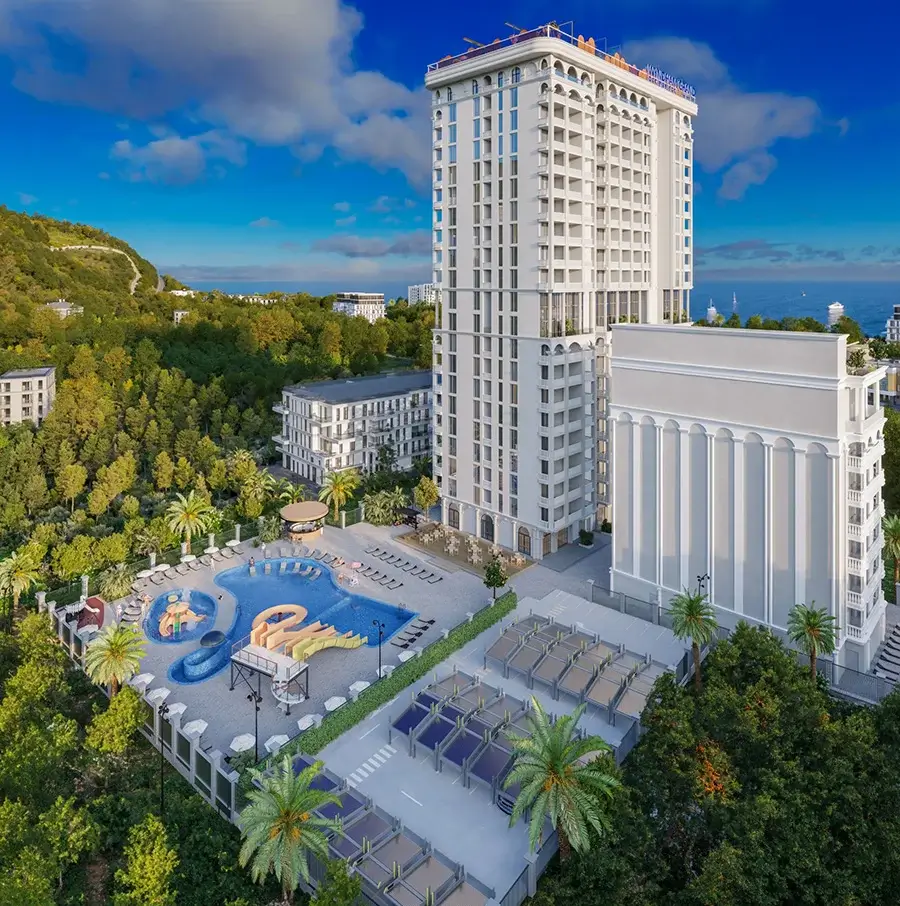
European Village's Wyndham Grand Batumi Gonio project combines hotel accommodation, residences, villas and townhouses with a proposed Ultra All-Inclusive model. The developer advertises more than 100 resort facilities and planned management involving Aimbridge Hospitality.
This bundled product can distinguish a professionally managed resort from a privately let apartment. However, projected developer returns or buyback statements are not the same as independently verified operating results. Atlantis is an established business; Wyndham Grand Batumi Gonio is discussed here as a development project.
Georgia's demand is expanding but seasonal
Georgia generated around $695 million in international travel revenue in August 2026, up 8.8% year on year. Revenue for January–August reached about $3.2 billion, an increase of just 1.6%. Meanwhile, Adjara's hotel price index for three- to five-star properties rose 4.4% in August, but that does not establish the occupancy or profitability of any individual resort.
What hotel investors should measure
Dubai's operators are trying to defend established premium rates during a demand downturn. Batumi's branded resort developers aim to differentiate themselves from mass-market holiday apartments. Both depend on real guest demand and the cost of delivering services. Investors should assess achieved ADR, occupancy, RevPAR, gross operating profit, management fees and contractual risk rather than assume brands alone guarantee returns.
FAQ
Why do Dubai luxury hotels add perks instead of cutting rates?
They aim to preserve published tariffs while making packages more attractive. Some still use selective discounts.
What was Dubai luxury occupancy in August 2026?
It was 58.4%, down from 73.9% in August 2025.
What does RevPAR measure?
Room revenue divided by all available rooms, reflecting both average sold-room price and occupancy.
How does Batumi's accommodation supply differ?
Batumi has many privately rented apartments alongside a much smaller inventory of internationally branded hotel rooms.
Are Wyndham Grand Batumi Gonio returns verified?
No operating return is independently established here; developer forecasts and terms should be checked against contracts and completed operations.