







 Spain Approves 10% VAT on Short-Term Housing Rentals
 Foreign Investment in Indian Real Estate Rises 17%
 Finland Misses Residence Permit Processing Deadlines
 Europe Living Investment Reaches €44.6bn
 Urban Homes Cost 27% More Across OECD
 Adjara Overtakes Tbilisi: How Georgia's Regional Hotel Sector Structure Is Shifting
Private Wealth Takes 47% of Hotel Investment
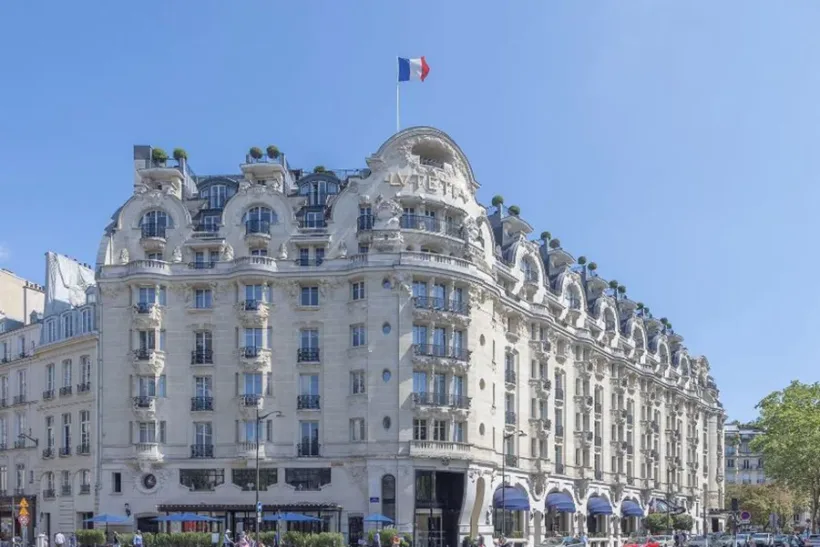
Wikimedia
Private investors are no longer a niche source of capital in EMEA hotels. Private wealth captured 47% of hotel investment volume in the first half of 2026, according to JLL, compared with a ten-year average of 12%.
Private investors acquired €4.5bn of hotel assets and sold €2.7bn. They were involved in €7.2bn of transactions, equivalent to 73% of total market activity by participation.
The shift puts family offices and high-net-worth individuals into a part of the market historically dominated by institutional capital.
The 47% figure needs context
The 47% figure measures private wealth's share of H1 2026 investment volume. It is not a measure of ownership across EMEA hotel stock.
JLL also reports a trailing 12-month capital breakdown. Over that longer period, private equity leads with 29%, private wealth accounts for 18% and owner-operators 12%.
The difference is a function of the measurement window. The surge in private wealth is particularly pronounced in the first half of 2026.
Average deal size is above €35m
Average private-wealth transaction sizes have exceeded €35m, confirming that family offices and HNWIs are deploying institutional-scale capital.
JLL says annual deal flow involving private capital has exceeded the ten-year average by 23% for three consecutive years.
This changes the buyer pool. Private wealth does not always operate under the same fund-life constraints, fundraising cycles or allocation rules as institutional funds.
That can create longer holding periods and faster decision-making, but it does not eliminate hotel operating risk or pricing discipline.
Domestic capital dominates
Domestic investors accounted for 62% of private wealth activity in H1 2026, concentrated primarily in the UK and Spain, followed by France and Germany.
Cross-border private capital was particularly active in the UK and France, while Middle Eastern participation is also increasing.
The result is a hotel market supported by both local wealth and international trophy-asset demand.
Why hotels attract private capital
Hotels combine real estate with an operating business. That complexity can deter passive investors but create opportunities for buyers comfortable with operator performance, capex and branding risk.
Prime hotels are also physically scarce. Landmark properties in major European cities cannot be replicated quickly, especially when planning and construction are constrained.
That scarcity can attract buyers with strategic or prestige motives alongside financial return.
But iconic status is not a substitute for underwriting. ADR, occupancy, management contracts, renovation requirements and financing still determine cash flow.
What it means for sellers
A broader private-wealth buyer base gives hotel owners more potential exit routes.
When institutional funds are constrained by debt costs, redemptions or portfolio allocation rules, family offices can add liquidity, particularly for unusual or high-profile assets.
They may also accept more bespoke transaction structures.
For the market, that reduces dependence on one type of investor and can support deal execution even during uneven capital-market conditions.
Market share is not investment yield
The 47% figure describes who is buying, not how much those buyers are earning.
It does not measure cash-on-cash returns, IRR or hotel owner income after financing, capex and operating costs.
The investment question therefore moves from “is private wealth active?” to “which assets is private wealth buying, and at what price?”
FAQ EN
What does the 47% figure represent?
Private wealth’s share of EMEA hotel investment volume in H1 2026.
How much did private investors acquire?
About €4.5bn of hotel assets.
Why does JLL also report an 18% share?
The 18% figure covers the trailing twelve months, while 47% covers H1 2026 only.
Where is private wealth most active?
Domestic activity is concentrated in the UK and Spain; cross-border private capital is particularly active in the UK and France.