







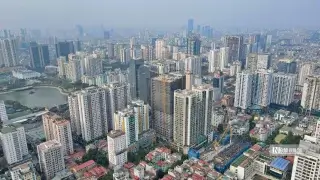
 Vietnam Mortgage Surge Pushes Homes Out of Reach
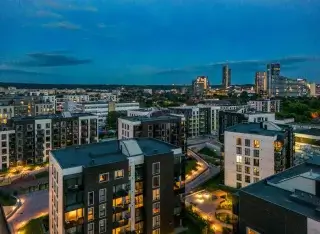 Lithuanian Apartment Prices Accelerate Across Major Cities
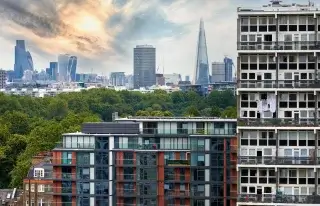 London Flats Lose Value Ahead of Leasehold Reform
 Construction of the Batumi–Sarpi Highway Begins in Georgia
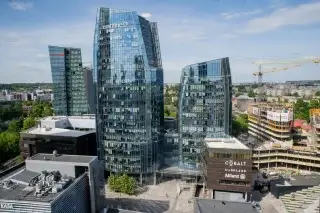 Baltic Property Investment Accelerates in 2026
 Hong Kong and Singapore Renew Their Expat Rivalry
China’s Property Crisis Outlives Evergrande
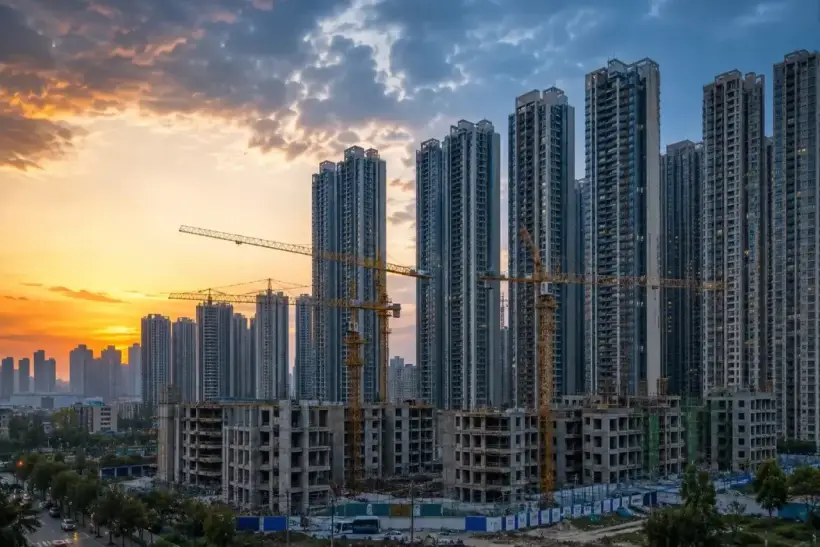
Almost five years after China Evergrande's default, the country's property downturn remains a major drag on the world's second-largest economy. On August 20, 2026, a Shenzhen court sentenced founder Hui Ka Yan, also known as Xu Jiayin, to life imprisonment. Yet the industry's problems have long moved beyond a single developer: property investment fell 19.2% in the first seven months of 2026, new construction starts dropped 24%, sales of newly built commercial property declined 11.8% by floor area, and a durable price recovery remains concentrated in a limited number of stronger cities. A new Bloomberg overview traces the market's path from Evergrande's collapse to the prolonged housing-price downturn.
Evergrande Founder Receives a Life Sentence
A Shenzhen court sentenced 67-year-old Hui Ka Yan to life imprisonment on August 20 and ordered the confiscation of his personal assets. Hui had pleaded guilty in April to eight charges covering offenses including illegal public fundraising, financial fraud, misuse of funds and bribery. China Evergrande was fined 8.82 billion yuan and Evergrande Real Estate Group another 7 billion yuan. Associated Press also reported that investigations found extensive inflation of the company's financial results before its collapse.
The judgment closes the career of a tycoon who ranked among Asia's richest people during China's property boom, but it does not close Evergrande's financial story. The group had more than $300 billion in liabilities when its debt crisis erupted in 2021.
The High Court of Hong Kong ordered China Evergrande Group into liquidation on January 29, 2024 after the developer failed to produce a restructuring acceptable to creditors. Court-appointed liquidators were tasked with preserving assets, returning value to creditors and investigating the causes of the company's failure.
The company's Hong Kong listing was formally cancelled on August 25, 2025. Trading had already been suspended since January 29, 2024, and the exchange said Evergrande had failed to meet its resumption requirements within the required period.
The Three Red Lines Exposed Developers' Dependence on Debt
The origins of the crisis predate Evergrande's default.
In 2020, Chinese authorities introduced the framework known as the three red lines to curb excessive developer leverage. Adjusted liabilities were expected to remain below 70% of assets, net debt below 100% of equity and cash holdings at least equal to short-term borrowing.
The more thresholds a developer breached, the tighter its limits on additional interest-bearing debt became. Analysis by the Reserve Bank of Australia showed how the policy exposed the sector's dependence on constant refinancing, presales and rapidly expanding property sales. Once sales weakened and financing became harder to obtain, highly leveraged developers faced increasingly severe liquidity pressure.
Evergrande became the most visible example, but the problem spread across a significant portion of the private development industry and weakened household confidence in the presale model.
Property Investment Is Down Almost 20%
The latest data show no nationwide recovery in 2026.
Property development investment totalled 4.3009 trillion yuan between January and July, down 19.2% year on year. Residential investment declined 19.1% to 3.3172 trillion yuan.
Newly started floor space fell 24% to 267 million square metres, while residential starts declined 24.6%. Completed property floor space dropped 23.2%, including a 25.5% fall for residential buildings.
Demand also weakened. Sales of newly built commercial property declined 11.8% by floor area to 450.21 million square metres and 13.1% by value to 4.2718 trillion yuan. Residential sales area fell 12.7% and residential sales value 13.2%.
Developer funding contracted 20.3% to 4.5748 trillion yuan. Domestic bank loans were down 32.1%, deposits and advance payments fell 14.4%, and individual mortgage funding dropped 23.5%, according to figures released by China's National Bureau of Statistics on August 17.
The Contraction Is Deeper Than in 2025
The deterioration follows an already weak 2025.
Full-year property investment fell 17.2% to 8.2788 trillion yuan last year. Newly started floor space declined 20.4%, completions fell 18.1%, and sales of newly built commercial properties decreased 8.7% by area and 12.6% by value.
Commercial property available for sale stood at 766.32 million square metres at the end of 2025, 1.6% higher than a year earlier. The official real-estate development climate index was only 91.45 in December; the National Bureau of Statistics defines readings below 95 as relatively weak.
The first seven months of 2026 therefore provide little evidence of a sustained turn in investment or new construction.
Home Prices Are Splitting Along City Lines
The price picture is more complicated because China's housing market is increasingly divided between major metropolitan areas and smaller cities with weaker demand.
In July, average new-home prices across Beijing, Shanghai, Guangzhou and Shenzhen were unchanged from June. Shanghai rose 0.2%, Guangzhou 0.1% and Shenzhen 0.2%, while Beijing fell 0.3%.
Compared with July 2025, new-home prices across the four first-tier cities were down 1.1%. Shanghai was the major exception with a 3% gain. Beijing fell 2.3%, Guangzhou 2.2% and Shenzhen 2.9%.
New-home prices in second-tier cities were 2.8% lower year on year and those in third-tier cities were down 4.2%. Existing-home prices fell even more sharply: 3.7% in first-tier cities, 5.1% in second-tier markets and 5.8% in third-tier locations.
The National Bureau of Statistics table also shows that only 17 of the 70 monitored cities recorded month-on-month increases in new-home prices. Hangzhou, where new-home prices were 2.6% higher than a year earlier, was among the stronger markets alongside Shanghai.
The divergence is critical: stabilization in a handful of wealthy cities does not amount to a nationwide housing recovery.
Property Inventories Are Falling Only Gradually
Commercial property available for sale totalled 759.11 million square metres at the end of July, down just 0.8% from a year earlier. Property that had been on the market for less than three years fell 3.6% to 555.59 million square metres.
Those figures should not be interpreted solely as evidence that buyers are rapidly absorbing excess housing. Inventories are falling at the same time that new construction has dropped by almost one-quarter, meaning substantially less supply is entering the pipeline.
Beijing has separately focused on unfinished homes that buyers have already paid for. Under the real-estate financing coordination mechanism, commonly called the project white list, commercial banks had approved 5.6 trillion yuan in loans by January 22, 2025. Authorities said the mechanism had supported construction and delivery involving around 14 million homes.
The approach is designed to finance viable individual projects rather than provide an unconditional bailout for developer shareholders or bondholders.
The National Mortgage Down-Payment Floor Is 15%
China has already relaxed major demand-side restrictions.
Since September 2024, the national minimum down-payment requirement for commercial mortgages has no longer distinguished between first and second homes and has been set at no less than 15%. Provincial branches of the People's Bank of China and local financial regulators retain authority to set city-specific floors according to local market conditions.
Authorities have also reduced the cost of existing mortgages and eased purchase restrictions in many cities.
Yet cheaper credit does not automatically restore demand. Households that expect prices to fall further may delay purchases even when mortgage rates and down-payment requirements decline.
Beijing Is Buying Unsold Completed Homes
Policy has increasingly shifted from stimulating borrowing toward reducing property inventories.
The People's Bank of China established a 300-billion-yuan relending facility in 2024 to support banks financing purchases of unsold completed commercial homes by local state-owned enterprises. The homes can then be converted into government-subsidized housing for sale or rent. The central bank subsequently increased its funding share under the program from 60% to 100%.
The mechanism provides liquidity to developers while also reducing completed inventory. Its scale, however, needs to be considered against the hundreds of millions of square metres of commercial property still available for sale nationwide.
Property Remains a Drag on China's Economy
The housing downturn is visible in China's broader economic accounts.
Gross domestic product expanded 4.7% year on year in the first half of 2026, while second-quarter growth slowed to 4.3%. Real-estate value added contracted 0.2% in the first half and construction fell 4%.
By contrast, industrial value added grew 5.4%, manufacturing 5.5%, finance 6.7% and information, software and technology services more than 10%.
The figures underline an ongoing structural shift away from property-led growth. But a rapid housing contraction creates its own problems because real estate is closely connected to steel, cement, glass, furniture, appliances, bank lending, construction employment and local-government finances.
Evergrande Is No Longer the Main Indicator
Evergrande's legal fate is becoming progressively less useful as a gauge of the wider property market.
The company has already defaulted, entered court-ordered liquidation, disappeared from the Hong Kong stock market and seen its founder sentenced to life imprisonment. Yet nationwide property investment is still falling at a double-digit pace, new construction is contracting by roughly one-quarter and prices remain under pressure across many smaller markets.
The central question has therefore changed. In 2021 and 2022, investors were asking whether Evergrande would fail and how far contagion might spread. In 2026, the more important question is when falling construction and prices will reach a level that restores household willingness to buy and allows developers to invest without extraordinary policy support.
As International Investment experts report, Hui Ka Yan's life sentence has major legal and symbolic significance but little direct effect on the current economics of China's housing market. The critical figures now sit in national statistics rather than on Evergrande's balance sheet: investment is down 19.2%, new starts 24%, residential sales remain weak, and the strongest price performance is concentrated in selected core cities. Government intervention has reduced the risk of a disorderly collapse and helped finance unfinished projects, but a credible end to the downturn would require sales, prices, construction starts and developer cash flows to stabilize at the same time. As of August 2026, that combination has not yet emerged.
FAQ: China's Property Crisis and Evergrande
Why did China's property crisis begin?
It developed from a combination of high developer leverage, dependence on presales, excessive construction in some regional markets and tighter financing rules introduced from 2020. Falling sales then turned company-level debt problems into a broader demand crisis.
When did Evergrande default?
The critical default on international debt occurred in late 2021, when the group had more than $300 billion in liabilities.
What happened to Hui Ka Yan?
A Shenzhen court sentenced the Evergrande founder to life imprisonment on August 20, 2026 and ordered the confiscation of his personal assets.
Are Chinese home prices still falling?
Across much of the country, yes. In July, new-home prices were down 1.1% year on year in first-tier cities, 2.8% in second-tier cities and 4.2% in third-tier markets. Shanghai was one of the major exceptions.
How much has construction fallen in 2026?
Newly started property floor space fell 24% year on year in January through July. Residential starts declined 24.6%.
How large is China's unsold property inventory?
Commercial property available for sale totalled 759.11 million square metres at the end of July. The figure includes more than residential housing, so it should not be interpreted as a direct count of unsold apartments.
Is Beijing bailing out troubled developers?
Policy is focused mainly on financing specific viable projects, completing presold homes and reducing completed inventory rather than guaranteeing all developer debts.
Did Evergrande's liquidation end the property crisis?
No. Evergrande is the best-known symbol of the downturn, but the current problem is a nationwide contraction in investment, construction, sales and prices across many regional markets.