










Czech Rental Housing Becomes Long-Term Choice
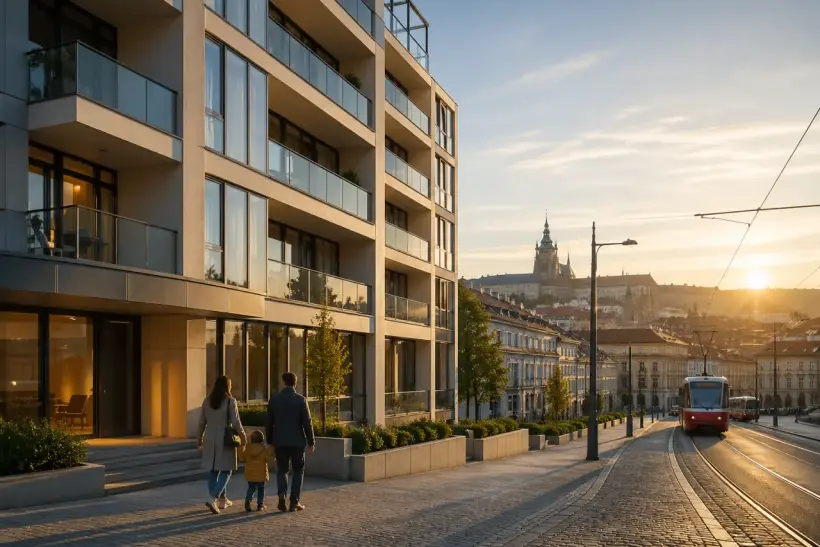
Czech rental market changes its housing model
By 2026, rental housing in Czechia is no longer just a temporary step before buying a home. According to Trend Report 2026, renting is increasingly chosen not only by young professionals, but also by families and middle-aged households. The main drivers are poor affordability of ownership, costly mortgages and demand for greater flexibility.
The Czech National Bank says real apartment prices, after falling in 2023, rose sharply again in 2024 and early 2025, while housing became less affordable as prices outpaced household income.
Rents keep rising, but growth is stabilizing
Trend Report 2026 puts the average rent in Czechia at the beginning of 2026 at about CZK 313 per square meter. Annual growth is estimated at around 5–6%, though some regions may see increases of up to 10%.
Radio Prague International, citing the Association of Rental Housing, reported that rents in Czechia may rise by 6–9% in 2026, while the Czech Chamber of Commerce expects nominal wages to grow by 5–6%. That means rent growth may again outpace income growth.
Prague and Brno widen the regional gap
Czechia’s rental market is becoming increasingly fragmented. In Prague, older apartments in selected districts rent for about CZK 370–490 per square meter. Prague 1 reaches around CZK 490, Prague 2 about CZK 470, while Prague 3 and Prague 6 are around CZK 420–430.
Outside the capital, prices are lower. Brno stands at about CZK 355 per square meter, the Central Bohemian Region at around CZK 315, and Pardubice or Plzeň at roughly CZK 285. Ústí nad Labem and Ostrava remain much cheaper, at about CZK 205–215.
CBRE’s Czech Republic Real Estate Market Outlook 2026 also notes that affordability pressure continues to support demand for institutional rental housing, meaning professionally developed or managed apartments intended for long-term tenants.
Supply expands, but apartments move quickly
More than 18,000 apartments were available for long-term rent in Czech regional markets in 2025, according to Trend Report 2026. Total rental apartment supply increased by almost 30% year on year. The increase came from some units returning from short-term rental, new institutional rental projects and stronger activity by private investors.
Demand remains strong despite the larger supply. Rental apartments are still often leased within weeks of being listed, showing that the market remains tight across regions.
Renting becomes part of a new housing model
For Czechia, this is a structural shift. The country has long been ownership-oriented, but rising prices, mortgage costs and limited construction are broadening the tenant base. According to the International Union of Tenants, about 22% of Czech households live in rental housing, equal to roughly 900,000 households and 2.3 million people.
As experts at International Investment report, Czechia’s rental market is entering a more mature phase: price growth looks less volatile, but the high cost of ownership is turning renting into a long-term norm for more families. The key risk for tenants is not only rent level, but also contract stability, housing quality and the widening gap between Prague, Brno and the rest of the country.