







 Australia’s Spring Auctions Rise but Remain Well Below 2025
 Number of Foreigners Holding Turkish Residence Permits Exceeds 1.27 Million
 Demand from Russian Tourists for Holidays in Georgia Rises by 20–25%
 Montenegro Property Buying Costs in 2026
 Four in Ten Companies Would Not Choose Slovakia
 Gulf Countries Prepare Unified Tourist Visa
France Slows Dover Biometric Checks
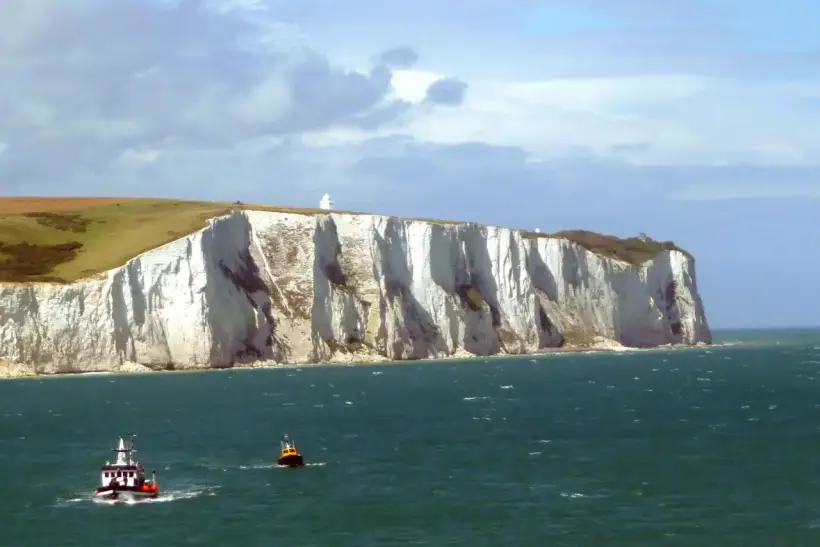
French border police temporarily eased additional European Entry/Exit System checks at the Port of Dover after a bank-holiday surge in ferry traffic produced hours-long queues, exposing how Europe’s new digital border can strain one of the UK’s busiest gateways to the continent.
Dover became the first major EES stress test
The Port of Dover on May 23, 2026, became a visible test case for the European Union’s new Entry/Exit System, known as EES. As British holiday traffic headed toward ferries to France during hot weather, waiting times on the Kent approaches and at the terminal stretched from more than two hours to around four hours at peak periods, according to UK media reports.
French border police, who operate controls at Dover under juxtaposed border arrangements, temporarily relaxed the additional EES procedures. That did not mean passport checks were abolished. It meant officers reverted to faster conventional processing where digital registration was creating congestion. For passengers, the effect was immediate: cars and coaches moved more quickly, but the episode showed that a system designed to modernize Europe’s border can still be vulnerable at high-volume crossings.
What the EU Entry/Exit System does
The European Commission defines EES as an automated information system for registering non-EU nationals travelling for a short stay to 29 European countries. Since April 10, 2026, it has replaced manual passport stamping and records a traveller’s name, document data, fingerprints, facial image, and the date and place of entry and exit, as well as refusals of entry.
EES is not the same as ETIAS. EES is a border registration system used when a traveller crosses the Schengen external border. ETIAS, the European Travel Information and Authorisation System, is a future online travel authorization for visa-exempt nationals. France’s foreign ministry says ETIAS is expected in the final quarter of 2026 and will require a €20 fee for most applicants.
Why Dover is operationally exposed
Dover is different from many airports and seaports because French border controls take place on the UK side before passengers board ferries. That arrangement helps carriers and destination ports, but it concentrates disruption in Kent if checks slow down. When processing times rise, the queue forms before departure rather than after arrival in France.
The UK government previously said it had provided £3.5 million each to Eurostar, Eurotunnel and the Port of Dover for kiosks and infrastructure. Dover also built a dedicated EES processing area at the Western Docks. The May disruption showed that facilities and equipment are only part of the problem; the decisive test is how the process works when passenger volumes rise sharply.
Biometrics may speed borders only after transition
In the long term, EES is meant to make border control more efficient. It automatically tracks the 90-days-in-180-days short-stay rule, helps detect overstayers and reduces reliance on passport stamps. But first-time registration requires biometric collection, which takes longer than a routine passport inspection.
The Port of Dover tells passengers that most non-EU citizens, including British citizens, will need to register fingerprints and facial images when entering or leaving the Schengen area. The port also says passengers do not need to provide information before travel, because registration happens at the border point. That makes car and coach traffic especially sensitive to peak demand, since each person in a vehicle may become a separate processing case.
France’s pause does not cancel the new rules
The temporary easing in Dover does not mean France or the EU is abandoning EES. It reflects a flexibility mechanism that allows border authorities to reduce additional processing when queues become excessive. Conventional passport control continues, and biometric registration remains part of the new border model for travellers covered by the system.
For transport companies, the lesson is clear. Ferry operators, coach firms and tour companies cannot assume that EES will be switched off whenever terminals are busy. They will need to plan timetables, boarding flows and passenger communications around the assumption that digital checks are now a permanent feature of cross-Channel travel.
Who is covered by the digital border
EES applies to non-EU and non-Schengen nationals travelling for a short stay of up to 90 days in any 180-day period. That includes many British tourists after the UK’s departure from the European Union. EU citizens, Schengen nationals, holders of long-stay visas and residence-permit holders are generally outside the registration requirement when they present the relevant documents.
French official guidance says fingerprints are not collected from children under 12, although facial images and trip data remain part of the system’s logic. For families, that reduces the burden only partly: cars carrying several adults still require sequential processing for each covered traveller.
Dover queues warn of summer pressure
The Dover incident came just as European carriers were preparing for the summer travel season. The Channel route is a mass-market corridor for British tourists, freight, coaches and family trips. Even a small increase in processing time per passenger can translate into hours of delay when traffic peaks.
The Guardian reported that French police temporarily suspended extra checks as long waits developed in hot weather. The Times reported queues of about four hours and said waiting times fell after officers reverted to more traditional processing. For regulators, this was not merely a local transport disruption; it was a test of whether digital border controls can work inside the physical limits of older, high-density ports.
EES is not a visa and not ETIAS
For travellers, the biggest immediate risk is confusion. EES is not a visa, does not require an online application before travel and is not paid for by the passenger at registration. It is a border process that records entry and exit from the Schengen area.
ETIAS is different. It will be a pre-travel authorization for visa-exempt nationals when it launches. It will not replace passport control and will not grant rights to live or work in the EU. In practice, once ETIAS is active, a traveller may need online authorization before departure and then still be registered or verified in EES at the border.
The new border adds a time cost
For the travel industry, Dover’s disruption is more than passenger irritation. Queues raise operating costs, disrupt ferry schedules, increase pressure on staff and create reputational risk for the route. For families, a four-hour delay in hot weather can change travel behavior, pushing some passengers toward air travel, rail through the Channel Tunnel or off-peak dates.
For France and the EU, the stakes are broader than one port. EES must prove that stronger control does not undermine travel convenience. If the system regularly requires manual relief during peak periods, the political debate will intensify: governments will emphasize security and overstay detection, while operators will point to capacity and lost customers.
As International Investment experts report, the critical conclusion is that Dover exposed the weak point of the reform: a digital border cannot be judged only by legal readiness and installed kiosks. Its real effectiveness depends on minutes per passenger, family travel patterns, weather, seasonal traffic and the ability of national services to switch between digital and conventional processing without chaos. If the EU and France cannot stabilize the system during peak periods, EES risks becoming not just a control tool but a source of uncertainty for tourism, ferry operators and border economies.