







 Germans Seek Temporary Asylum in Russia
 Alta Banka Collapse in Serbia: What Happens to Russian Depositors' Money
 Covivio Hotels Revenue Grows 4.7% as European Markets Split
 Lithuanian Apartment Prices Accelerate Across Major Cities
 Georgia's Tourism Revenue Hits Record High
 Norway's Sovereign Fund Commits €1.5bn to European Warehouses
Georgia Aviation Holds Growth as Fuel Costs Rise
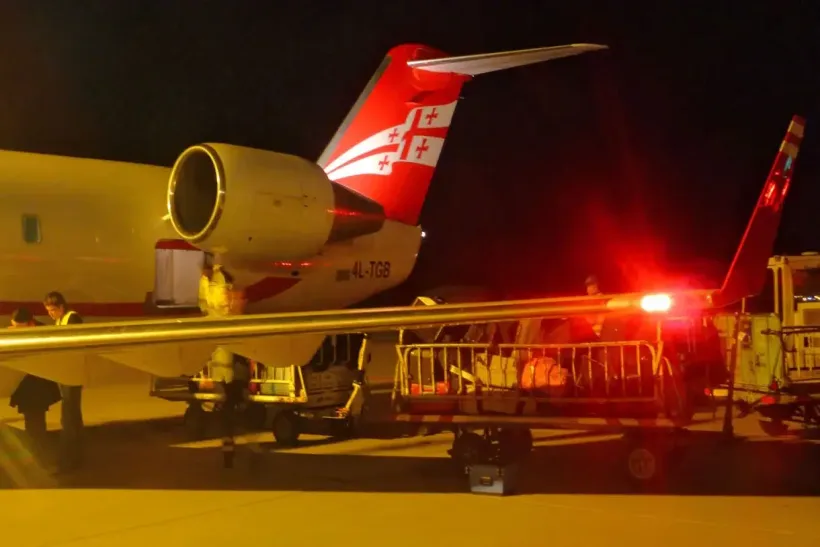
Georgia's international airports handled 5.7 million passengers in January-August 2026, up 1% from a year earlier. Passenger traffic has remained resilient despite a sharp increase in jet fuel prices, airspace restrictions and changes to airline networks. The Georgian market now has 85 airlines serving 125 destinations, while intense competition could put downward pressure on some fares during the winter season.
Jet Fuel Prices Rise 116% Year on Year
Rising operating costs remain one of the main challenges for carriers. Giorgi Shengelia, a representative of Pegasus Airlines and Air Arabia in Georgia, told BMG that jet fuel prices have remained elevated for about six months. Airlines have reduced frequencies on routes with relatively weak demand, while strong summer traffic allowed them to maintain a substantial part of their schedules.
Shengelia also pointed to airspace restrictions. Some carriers have had to use longer routes, increasing flight times and operating costs. Demand for Georgia itself has not fallen significantly, in his assessment, while the country's network has become more diversified as new airlines and departure cities were added.
IATA data cited on September 25 showed jet fuel prices up 116% year on year. Shengelia expects winter fares to decline on some routes as seasonal demand weakens and airlines compete for passengers. He argues that ticket prices depend not only on operating costs but also on the balance between demand and the number of seats offered on each route.
The International Air Transport Association's latest fuel monitor put the global average jet fuel price at $194.90 a barrel, up 7.4% from the previous week. The index is based on S&P Global Energy data and reflects average refinery prices across major aviation fuel markets.
Georgian Airports Handle 5.7 Million Passengers
Passenger traffic during the first eight months of the year reached the highest level for that period in at least a decade. Georgia's international airports handled 5.7 million passengers, 1% more than in January-August 2025. August also set a monthly passenger record.
Performance was uneven during the year. Georgian airports handled about 2 million passengers in the second quarter, a 5.7% year-on-year decline. Roughly 1 million passengers arrived and a similar number departed. Passenger flights fell 4.7% to 8,200, while scheduled services accounted for 94.5% of traffic.
Stronger summer demand helped offset part of that decline. The 1% increase for the first eight months is modest, but it shows that the weaker spring period did not develop into a sustained downturn in passenger traffic.
Georgia's Market Has 85 Airlines
Competition in the Georgian aviation market has increased substantially. Georgia's Ministry of Economy reported in July that 85 airlines were operating flights to 125 destinations. Forty-three new carriers had entered the market over the previous five years.
The ministry also reported that Georgian airports handled almost 788,000 passengers in June alone, 4% more than a year earlier. Passenger traffic at Batumi International Airport increased 3% during the month.
The international network is continuing to expand. China Eastern Airlines launched direct scheduled flights between Tbilisi and Shanghai on July 15. The carrier operates three services a week, on Wednesdays, Fridays and Sundays. The inaugural flight arrived in Tbilisi with a 98% load factor.
The increase in airlines and destinations will become particularly important during the winter season. The more carriers compete for passengers on comparable routes, the harder it becomes to offset higher operating costs through fares alone.
Tourism Revenue Returns to Growth
Aviation performance is closely tied to tourism revenue, which improved during the summer after a weaker second quarter. Galt & Taggart estimated Georgia's tourism receipts at $695 million in August, up 8.8% from a year earlier.
Revenue for January-August reached about $3.2 billion, an increase of 1.6%. The investment bank expects tourism revenue to reach $4.9 billion for the full year.
The first half was weaker. Tourism revenue fell 2% year on year to $1.9 billion, including a 3.8% decline to $1.1 billion in the second quarter. International visitors made about 2.7 million visits during the first half, down 2.7%, while tourist visits were broadly unchanged at around 2.3 million.
The composition of inbound tourism is also changing. Visits from the European Union and the UK reached a record 249,201 in January-June, up 23.4% from the same period of 2025. The second quarter accounted for 152,975 visits, an increase of 19.4%. Tourism revenue generated by visitors from the EU and UK rose 21.2% in the first half to a record $335.7 million.
Airlines Face Stronger Winter Competition
Georgia's aviation market is being shaped by two opposing forces. Higher fuel costs and longer flight paths are raising expenses, while substantial airline capacity limits the ability of carriers to pass those costs fully on to passengers.
Strong summer demand made it easier to absorb higher expenses. Winter is more difficult: as load factors weaken, airlines can either reduce frequencies or lower fares to fill aircraft.
Higher jet fuel prices therefore do not automatically mean equally large increases in ticket prices. Fares can fall on highly competitive routes where seat supply exceeds demand, while routes with more limited capacity may behave differently.
Tbilisi Airport Capacity Is Set to Double
Georgia is also expanding aviation infrastructure. TAV Airports plans to invest more than $150 million in Tbilisi International Airport between 2026 and 2028.
The project is expected to increase annual capacity to 10 million passengers and expand the airport's existing infrastructure to accommodate future traffic growth.
The expansion comes as Georgia's aviation market reaches a record number of airlines and destinations. Current passenger figures, however, are growing at a much slower rate: international airport traffic increased only 1% during the first eight months of 2026.
As International Investment experts report, the latest figures show that Georgia's aviation sector has maintained passenger traffic and expanded its route network despite substantially higher fuel costs. With 85 airlines competing across 125 destinations, carriers have limited room to raise fares when winter demand weakens. That competition could support lower prices for travelers on some routes, but it also increases pressure on airline margins and may lead carriers to adjust frequencies where demand is insufficient to cover higher operating costs.
FAQ
How many passengers have Georgian airports handled in 2026?
Georgia's international airports handled 5.7 million passengers in January-August, 1% more than during the same period of 2025.
How many airlines operate in Georgia?
Georgia's Ministry of Economy reported 85 airlines serving 125 destinations in the summer of 2026.
How much have jet fuel prices increased?
IATA data cited on September 25 showed jet fuel prices 116% higher than a year earlier. The latest global average in IATA's weekly monitor was $194.90 a barrel.
Could flights to Georgia become cheaper in winter?
Giorgi Shengelia expects lower fares on some routes because of weaker seasonal demand and intense competition. Actual prices will depend on the route, capacity and passenger demand.
How much tourism revenue has Georgia generated?
Galt & Taggart estimated tourism revenue at about $3.2 billion in January-August 2026, up 1.6% year on year. August revenue increased 8.8% to $695 million.
Is tourism from Europe increasing?
Yes. Visits from the European Union and the UK rose 23.4% year on year to a record 249,201 in the first half of 2026.
Is Tbilisi International Airport being expanded?
Yes. TAV Airports plans to invest more than $150 million between 2026 and 2028. The project is expected to increase annual passenger capacity to 10 million.