







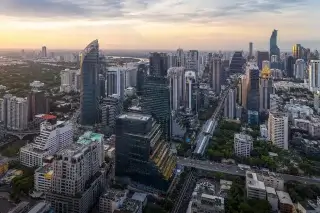
 Asia-Pacific Property Investment Hits Record $92.5 Billion
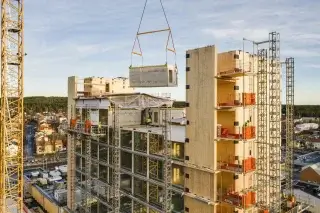 Scandinavian Prefab Housing Market Seen Reaching $7.9 Billion
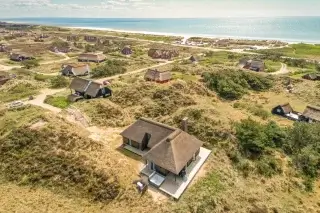 Denmark Sets First-Half Tourism Record as Germans Lead
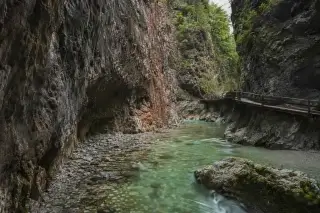 Drought Dries Bärenschützklamm Waterfalls in Austria
 Thailand Industrial Property Faces Rising Vacancy Risk
 Apartment Prices in Estonia Differ by 51 Times
Greeks Lose Access to Their Own Summer

Greece is once again selling the world the image of the perfect Mediterranean holiday, but for many of its own citizens that image is becoming less accessible. After the debt crisis, the country has restored tourism, employment and industry revenues, yet rising island prices, expensive ferries, limited affordable accommodation and weak household purchasing power are turning a summer beach vacation into a privilege rather than a normal part of life.
Tourism Success Collides With Holiday Poverty
Greek tourism is going through one of the strongest periods in its history. In 2025, travel receipts reached about €23.6 billion, rising 9.4% from 2024. Foreign arrivals approached 38 million. For a country of about 10 million people, that means international demand is several times larger than the domestic market and plays a major role in setting prices in key destinations.
But that success has another side. Greeks increasingly find themselves not as participants in their own tourism boom, but as spectators. Hotels, ferries, restaurants, beach services and rental housing in popular areas are oriented toward the foreign client with higher spending power, not the local family earning Greek wages.
Bloomberg described the situation as Greeks being priced out of summer beach vacations after the country’s recovery from crisis. Formally, the economy is stronger: unemployment has fallen, tourism is growing, and fiscal discipline has improved. But for households, a holiday depends not on macroeconomic statistics but on what a week on an island costs after rent, food, bills and transport.
Half of Greeks Do Not Plan a Summer Holiday
A survey by the Institute of Retail Consumer Goods Research, IELKA, found that only 50% of Greeks plan to take a holiday in summer 2026. That is slightly better than 48% in 2025, but it still means half the population is either skipping vacations or unable to afford a proper trip.
The main reason is cost. Households face not one expensive item but a whole chain: accommodation, ferry tickets, fuel, food, beach loungers, car rental, children’s expenses and the broader cost of living. Even if a family gives up on a premium hotel, an island trip can still be too expensive because of transport and food.
This changes the structure of leisure itself. Instead of a week on an island, families choose shorter trips, day visits to nearby beaches, stays with relatives, mainland destinations or no holiday at all. In a country where summer has historically been part of social culture, this is a painful symbol of uneven recovery.
Foreign Demand Raises the Price Floor
Greece competes in the global holiday market. For tourists from Germany, the United Kingdom, France, the United States, the Netherlands or Scandinavia, prices on Greek islands may remain acceptable even after rising. For a Greek family with local income, the same prices feel far heavier.
Foreign demand has the strongest effect on Santorini, Mykonos, Paros, Naxos, Crete, Rhodes, Corfu and Athens. In these places, the short-term rental market, hotels, restaurants and beach services quickly adjust to visitors who come for a short period and are willing to spend more. A local resident or domestic tourist ends up competing with visitors who have higher purchasing power.
This is the classic effect of tourism inflation. Tourism inflation is the rise in prices in places where high visitor flows change the structure of demand and push businesses toward more expensive segments. It does not always appear fully in official inflation, but it is visible in specific costs: a hotel night, a ferry ticket, a dinner by the sea, an umbrella on the beach.
Islands Have Become Especially Expensive
Greek islands have always cost more than the mainland because of logistics. Goods must be delivered by sea, workers often arrive for the season, housing is limited, and summer demand is concentrated in a short period. In recent years, however, that gap has widened. Popular islands have become international resorts where budget guesthouses and campsites are being replaced by boutique hotels, villas and expensive short-term rentals.
For a Greek family, an island holiday often begins with a high transport bill. Ferries for a family with children and a car can become one of the largest expenses before accommodation is even paid. Add food, loungers, car rental or taxis, and a week by the sea quickly becomes a cost out of line with average wages.
This is especially painful for people who remember a different holiday model. A generation ago, Greek families could travel to islands through guesthouses, campsites, modest rooms or stays with friends. Some of those cheaper formats are now disappearing, while available properties move into tourist rentals with dynamic pricing.
Economic Recovery Has Not Restored Equal Purchasing Power
Greece has indeed moved out of the worst phase of its debt crisis. The country has returned to growth, regained investment grade, lowered unemployment and become one of Europe’s successful tourism markets. But many households still carry the scars of a decade of austerity.
Wages are rising, but they do not always keep pace with housing, food, energy and services. The minimum wage in 2026 has been raised to about €920 gross a month, yet even two such wages in one household do not make a week on a popular island an easy expense. For pensioners, seasonal workers, young families and renters, the situation is even harder.
Purchasing power is not nominal salary, but the amount of goods and services it can buy. In Greece’s case, the problem is that holiday-related expenses have risen faster than what local residents consider manageable. Vacation has begun to compete with basic spending rather than remain a normal annual event.
Tourism Creates Jobs but Blocks Workers’ Own Holidays
The paradox of Greek tourism is that it employs many people who often cannot take holidays themselves. Restaurants, hotels, shops, excursion firms, transport and beach services work precisely when most people would like to rest. For seasonal workers, summer is not holiday time but the main earning period.
In the past, some small businesses closed for several weeks in August, allowing owners and employees to rest. Now many cannot close because foreign tourists bring in the year’s main revenue. Workers earn in summer in order to survive the weaker season, but in doing so lose the chance to be ordinary consumers of the tourism economy.
This deepens social tension. Tourism supplies a significant share of Greece’s GDP, but the gains are unevenly distributed. Property owners, hotel operators and successful restaurants benefit more than workers on seasonal contracts who rent housing and depend on unstable shifts or tips.
Beaches Become a New Social Battleground
The commercialization of beaches is a particular source of frustration. Loungers, umbrellas, beach bars and private zones in popular locations have become symbols of the rising cost of access to the sea. For Greeks, the sea is not merely a tourism product, but part of public space and everyday identity.
The movement against the “capture of beaches” has for several years demanded that coastal areas remain accessible to everyone. The state has tightened control through digital tools, concession inspections and restrictions on sunbeds in protected areas. In 2026, measures to protect hundreds of beaches from commercial infrastructure were also discussed or introduced.
But the problem has not disappeared. Even if a section of beach is formally free, the surrounding economy may be expensive: parking, cafés, transport, equipment rental, food and nearby accommodation. The social dispute is therefore not only about the right to place a towel on the sand, but about whether residents still have real access to the sea.
Short-Term Rentals Increase Pressure
The growth of short-term rentals has changed Athens and the islands. Apartments that could have been rented to local residents or domestic tourists at moderate prices are moving onto platforms for foreign guests. This is especially visible in the historic center of Athens, the Cyclades and popular coastal zones.
For owners, this model is often more profitable than long-term rental. For the city or island, it creates shortages of affordable housing, higher prices and displacement of local residents. For domestic tourists, it means that even simple accommodation in season can be priced as an international product rather than a local service.
Regulating short-term rentals has become part of the broader overtourism debate. Greece does not want to destroy the sector because it provides income to thousands of owners. But without control, it widens the gap between the tourism economy and local life.
Domestic Tourism Shifts to the Mainland
Some Greeks are adapting by choosing mainland beaches, lesser-known areas, mountain villages, car trips, short breaks and off-season holidays. This is a rational response to island prices. Domestic tourism is not disappearing, but it is becoming more economical and fragmented.
Mainland Greece benefits from this shift. The Peloponnese, Epirus, Halkidiki, Evia, Pelion, the western coast and less promoted areas can offer sea, nature and food without the costs of Santorini or Mykonos. But even there prices rise when a destination becomes popular.
For the state, this is an opportunity to redistribute demand. If domestic tourists travel not only to overloaded islands but also to lesser-known regions, that supports small business and reduces pressure on infrastructure. But this requires roads, public transport, affordable accommodation and promotion of alternative routes.
The Government Disputes the “Priced Out” Narrative
Greek authorities do not accept the idea that citizens have broadly lost access to holidays. Government representatives point out that domestic trips by Greeks have risen after the pandemic and debt crisis, while household spending on restaurants, cafés and hotels is high. In this view, economic recovery is gradually restoring people’s ability to travel.
There is a factual basis to that argument: employment is higher, tourism is strong, and incomes have improved compared with the crisis decade. But averages conceal gaps between groups. Some families can travel again, while others shorten holidays, stay with relatives or choose a nearby beach without overnight accommodation.
It is therefore more accurate to speak not of the disappearance of Greek holidays, but of their stratification. Wealthier households and the upper middle class continue to travel, people with family homes on islands retain access to the sea, while households without property and with lower incomes face a harder choice.
The Social Cost of Tourism Success Is Rising
Greek tourism gives the country foreign exchange, jobs, tax revenue and international visibility. But if citizens begin to see it as the mechanism that makes their own beaches, islands and cities unaffordable, political support for the industry may weaken.
The same problem is visible in Spain, Italy, Portugal and other southern European countries. Tourism brings income, but it raises rents, changes neighborhoods, overloads transport, displaces local shops and makes cities serve visitors before residents. Greece faces the same dilemma, but on islands it appears especially sharply.
Socially sustainable tourism means the industry can grow without damaging residents’ quality of life. If that sustainability is lost, protests against loungers, cruises, short-term rentals and new hotels become not accidents, but part of the political cycle.
Cruises and Premium Hotels Change Demand
On Santorini, Mykonos and other iconic islands, the premium segment is growing faster than the budget segment. Cruise passengers, luxury villas, boutique hotels and international restaurants create an economy of short, expensive and concentrated consumption. For businesses this is profitable, but for local families it creates the sense that islands are ceasing to be a shared national space.
A cruise tourist may spend only a few hours on an island but adds pressure to ports, roads, cable cars, viewpoints and historic streets. A premium guest pays more but raises the price floor for the surrounding economy. As a result, cheaper formats are pushed out economically, not administratively.
Greece is already introducing restrictions and fees for cruise destinations and discussing caps for overloaded areas. But those measures are mainly about managing flows. They do not always address affordability for Greeks themselves.
For Families, Holidays Become a Calculation, Not a Tradition
The main change is visible in the family budget. A summer vacation is no longer assumed to be part of the year. It must be calculated: how much transport costs, where to stay, whether self-catering is possible, how many days to spend away, whether to take a car, whether to book tickets early, whether to travel in July or wait until September.
This calculation is especially difficult for families with children. Children are tied to school holidays, meaning families often have to travel in the high season when prices are at their peak. If parents do not own a home by the sea or have relatives on an island, options narrow quickly.
As a result, “small holidays” become more important: two or three days instead of a week, mainland instead of island, bus instead of ferry with car, supermarket instead of restaurants, free beach instead of organized beach club. This is not the end of the sea, but it is the end of the old holiday model.
The Tourism Economy Needs a New Balance
Greece cannot easily turn away from high-revenue foreign tourism. It finances businesses, employment, the budget, hotel investment and transport. But the country also needs to preserve the domestic legitimacy of its tourism model. If citizens feel displaced, economic success becomes socially vulnerable.
The solution is not simply to order prices lower. Greece needs affordable ferry routes for residents, development of mainland destinations, enforcement against illegal beach commercialization, regulation of short-term rentals, investment in public transport and support for lower-cost accommodation formats.
Season extension also matters. If holidays become viable in May, June, September and October, pressure on August declines. But that requires functioning schools and work calendars, flexible leave, open hotels, transport and cultural programming outside the peak. Otherwise, demand will continue to collide in the most expensive weeks.
Greece Sells a Dream but Must Keep Access to It
The main risk for Greece is not that foreigners will stop coming. International demand remains strong. The risk is that the tourism model becomes alien to its own citizens. The sea, islands and beaches that shape Greek identity could become a product designed mainly for external buyers.
For the economy, that may look rational: foreigners spend more, businesses earn more, and the budget collects taxes. For society, it looks different: recovery from crisis does not feel complete if citizens cannot afford holidays in a country that earns billions from other people’s holidays.
Greek tourism has reached a stage where revenue growth is no longer the only measure of success. As experts at International Investment report, the critical conclusion is that the country must move from maximizing tourism receipts to ensuring social access to tourism: if domestic holidays become a luxury and beaches and islands become spaces for foreign wallets, Greece risks not only overtourism, but an internal conflict over citizens’ right to their own summer.
FAQ
Why are Greeks increasingly unable to afford summer holidays?
The main reason is the combined rise in the cost of accommodation, ferries, fuel, food, beach services and rentals. Many household incomes are not rising as fast as prices in popular tourist areas.
How many Greeks plan a summer holiday in 2026?
According to the IELKA survey, about 50% of Greeks plan to take a holiday in summer 2026. The rest are either skipping trips or limiting them because of costs and personal circumstances.
Why is tourism successful in Greece while locals struggle to travel?
Foreign demand raises prices in popular destinations. Tourism brings record revenue to the country, but that revenue is unevenly distributed, and services are increasingly priced for higher-spending international visitors.
Which destinations have become especially expensive?
The strongest pressure is visible on Santorini, Mykonos, Paros, Crete, Rhodes, Corfu, Athens and other popular island and urban destinations.
How are Greeks adapting to higher prices?
Many are choosing shorter trips, day visits, stays with relatives, mainland beaches, lesser-known regions, off-season travel and more economical food and accommodation options.
What can the government do?
Authorities can support affordable domestic routes, regulate short-term rentals, control beach commercialization, support lower-cost accommodation, extend the season and redistribute tourism toward less crowded regions.