







 Denmark Sets First-Half Tourism Record as Germans Lead
 Drought Dries Bärenschützklamm Waterfalls in Austria
 Thailand Industrial Property Faces Rising Vacancy Risk
 Apartment Prices in Estonia Differ by 51 Times
 European Property Investment Rises to €54 Billion
 Vienna Leads Rentals, Alpine Resorts Earn More
Paraguay Permanent Residency: New Requirements for Foreigners
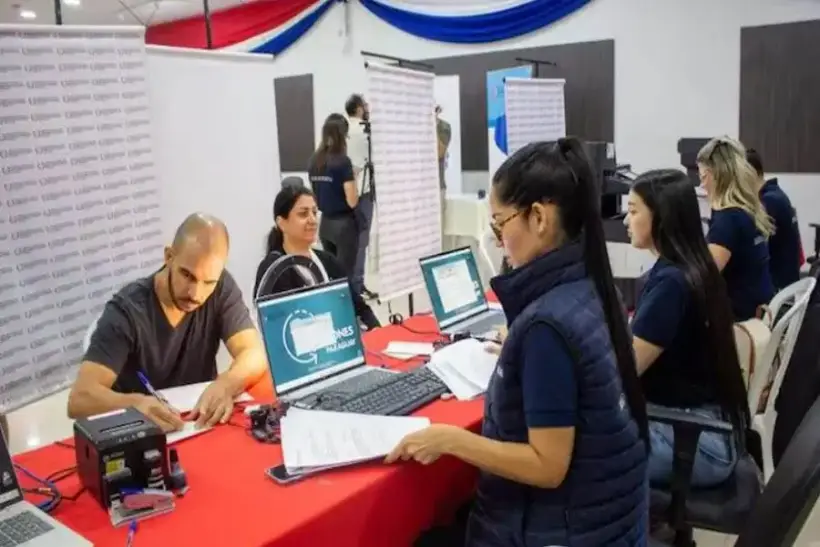
ABC Color
Paraguay has introduced new rules for obtaining permanent residency (PR). The government has created 12 applicant categories, and since July 6, 2026, foreigners must prove not only that they have sufficient income but also that they are actively engaged in the professional or economic activity they claim as their source of income, according to ABC Color.
How Paraguay's Residency Rules Have Changed
On May 28, 2026, Paraguay's National Directorate of Migration (Dirección Nacional de Migraciones, DNM) adopted Resolution No. 407, establishing unified financial eligibility requirements for permanent residency applications, IMI Daily reports.
The resolution consolidates six separate regulations into a single framework. Previously, different application grounds required different sets of documents, resulting in inconsistent implementation. The new rules bring all financial requirements into one annex under Migration Law No. 6984/22 and the MERCOSUR Residence Agreement.
The updated regulations introduce stricter verification of applicants' financial capacity. In addition, an applicant's profession and the financial qualification category will no longer appear on the printed residence card; this information will be stored only in the migration authority's internal database.
According to the DNM, the reform is intended to improve transparency, standardize documentation requirements, and strengthen oversight of foreign residents in Paraguay.
The new rules apply only to applications submitted on or after July 6, 2026. Applications filed before that date will continue to be processed under the previous regulations.
Twelve Categories of Permanent Residency Applicants
The revised regulations establish 12 categories of foreign applicants who may demonstrate financial eligibility based on their source of income and professional activity. These include:
- professionals and technical specialists;
- salaried employees;
- entrepreneurs in trade and services;
- remote workers and digital nomads;
- property owners;
- shareholders and company partners;
- farmers and agricultural business owners;
- representatives of religious organizations;
- pensioners;
- dependents;
- students.
The DNM says the classification is designed to accommodate the different professional and personal circumstances of foreigners already living in Paraguay or planning to obtain permanent resident status.
For most categories, applicants must demonstrate an active source of income. Acceptable evidence may include registration with the Instituto de Previsión Social (IPS) social security system, an employment contract registered and approved by the Ministry of Labor, or three months of VAT returns together with a tax clearance certificate.
Professionals and technical specialists now face particularly strict requirements. Holding a university or technical diploma alone is no longer sufficient. Applicants must also demonstrate that they are actively earning income from their qualifications.
Passive Income and Investments in Paraguay
Real Estate and Business Ownership
The new rules make it more difficult for people who want permanent residency but do not intend to live or conduct business in Paraguay.
Even categories that appear to involve passive income now have additional conditions. For example, real estate owners must prove ownership of property registered for at least two years, and migration authorities may request evidence that the property generates income.
Similarly, simply owning shares in a company may no longer be sufficient if the business is not actively operating or producing income.
The main exception is the pensioner category, which continues to allow passive income, provided that the applicant receives a genuine pension.
Investor Pass Program
The new residency rules do not affect Paraguay's Investor Pass program, established under Resolution No. 0283/2026. The program allows foreigners to obtain permanent residency directly through investment without first obtaining temporary residency.
Applicants may qualify through one of four investment options:
- purchasing real estate worth at least US$200,000;
- investing at least US$200,000 in financial instruments for a minimum of two years;
- establishing a productive business with an investment of at least US$70,000 and creating at least five jobs;
- investing at least US$150,000 in a tourism project.
For applicants who do not plan to live permanently in Paraguay, the first two options are generally the most suitable because they do not require operating a business or creating jobs.
Once permanent residency has been granted, holders only need to visit Paraguay once every three years to maintain their status.
The Permanent Residency Process Has Become More Demanding
The reforms do not mean Paraguay is closing its doors to foreigners. Instead, the country is changing the way it evaluates future residents, according to Jeremy Savory of Savory & Partners, who obtained Paraguayan permanent residency about 18 months ago.
Savory qualified under the previous productive investment scheme by creating five jobs. That pathway reduced the number of mandatory visits to Paraguay, although many investors were unwilling to meet those requirements.
"It is no longer enough simply to have a diploma, a particular status, or to have lived in the country for a certain period. What used to be a relatively simple and almost automatic process has become significantly more demanding," Savory said.
In practice, the National Directorate of Migration now verifies whether applicants are genuinely engaged in the economic activity they declare as their source of income.
Additionally, applicants transitioning from temporary to permanent residency may not remain outside Paraguay for more than one consecutive year.
Resolution No. 407 does not affect the Investor Pass program, which continues to offer direct permanent residency through investment without requiring a temporary residence period. Following the tightening of the general residency rules, this route has become more attractive for individuals who view Paraguay as a backup residence rather than an immediate destination for relocation.
Savory also believes Paraguay is entering a new phase in investment migration. Demand for such programs at his company has already increased by 40% compared with last year and is expected to grow by more than 80% by December.
Analysts at International Investment note that Resolution No. 407 still leaves several practical questions unanswered. For example, it does not specify a minimum income threshold for permanent residency applications. As the new rules are implemented in practice, these and other issues are expected to become clearer.