







 China Nears a Decision on Fresh Stimulus
 Fines for Illegal Rentals in Spain Reach €800,000
 Australia’s Spring Auctions Rise but Remain Well Below 2025
 Number of Foreigners Holding Turkish Residence Permits Exceeds 1.27 Million
 Demand from Russian Tourists for Holidays in Georgia Rises by 20–25%
 Montenegro Property Buying Costs in 2026
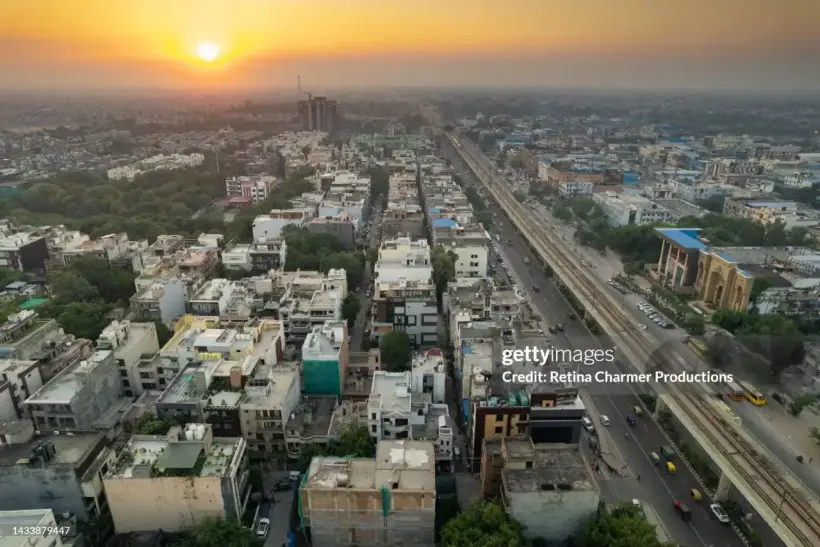
India is in talks with the World Bank and the Asian Development Bank for $2.5 billion in infrastructure funding as the government tries to preserve its high capital-spending drive amid rising fiscal risks linked to energy prices and subsidies. The financing is expected to support urban infrastructure, job creation and the long-term strategy of turning India into a developed economy by 2047.
India Discusses $2.5 Billion for Infrastructure Growth
Bloomberg reported that India is in talks with two multilateral lenders to secure $2.5 billion for infrastructure spending. According to the report, the World Bank may provide about $1.5 billion, while the Asian Development Bank may disburse about $1 billion. Announcements could come within the next two months if the discussions are finalized.
Multilateral lenders are international financial institutions created by groups of countries to support development, infrastructure, reforms and sustainable growth. For India, such loans are not only a source of funding, but also a way to share risk: participation by major international institutions can make it easier to attract private capital, lower financing costs and strengthen confidence in projects.
The funds are expected to be directed mainly toward urban infrastructure and job creation. That means the focus is not only on roads, transport links or utilities, but also on the broader economic impact: construction employment, services growth, city productivity and a stronger base for private investment.
Why New Delhi Needs External Loans
India has made infrastructure one of the main engines of economic growth for several years. Public capital expenditure remains a core tool for supporting the economy, especially when private investment is uneven and the global trade environment is less predictable.
In the 2026–2027 budget, the government announced an increase in public capital expenditure to 12.2 trillion rupees. Capital expenditure means investment in long-term assets such as roads, railways, ports, energy systems, urban infrastructure, hospitals and educational facilities. Unlike current expenditure, it creates assets and is intended to raise the productive capacity of the economy.
But a large infrastructure program needs stable financing. Higher oil prices and related subsidy costs can narrow fiscal space. For India, which remains a major energy importer, a jump in crude prices quickly affects government expenditure, inflation risks and the trade balance.
That is why talks with international lenders look like an attempt to keep the infrastructure push intact even as external pressure rises. External financing allows the government to support construction and urban projects without sharply increasing pressure on the domestic borrowing market.
Urban Infrastructure Becomes a Growth Priority
Urbanization remains one of India’s central challenges. Rapid city growth requires investment in roads, metro systems, water supply, sewerage, housing, digital networks, waste management and climate resilience. Without such spending, urban population growth can worsen congestion, housing shortages, pollution and pressure on municipal budgets.
Urban infrastructure is directly connected to employment. Construction and maintenance create jobs immediately, while completed projects reduce business costs, speed the movement of goods and workers, expand market access and increase the investment appeal of urban clusters.
For India, this is especially important because of demographic pressure. The country needs millions of jobs for its young population, and infrastructure is one of the few areas where public investment can quickly turn into demand for labor, materials, services and engineering skills.
The quality of urban projects will matter more than the volume of financing alone. If money goes into disconnected assets with little connection to transport planning, industrial zones or housing policy, the effect on jobs and productivity will be limited. If the financing is built into long-term urban strategies, the multiplier can be significantly higher.
The World Bank Links Financing to Jobs
The World Bank has announced a new Country Partnership Framework for India for fiscal years 2026–2031. It envisages $8 billion to $10 billion in annual financing over five years. The priorities include infrastructure and energy, agribusiness, health care, tourism, value-added manufacturing and private-sector-led job creation.
A Country Partnership Framework is a strategic document that defines the bank’s work with a country over several years. It does not mean that all money is disbursed immediately, but it sets the project, reform and financing channels through which the bank plans to support development.
The current talks on $1.5 billion may be part of that broader track. For India, that is useful: the country gains access to large, predictable and relatively long-term financing, while the World Bank strengthens its role in one of the world’s fastest-growing major economies.
The focus on jobs is especially important. India’s economy is growing quickly, but employment remains politically sensitive. Infrastructure projects can form a bridge between macroeconomic growth and the labor market if they create not only temporary construction work, but also durable jobs around new transport, industrial and urban nodes.
The Asian Development Bank Expands Its Infrastructure Role
The Asian Development Bank treats India as one of its key markets for financing infrastructure, sustainable energy, transport, urban development and private-sector-related projects. The bank supports India’s Viksit Bharat strategy, meaning the goal of becoming a developed economy by 2047.
If the discussed $1 billion loan is approved, it will add to existing cooperation. For India, this matters because infrastructure needs are too large to be covered by the budget or domestic debt alone. Development banks can finance projects over longer maturities and with closer attention to technical standards, sustainability and risk management.
For the Asian Development Bank, participation in India’s program is also strategically significant. India is one of Asia’s largest economies, and its infrastructure choices will affect regional supply chains, the energy transition, transport corridors and investment flows.
Unlike commercial lending, development-bank loans are often accompanied by procurement rules, environmental standards, social assessments and requirements for spending efficiency. That can slow project preparation, but it increases the chances that money is directed toward assets with measurable economic value.
Infrastructure Supports the Budget, but Risks Remain
The proposed $2.5 billion financing does not by itself change the scale of India’s infrastructure program. Compared with public capital expenditure of 12.2 trillion rupees, the amount is limited. Its importance is greater than its nominal size, however, because it is external financing that may be tied to specific projects, reforms and additional private capital.
The main fiscal risk comes from the possibility that higher energy prices will raise subsidy and import costs. Subsidies are government payments or compensation mechanisms used to keep socially important goods and services below market prices. In India, such spending is sensitive for political stability, agriculture, transport and consumers.
If oil prices remain high, the government will find it harder to finance infrastructure, social programs and household support at the same time. In that environment, loans from international institutions become a way to preserve the investment cycle without immediate reallocations inside the budget.
But external loans are not free resources. They increase obligations for the state or public-sector entities and require discipline in project selection. If infrastructure assets fail to deliver the expected productivity gains, future debt costs may exceed the economic return.
Private Capital Remains the Key Condition
India’s infrastructure strategy increasingly relies on a combination of public spending, international financing and private investment. The state creates the basic push, development banks reduce risks and improve project preparation, while the private sector is expected to scale investment.
To achieve this, the government is promoting risk-reduction instruments, public-asset monetization and long-term financing channels. Asset monetization means using or transferring already built infrastructure to raise capital without necessarily giving up full strategic control. This approach can free money for new projects.
Private investors, however, will look not only at government guarantees, but also at tariff policy, legal risks, land issues, approval timelines and regulatory predictability. In infrastructure, an early-stage mistake can lock up capital for years.
The talks with the World Bank and the Asian Development Bank are therefore not just about loans. They are part of a broader financing architecture in which India is trying to combine fiscal discipline, high capital expenditure and private capital mobilization.
India Shields Growth From External Shocks
India remains one of the fastest-growing large economies, but its resilience is being tested by several forces at once. High global interest rates increase the cost of capital, geopolitical conflicts pressure commodity prices, and trade barriers complicate export plans.
Against this backdrop, infrastructure acts as a domestic stabilizer. Roads, ports, energy systems, urban networks and transport projects support internal demand even when external conditions weaken. That makes infrastructure spending a politically and economically useful instrument.
But reliance on public investment has limits. To turn the infrastructure push into sustainable growth, projects must raise private-sector productivity, reduce logistics costs and create jobs beyond the construction phase.
India has reached a point where the volume of infrastructure spending must be accompanied by stricter efficiency controls. For an economy of India’s size, construction itself is no longer a sufficient measure of success; the key question is which projects accelerate growth and which merely add to liabilities.
As experts at International Investment report, India’s talks for $2.5 billion from the World Bank and the Asian Development Bank show that even a large, fast-growing economy needs a blended model for infrastructure finance. The critical risk is that external loans can temporarily support spending, but cannot replace high-quality project selection, urban governance reform and private-capital mobilization. If the money is directed toward infrastructure linked to jobs, logistics and productivity growth, the effect may be long-term; if it merely helps close a fiscal gap, the result will be limited.