







 China Nears a Decision on Fresh Stimulus
 Fines for Illegal Rentals in Spain Reach €800,000
 Australia’s Spring Auctions Rise but Remain Well Below 2025
 Number of Foreigners Holding Turkish Residence Permits Exceeds 1.27 Million
 Demand from Russian Tourists for Holidays in Georgia Rises by 20–25%
 Montenegro Property Buying Costs in 2026
Cheap Flights Could Disappear as Airlines Turn to AI
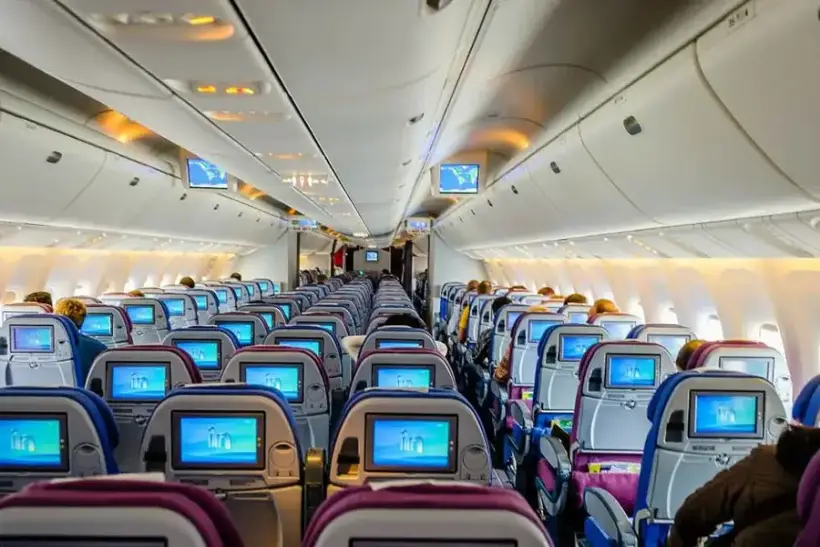
Unsplash
Major airlines are adopting artificial intelligence systems that calculate ticket prices based on multiple factors. The technology allows companies to increase revenue but is changing the traditional way passengers search for affordable flights, Bloomberg reports.
A new pricing model
Previously, airlines calculated ticket prices using analysts and pre-set models. For example, they could increase fares by 20% when a plane was only a quarter full. Now, these approaches are being replaced by artificial intelligence systems. Algorithms analyze dozens of variables in real time — from demand levels and flight occupancy to market changes — and continuously adjust prices.
Major industry players, including Delta Air Lines and Virgin Atlantic, are already using the new technologies. AI allows airlines to determine more accurately how much passengers are willing to pay for a particular flight. On popular routes, this could lead to fewer cheap tickets being available. Carriers may offer fewer seats at the lowest fares and raise prices faster when demand increases.
At the same time, these systems can work in the opposite direction. If a flight has low demand, algorithms can reduce ticket prices to attract more passengers and fill empty seats.
“Consumers should expect airlines to apply more intelligent pricing policies,” said Brian Terry of Alton Aviation Consultancy. Carriers will be able to use new technologies to raise and lower prices depending on demand. Critics fear that, ultimately, these tools will be used more often to increase average ticket prices.
Mistake fares could become rare
The development of artificial intelligence could reduce the number of so-called mistake fares — unusually cheap airline tickets that appear accidentally. Such offers occur due to data entry errors, currency conversion issues, technical failures, or incorrect information exchange between booking systems.
According to travel service Going, the number of such cases reached a record level in 2025, with experts finding approximately one mistake fare per month. In some cases, passengers received discounts of up to 90% compared with regular ticket prices.
However, such opportunities may almost disappear in the future. Artificial intelligence can detect pricing errors faster and automatically correct them. “AI will be able to identify mistakes across a much larger volume of data and do it faster than humans,” said Katy Nastro, a travel industry expert at Going.
Still, such offers are unlikely to vanish completely. Kyle Maltz, COO and Partner at Dollar Flight Club, noted that the airline ticket distribution system is becoming increasingly complex and global, meaning occasional errors will continue to occur.
Personal data in ticket pricing
The development of AI raises questions about how far airlines may go in using passenger data. The main concern is the possible emergence of individualized fares, where the cost of the same seat depends on how much a particular person is willing to pay.
Consumer advocates and US lawmakers warn that airlines could use generative artificial intelligence for so-called “surveillance pricing.” In this scenario, algorithms could take into account user data, including search history or estimated income levels, to set different prices for different passengers.
These concerns have already attracted the attention of regulators. The US Federal Trade Commission has launched a civil investigation to determine whether airlines use personalized consumer profiles to increase ticket prices. Some states have also begun taking action. Maryland adopted a law aimed at protecting consumers from predatory pricing. Regulators in other countries are monitoring the issue following cases such as the fine imposed on Chinese company Trip.com.
Airlines and technology providers, however, say they are not currently using personal data to set fares. Delta Air Lines said it does not price tickets based on information about individual passengers. Fetcherr says its models rely on aggregated market data, while Volantio states that its offers are not personalized.
AI is already managing sales
Artificial intelligence is already helping airlines set prices and manage sold tickets more efficiently. For example, software from Volantio, used by Japan Airlines, identifies passengers who may be willing to change their travel plans on an overbooked flight in exchange for compensation. The airline can then resell the freed-up seat to another passenger — such as a business traveler booking at the last minute and willing to pay significantly more.
Similar technologies are gradually spreading beyond aviation into the hotel sector and booking systems. One of the key developers of AI solutions for the airline market is Israeli startup Fetcherr. Its platform is used by around a dozen airlines, including Canada’s WestJet and Brazil’s Azul. During recent disruptions in the Middle East, the company’s system adjusted flight prices worldwide based on changes in fuel costs, flight cancellations, and demand fluctuations.
“Our models analyze dozens, if not hundreds, of categories of variables to determine fares. This is now possible only because of artificial intelligence,” said Uri Yerushalmi, co-founder of Fetcherr. According to him, the company increases airline revenues primarily by improving aircraft occupancy rather than by raising ticket prices.
AI is changing the airline market
International Investment analysts note that artificial intelligence is becoming part of airlines’ daily operations — from fare calculation to flight capacity management. Carriers can respond faster to demand changes and predict passenger behavior more accurately.
For travelers, this means that random cheap fares on popular routes may become increasingly rare. However, technology does not eliminate traditional ways of saving money: booking early, choosing flexible travel dates, and selecting less popular destinations can still help reduce costs.
The main challenge for regulators will be ensuring transparency in new pricing systems and preventing situations where passengers receive different prices for the same ticket without a clear explanation.