







 Vietnam Mortgage Surge Pushes Homes Out of Reach
 Lithuanian Apartment Prices Accelerate Across Major Cities
 London Flats Lose Value Ahead of Leasehold Reform
 Construction of the Batumi–Sarpi Highway Begins in Georgia
 Baltic Property Investment Accelerates in 2026
 Hong Kong and Singapore Renew Their Expat Rivalry
Israel-Hezbollah Conflict Impacts Tourism in the Levant
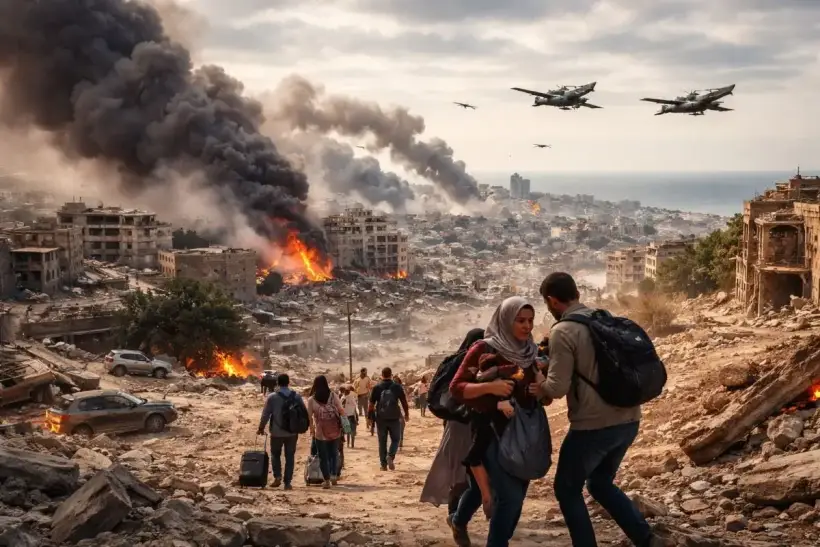
Escalation along the Israel–Lebanon border raises travel risks
In early March 2026, escalating tensions between Israel and the Lebanese group Hezbollah have become a major source of instability in the Levant region, affecting tourism and international travel flows.
Military activity, humanitarian challenges and growing geopolitical tensions have led several governments and international organizations to issue updated travel advisories. Tourists are urged to monitor the situation carefully before planning trips to Israel, Lebanon or nearby destinations.
Particular caution is advised for northern Israel and southern Lebanon, where military activity remains concentrated.
Military activity near the Israel–Lebanon border
Amid rising tensions, Israel has conducted military operations targeting Hezbollah infrastructure in southern Lebanon and along the northern border area.
The increased military presence, airstrikes and limited ground operations have raised security concerns in border regions.
Israeli authorities have advised travelers to exercise caution when visiting northern areas of the country, particularly regions of Galilee located close to the Lebanese border.
As a result, some tourism activities and travel routes in these areas have been temporarily affected.
Lebanon’s tourism sector under pressure
Lebanon’s tourism industry, which has historically played an important role in the country’s economy, has also been significantly affected by the conflict.
The Lebanese Ministry of Tourism has stated that the security situation has disrupted travel operations and tourism-related activities across parts of the country.
Travelers are advised to avoid southern Lebanon where military activity remains concentrated. Increased security measures and broader instability are also affecting tourism in other areas, including Beirut.
Some hotels and accommodation facilities have also been used to host displaced residents, limiting availability for international visitors.
Humanitarian crisis strains local infrastructure
The conflict has triggered large-scale displacement inside Lebanon. According to government agencies and humanitarian organizations, hundreds of thousands of residents have left their homes in southern areas.
Many displaced individuals are now temporarily located in central and northern regions, putting additional pressure on transportation systems, healthcare services and local infrastructure.
This situation complicates travel logistics and reduces the availability of accommodation and tourism services.
Regional travel risks across the Middle East
The consequences of the conflict extend beyond Israel and Lebanon. Rising tensions are affecting the broader security environment across the Eastern Mediterranean and the Middle East.
Neighboring countries are closely monitoring developments and updating travel guidance when necessary.
Although the conflict has not spread into neighboring states, analysts warn that continued escalation could increase regional risks.
Governments update travel advisories
Due to the evolving security situation, several governments including the United States, the United Kingdom and European Union member states have updated travel advisories for the region.
In most cases, authorities recommend postponing non-essential travel to areas close to the conflict zone.
Travelers currently in the region are advised to avoid border areas and follow guidance from local authorities. Registering with embassies or consulates is also recommended in order to receive safety updates.
Tourism recovery will depend on stability
Despite the current challenges, Lebanon remains home to major cultural and historical attractions such as the ancient city of Byblos, the Jeita Grotto and the historic districts of Beirut.
Tourism could recover once security conditions improve, although the timeline for stabilization remains uncertain and will depend on political and diplomatic developments.
As experts at International Investment note, the current escalation in the Middle East highlights how geopolitical conflicts can rapidly disrupt international tourism flows. In periods of uncertainty, travelers and investors increasingly prioritize destinations that offer stronger safety and stability indicators.