







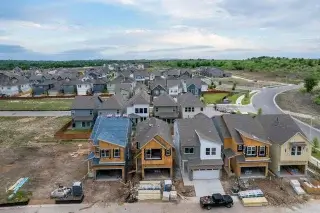
 Immigration Slowdown Reshapes the US Sun Belt
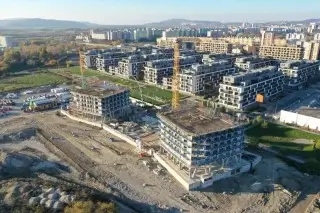 Slovakia Reforms Building Rules as Housing Starts Slide
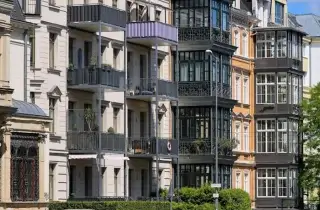 EU Proposes New Restrictions on Short-Term Housing Rentals
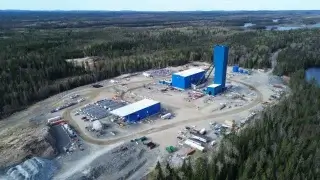 Canada Fast-Tracks Tax Rulings for C$1 Billion Investments
 China Nears a Decision on Fresh Stimulus
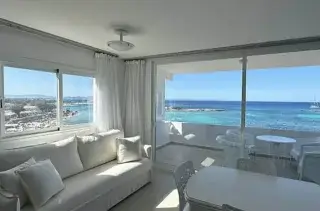 Fines for Illegal Rentals in Spain Reach €800,000
Israel Home Prices Fall as Rents Rise

Israeli home prices declined by 1% when April–May 2026 transactions were compared with March–April and were 2% below their level a year earlier. The correction was stronger in the Tel Aviv and Central districts, while the annual new-home index fell by 3.9%. More than 84,000 new units remained for sale, while the estimated annual rent increase for homes with a change of tenant reached 6.6%.
The 1% Decline Is Not a Conventional Monthly Figure
Israel’s Central Bureau of Statistics calculates the dwelling price index using overlapping two-month periods. April–May is compared with March–April, meaning that April appears in both samples. Describing the result as a 1% decline occurring solely in May would be methodologically incorrect.
The index covers new and resale properties and is adjusted for differences in quality. The calculation seeks to prevent changes in property size, location and other characteristics from being mistaken for a nationwide price movement. Compared with April–May 2025, the adjusted index declined by 2%.
The figure does not mean that every Israeli home became exactly 2% cheaper. The price of an individual property depends on its city, neighbourhood, condition, floor, parking, protected room and other building-specific features.
Tel Aviv Recorded the Sharpest Short-Term Fall
Prices in the Tel Aviv District declined by 2.3% from the previous two-month period. Jerusalem fell by 1.8%, Haifa by 0.5% and the Northern District by 0.3%. No change was recorded in the Central or Southern districts.
The annual pattern was different. Prices declined by 3.2% in the Central District, 2.6% in Haifa, 2.5% in Tel Aviv and 0.5% in the South. They increased by 1.4% in the Northern District and by 0.3% in Jerusalem.
Jerusalem’s recent two-month decline has therefore not yet produced a negative annual result. The regional divergence also shows why the national index cannot describe every local market.
New-Home Prices Fell by 3.9% Annually
The new-home price index declined by 0.1% from March–April and by 3.9% from April–May 2025.
Government-supported purchases represented 37.5% of the new-home transactions included in the calculation, up from 34.6% in the previous period. When subsidised deals were excluded, new-home prices increased by 0.2%.
The results are not contradictory. Commercial new-home prices may have edged higher while the increasing proportion of homes sold at government-supported prices pulled down the overall index. Over five years, the general dwelling index increased by 31.2% and the new-home index by 29.9%.
The 3.9% annual decline therefore does not prove that every developer reduced published prices by the same amount. Payment deferrals, financing benefits, finishing packages and included parking may change the economic value of a transaction without producing an equivalent nominal price cut.
Resale Activity Weakened More Sharply
Approximately 21,390 homes were sold between March and May 2026, down 10.6% from the preceding three months and 5.7% from a year earlier.
New homes accounted for about 8,910 transactions. Sales increased by 0.4% from the previous three-month period and by 8.2% annually. Approximately 29% of those new homes were sold through government-supported programmes.
Resale transactions fell by 17.2% from the previous period to about 12,480. The secondhand segment was therefore responsible for most of the decline in total market activity.
The 29% subsidised share in the three-month sales data should not be confused with the 37.5% share in the new-home price-index sample. The two measures cover different periods and use different denominators.
More Than 84,000 New Homes Remained for Sale
At the end of May, approximately 84,130 new homes remained available for sale. At the prevailing sales rate, the inventory represented 28.9 months of supply.
The Tel Aviv District contained 25,390 of the unsold units. Jerusalem led individual cities with approximately 10,368, followed by Tel Aviv–Jaffa with 9,811.
The figure should not be interpreted as the number of completed, vacant homes. It includes new units remaining for sale in projects at different stages of construction.
A supply approaching 29 months gives buyers greater negotiating leverage, particularly in districts containing several similar projects. Scarce homes in established neighbourhoods may remain more resilient.
Ynet’s Transactions Are Not a National Price Sample
Ynet reviewed transactions completed during a single week with assistance from brokerage networks including RE/MAX. The deals are genuine examples but do not form a random, complete or statistically representative sample.
The selection contains no transactions in Tel Aviv or Jerusalem, even though those markets strongly influence the national index. The examples cannot be used to calculate an Israeli average or forecast the next index.
Be’er Sheva Remains Relatively Affordable
A 97-square-metre three-room apartment in Neve Ze’ev sold for NIS 1.15 million. It included a 14-square-metre balcony, lift, parking and a reinforced protected room.
An 84-square-metre four-room apartment in Neighborhood Gimmel sold for NIS 1.045 million. Another four-room property measuring 118 square metres in Neve Ze’ev sold for NIS 1.35 million.
Dividing the transaction prices by internal area produces approximate values ranging from NIS 11,400 to NIS 12,400 per square metre. The calculation assigns no separate value to balconies, parking or property condition.
Kiryat Gat Recorded a Wide Price Range
A 60-square-metre two-room apartment on Malchei Yisrael Street sold for NIS 895,000, equivalent to approximately NIS 14,900 per square metre of internal space.
An 80-square-metre four-room apartment on Shiryon Street sold for NIS 1.53 million. It included a 30-square-metre balcony, while the price-to-internal-area ratio reached approximately NIS 19,100 per square metre.
The difference exceeded 28%, illustrating the effect of location, outdoor space, building condition and property specifications.
Shoham Approached NIS 30,000 per Square Metre
A 110-square-metre four-room apartment on Ha’Etrog Street sold for NIS 3.265 million. A five-room unit measuring 130 square metres in the same area sold for NIS 3.85 million.
Both transactions equated to approximately NIS 29,600 per square metre of internal space. The properties included balconies, lifts, parking and protected rooms.
Similar ratios do not make the units identical. Floor level, view, renovation and the seller’s circumstances can materially affect the final price.
Holon Remained an Expensive Market
A 50-square-metre 2.5-room apartment sold for NIS 1.4 million, equivalent to approximately NIS 28,000 per internal square metre.
A 109-square-metre five-room penthouse with a 90-square-metre roof terrace sold for NIS 2.9 million. A 110-square-metre five-room apartment in a 13-storey building sold for NIS 3.15 million.
The internal-area ratios ranged from approximately NIS 26,600 to NIS 28,600 per square metre. The penthouse appears cheaper only because its large terrace is not included in the internal-area denominator.
Larger Afula Apartments Cost Less per Metre
A 74-square-metre three-room apartment sold for NIS 1.25 million, or approximately NIS 16,900 per internal square metre.
A 165-square-metre five-room apartment sold for NIS 1.75 million, equivalent to around NIS 10,600 per square metre. A detached six-room house measuring 170 square metres on a 230-square-metre plot sold for NIS 2.95 million.
The house cannot be compared directly with apartments because its price includes land, privacy and potential development rights.
The 6.6% Rent Increase Does Not Cover All Tenants
Israel’s Consumer Price Index was unchanged in June, reducing annual inflation to 1.6%. Home-purchase prices are excluded from the regular consumer index and measured separately.
The housing component increased by 0.7% during the month. For tenants renewing a lease with the same landlord, the estimated annual rent increase was 2.6%. For homes where the tenant changed, the figure was 6.6%.
The 6.6% figure is not the average increase across the entire rental market. The bureau describes both rates as approximations of annual change for the relevant contract groups. Most tenants do not have their rent revised every month.
The Bank of Israel Cut Its Rate to 3.5%
The central bank reduced its policy rate by 0.25 percentage points on July 6, 2026, bringing it to 3.5%. It was the third quarter-point cut of the year after decisions in January and May.
The three reductions lowered the rate by a cumulative 0.75 percentage points. Policymakers said further decisions would depend on inflation, economic activity, geopolitical uncertainty and fiscal developments.
Lower policy rates may gradually reduce the cost of some variable-rate borrowing, but they do not guarantee an identical decrease in every mortgage. Lenders also consider the down payment, borrower income, term and loan structure.
Buyers Have Gained More Negotiating Room
The figures indicate cooling rather than a uniform collapse. National prices declined, but the Northern and Jerusalem districts still recorded annual increases.
Government programmes and developer financing offers are supporting the new-home market. Resale owners face more direct pressure because they are less able to provide long payment deferrals or subsidised borrowing.
As International Investment experts report, falling sale prices, nearly 29 months of new-home supply and rapidly increasing rents point to a widening gap between market segments rather than a single nationwide crisis. Developers are maintaining sales through subsidies and financing incentives, while private resale sellers face stronger pressure on final prices. Investors risk treating the 6.6% increase for tenant-change contracts as a guaranteed return while underestimating financing, taxation, maintenance and vacancy costs.