







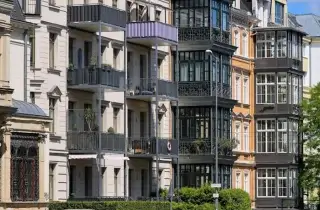
 EU Proposes New Restrictions on Short-Term Housing Rentals
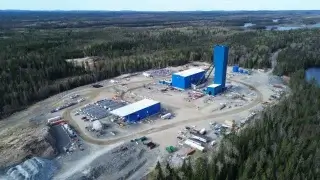 Canada Fast-Tracks Tax Rulings for C$1 Billion Investments
 China Nears a Decision on Fresh Stimulus
 Fines for Illegal Rentals in Spain Reach €800,000
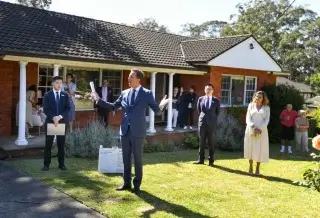 Australia’s Spring Auctions Rise but Remain Well Below 2025
 Number of Foreigners Holding Turkish Residence Permits Exceeds 1.27 Million
Slovakia Reforms Building Rules as Housing Starts Slide

Slovakia has simplified its construction approval system and moved much of the process online, but residential development continues to weaken. Just 2,368 dwellings were completed in the second quarter of 2026, the lowest Q2 total since 2000. The pipeline for future supply looks even weaker, with the number of dwellings classified as started falling by more than 40% from a year earlier.
Housing construction falls to a 26-year Q2 low
Slovakia completed 2,368 dwellings between April and June 2026. That was more than one third fewer than in the same period of 2025 and more than 40% below the average for second quarters over the previous ten years. It was the weakest second-quarter result since 2000.
Almost 2,400 dwellings were classified as started during the quarter, down by more than 40% year on year and equal to only about half the 2016–2025 Q2 average. In the Slovak statistics, a dwelling is recorded as started when a building permit is issued during the reference quarter, meaning the measure is primarily an indicator of newly permitted supply rather than necessarily the day physical work begins on site.
During the first half of 2026, 4,849 dwellings were completed, a decline of 29% from a year earlier. A total of 4,839 were classified as started, down by about one third year on year and almost half below the long-term average. Family houses accounted for 66% of completions and 63% of starts. At the end of June, 76,800 dwellings were recorded as under construction, only 0.7% fewer than a year earlier and 0.5% below the ten-year average, according to the Statistical Office of the Slovak Republic.
The decline has spread across Slovakia
The slowdown is not confined to Bratislava. Completions fell year on year in seven of Slovakia's eight regions. The steepest declines, exceeding 50%, were recorded in Trenčín and Prešov. Banská Bystrica was the exception, with completions increasing by around 20%.
The picture was weaker for newly permitted housing. Starts declined in all eight regions, with Bratislava and Trenčín recording falls of more than 60%. Every region was also below its ten-year Q2 average. Bratislava, Trenčín, Košice, Prešov and Nitra were more than 50% below their longer-term benchmarks.
That geographical spread matters because it shows that the weakness is not simply the result of conditions in one expensive metropolitan housing market. The slowdown is affecting the capital, major regional cities and lower-cost parts of the country at the same time.
The new Building Act has been in force since April 2025
The construction downturn has coincided with the biggest overhaul of Slovakia's building-approval framework in decades. The new Building Act took effect on April 1, 2025. It consolidated parts of the approval process into a single proceeding for a proposed building project, expanded the range of works that require only notification and shifted a substantial share of communication to the electronic Construction Portal.
The system also introduced deemed consent as a mechanism intended to prevent inaction by public authorities from blocking projects indefinitely in cases covered by the rules. By April 2026, almost 31,000 applications had been registered through the portal and it had more than 10,000 users. The Office for Spatial Planning and Construction had also received around 6,000 submissions related to state construction supervision.
Those figures show that the new infrastructure is being used, but they do not establish how much average approval times have fallen. The Office for Spatial Planning and Construction of the Slovak Republic publishes data on applications, users and implementation of the reform, rather than a directly comparable before-and-after measure of median project approval times.
Faster administration has yet to produce more homes
Weak completions in 2026 cannot be treated as a direct verdict on the new law. Residential developments typically pass through land acquisition or assembly, design, approvals, financing and construction over several years. Many homes delivered after April 2025 therefore began their development cycle under the previous system.
The fall in newly permitted dwellings is more relevant for future supply. These projects should feed completions in later years. If starts remain close to multi-decade lows for an extended period, the current weakness in permits is likely to move through the pipeline and eventually affect completed housing.
The 76,800 dwellings officially recorded as under construction add another layer to the picture. Slovakia still has a large stock of projects in progress, but that pipeline is producing relatively few completions. Individual schemes can remain under construction for years, large developments are often delivered in phases, and financing, construction costs, infrastructure requirements or changes in developer strategy can extend schedules.
CIJ.World also points to the lag between regulatory reform and physical housing output. Much of the housing reaching completion today was conceived under the previous framework. A more useful test of the reform will be the performance of projects that entered the approval process after April 1, 2025: how quickly they obtain decisions and how many subsequently progress into actual construction.
Home prices rise as the development pipeline weakens
Falling construction has not produced lower national housing prices. Residential transaction prices increased by 1.4% quarter on quarter and 13.6% year on year in the second quarter of 2026. Annual price growth has now remained in double digits for six consecutive quarters.
Existing homes rose by 14.3% from a year earlier, while new properties increased by 10%. Prices were higher year on year in all eight regions, with Bratislava recording the strongest rise at 16.2%. On a quarterly basis, however, prices in the Bratislava region slipped by 0.5%, driven by lower prices for existing properties.
The longer-term increase is much larger. In Q2 2026, Slovak residential properties were selling at prices 133% above the 2010 average. New dwellings were around 90% more expensive, while existing homes had risen by more than 150%, according to official transaction-price statistics, which are based on actual transactions rather than asking prices.
The combination of rising prices and fewer newly permitted homes makes the future supply pipeline increasingly important. Faster approvals can reduce one component of the development timetable, but permission alone does not make a project viable. Developers still need financing, manageable construction and land costs, adequate infrastructure and demand at prices capable of supporting the investment.
As International Investment experts note, the main risk is judging the reform by the number of applications moving through the digital system before its effect on actual housing supply can be measured. The administrative framework has already changed, while permits and completions remain close to multi-decade lows. If projects processed under the post-April 2025 rules fail to produce a sustained recovery in permits, construction and later completions, the constraints on Slovak housing supply will increasingly have to be sought outside the permitting process, including financing costs, project economics and infrastructure.
FAQ
How many homes were completed in Slovakia in Q2 2026?
A total of 2,368 dwellings were completed, more than one third fewer than a year earlier and the lowest Q2 figure since 2000.
How many homes were completed in the first half of 2026?
Slovakia completed 4,849 dwellings between January and June, down 29% from the same period of 2025.
How many new dwellings were started in 2026?
A total of 4,839 dwellings were classified as started during the first half of 2026. In the Slovak statistics, this category covers dwellings for which building permits were issued during the reference period.
When did Slovakia's new Building Act take effect?
The new Building Act took effect on April 1, 2025 and reshaped the country's building-approval process, including greater use of electronic procedures.
Has the new Building Act accelerated housing construction?
There is not yet enough evidence to make that conclusion. The new digital system is being widely used, but publicly available figures do not yet provide a complete before-and-after comparison of typical approval times. At the same time, newly permitted housing remains at historically weak levels.
What is happening to home prices in Slovakia?
Residential transaction prices increased by 13.6% year on year in Q2 2026. Existing homes rose by 14.3%, while new dwellings became 10% more expensive.
Could the decline in housing starts create a future shortage?
The risk would increase if the current low level of newly permitted housing persists. Today's permits feed part of the future supply pipeline, so an extended decline can eventually reduce the number of homes reaching the market.