







read also
 Australia’s Spring Auctions Rise but Remain Well Below 2025
 Number of Foreigners Holding Turkish Residence Permits Exceeds 1.27 Million
 Demand from Russian Tourists for Holidays in Georgia Rises by 20–25%
 Montenegro Property Buying Costs in 2026
 Four in Ten Companies Would Not Choose Slovakia
 Gulf Countries Prepare Unified Tourist Visa
DHS Travel Ban Shock: How a Proposed Expansion to 32 Countries Could Disrupt Airlines, Tourism and U.S. Hospitality
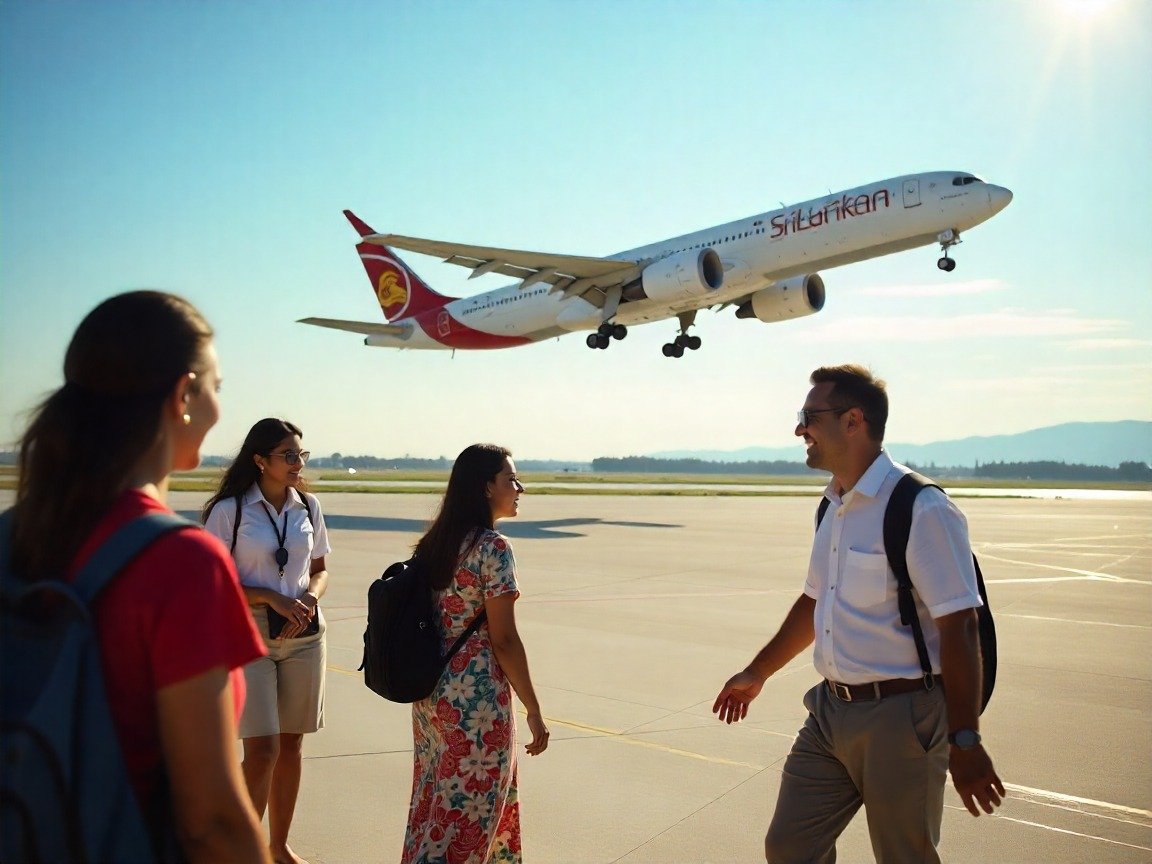
In late 2025, the U.S. Department of Homeland Security (DHS) placed on the table a proposal that could reshape international travel to the United States. The plan would expand the current travel ban list from 19 countries to as many as 30 to 32. Among the nations reportedly under consideration are Afghanistan, Libya, Yemen and Somalia — all countries with long-standing security and governance challenges.
If adopted, the expanded list would not only restrict entry for nationals of these countries, but also send shockwaves through the global travel ecosystem. Major U.S. carriers such as Delta Air Lines and American Airlines, which depend heavily on international routes and diaspora-driven traffic, are already modelling scenarios of lower demand, route cuts and capacity shifts. For the broader tourism and hospitality sectors, millions of dollars in potential revenue are at stake.
What the DHS proposal means in practice
Under the current framework, nationals from 19 countries face varying levels of restriction on entering the United States. The new DHS proposal would significantly widen that scope, potentially bringing the list to 30–32 countries. Afghanistan, Libya, Yemen and Somalia are among the jurisdictions expected to be affected.
The official justification centres on national security, terrorism risk and the ability of partner governments to provide reliable background information on travellers. Yet beyond the security narrative, the measure would inevitably affect tourists, students, business travellers and families with long-established ties to the U.S. For the American economy, the result could be fewer inbound visitors, softer demand for flights and lower spending at hotels, restaurants, shops and entertainment venues across major cities.
Delta and American Airlines prepare for turbulence
Delta Air Lines and American Airlines are particularly exposed to any sharp change in access rules. Both carriers operate extensive international networks, directly or via partners, feeding major U.S. hubs from regions with significant migrant and business links. An expanded travel ban would effectively remove entire segments of demand from the booking systems, forcing airlines to reassess the profitability of certain routes.
That reassessment is likely to result in reduced frequencies, rerouting or outright cancellation of services tied to affected markets. Industry projections suggest that a sharp contraction in long-haul flows could translate into billions of dollars in lost revenue across global airlines. For U.S. carriers, the pressures would show up in lower load factors on some routes, higher competition on others and a more constrained set of choices for travellers who have grown used to dense networks and flexible itineraries.
Hospitality and U.S. tourism face renewed headwinds
The U.S. hospitality industry, spanning major brands such as Hilton, Marriott and Hyatt, depends significantly on international guests. Before the pandemic, foreign visitors spent more than $200 billion annually in the United States, supporting jobs and investment in lodging, retail, food service and entertainment.
While countries like Afghanistan or Libya are not among the top sources of tourists, they generate steady flows of business travellers, students and family visitors, particularly in cities with large diaspora communities. This base demand often helps hotels maintain occupancy outside peak holiday seasons and stabilise weekday performance. A tighter travel regime would erode that buffer, making hotel revenues more cyclical and amplifying the impact of seasonal swings and macroeconomic shocks.
Global mobility, visas and the erosion of people-to-people ties
The implications of a wider travel ban stretch far beyond tourism metrics. Students, researchers, professionals and families who rely on international mobility to study, work or reconnect could find themselves stuck in longer queues or facing outright denials. Stricter screening, extended processing times and additional documentation requirements are likely to complicate access to U.S. visas for nationals of affected countries.
For universities, research institutes and global companies, this introduces delays, uncertainty and, in some cases, the risk of losing talent to other destinations perceived as more accessible. Academic exchanges, scientific conferences and cross-border projects — historically an important part of U.S. soft power and higher education revenue — would all feel the strain.
How travellers can navigate the uncertainty
For would-be visitors from countries that may be added to the ban list, proactive planning becomes essential. Monitoring updates from U.S. embassies and consulates, applying for visas well ahead of planned travel dates and budgeting extra time for potential administrative delays will be critical steps. Professional travel advisers and immigration lawyers can help interpret evolving rules, though they cannot eliminate the underlying uncertainty.
Financial and logistical flexibility will also matter. Travellers are increasingly opting for refundable airfares, flexible hotel reservations and insurance policies that cover visa-related cancellations or disruptions. Some may explore itineraries routed via third countries or using alternative carriers, but when entry restrictions themselves tighten, workarounds become limited: the key bottleneck remains permission to cross the U.S. border, not just the availability of flights.
A new risk scenario for airlines and global business
Even before any legal text is finalised, the DHS proposal forces airlines, corporates and investors to model downside scenarios. For Delta and American, one likely response is redeploying capacity toward markets where demand remains strong and access rules are more predictable. Corporate travel managers and university administrators, in turn, may adjust travel policies, extend planning horizons and lean more heavily on virtual formats for meetings and events.
In the longer term, persistent policy volatility around travel and visas raises the regulatory risk premium attached to U.S.-focused tourism and hospitality projects. The more travel decisions are exposed to political swings, the more cautious investors become when underwriting long-term cash flows tied to inbound mobility.
Experts at International Investment stress that the proposed expansion of the U.S. travel ban is not a routine technical adjustment but a structural shift with far-reaching consequences. In their assessment:
“If implemented, a broader U.S. travel ban will deepen the fragmentation of the global tourism market and introduce a new layer of regulatory risk for airlines, hotels and investors. Delta and American Airlines may be on the front line, but the impact will cascade through hubs, campuses and conference centres worldwide. For those allocating capital to tourism and hospitality, 2025–2026 will be a real-time stress test of how resilient their strategies are to policy shocks that directly restrict the movement of people.”
Tags: USA, travel ban, DHS, airlines, Delta, American Airlines, tourism, hospitality, visas, international travel